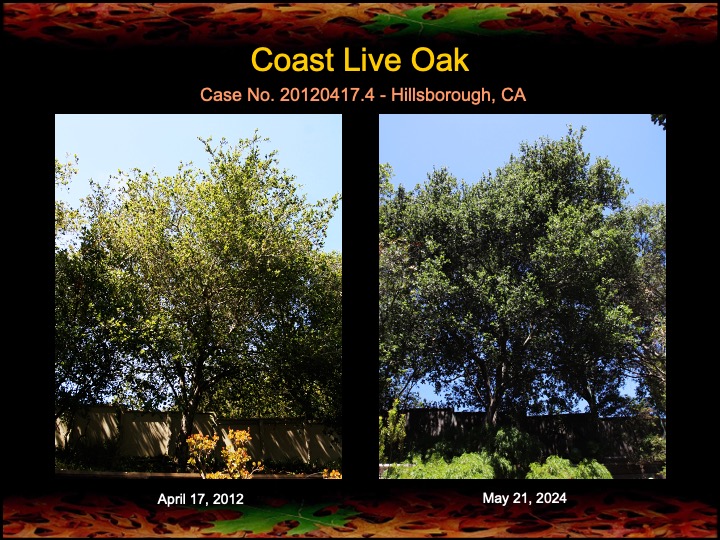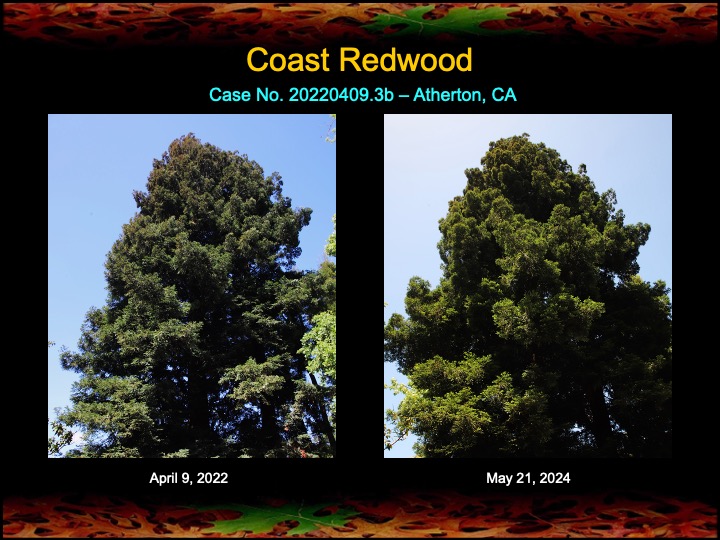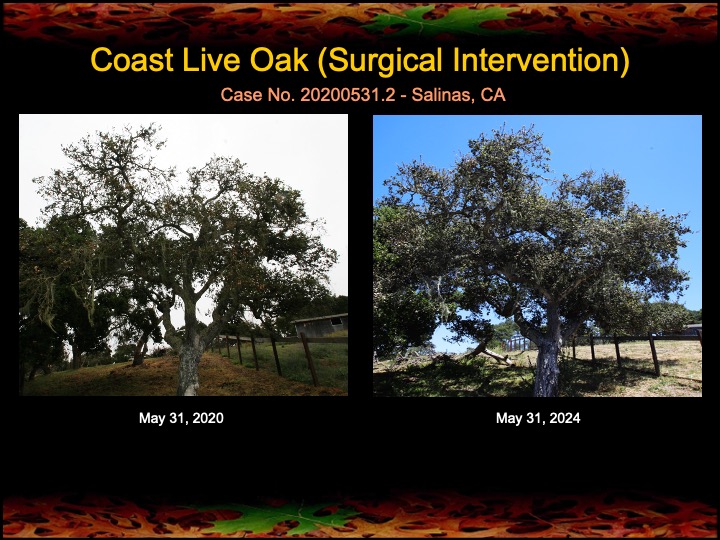
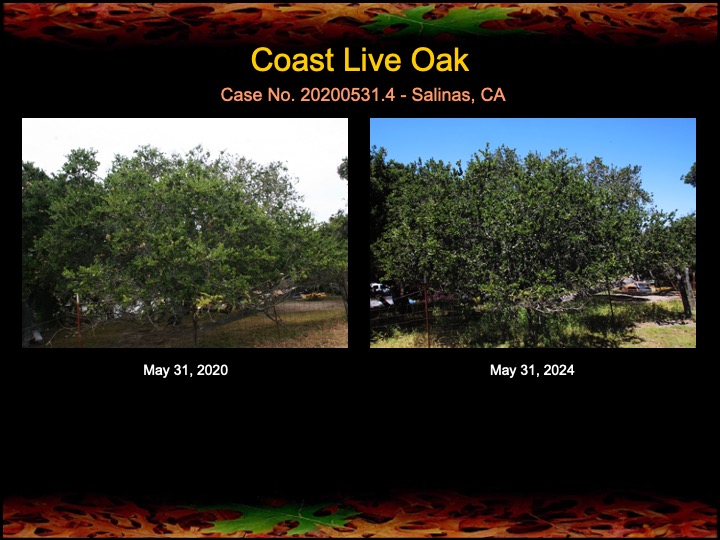
Coast live oaks in Salinas recovering after 4 years

31 05 2024

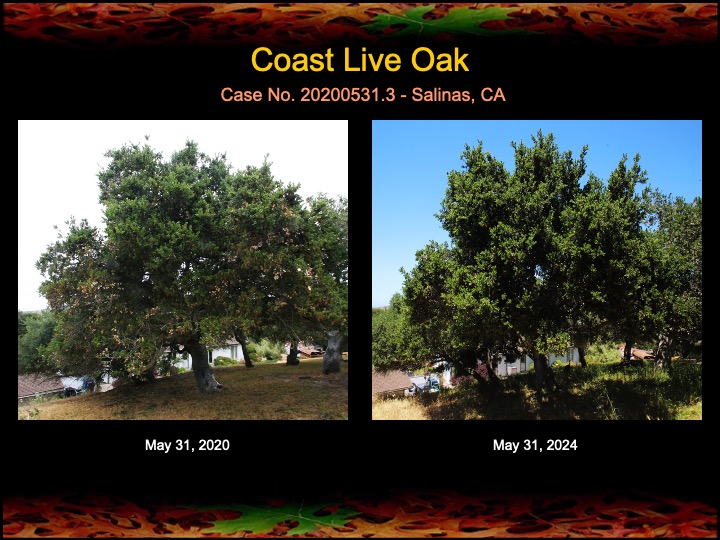
In 2020 a good friend contacted me about care for his sick oaks. I immediately responded and applied fire mimicry treatments on several of his oaks, including a control oak that I did not treat (see below). Here are the results after four years. Note below that one of the diseased oaks initially began to recover nicely in 2021, but ended up dying in 2022. The oak shown above had a stem canker infection (probably Sudden Oak Death) that was surgically removed in 2020, and now shows no sign of lingering infection.
Read the rest of this entry »


Coast live oaks, one requiring surgery, recovering after two years

30 05 2024

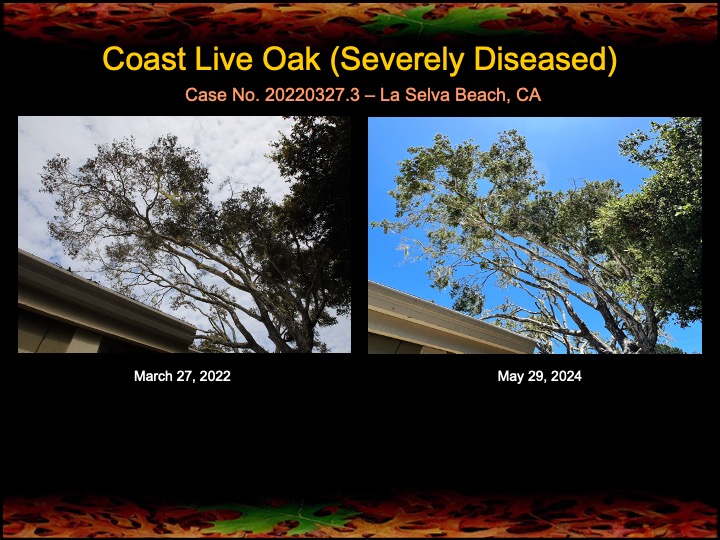
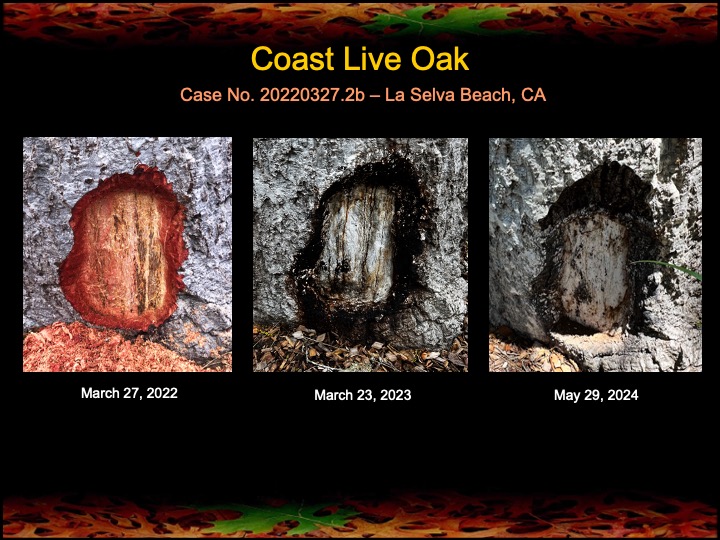
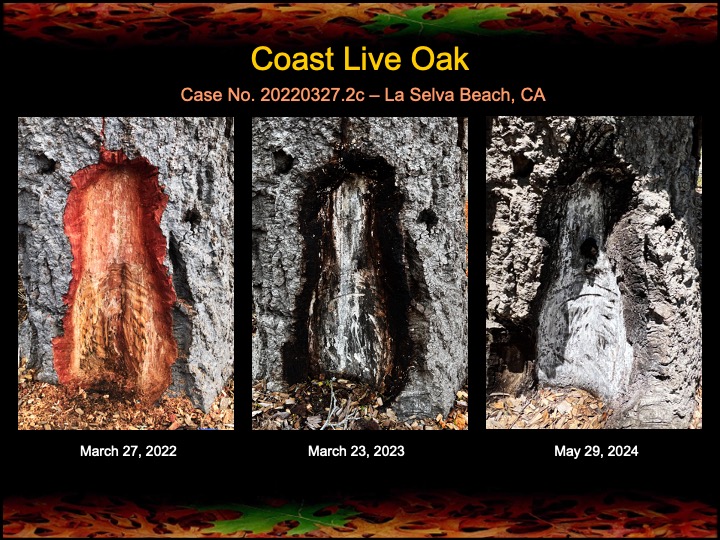
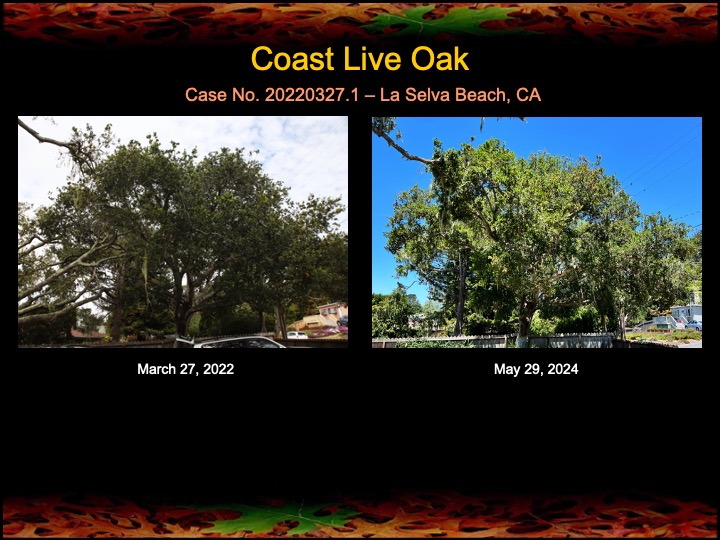
The coast live oak shown above was severely diseased with two large stem canker infections when I first arrived two years ago. Without promises of recover, I suggested two surgical procedures, as well as fire mimicry treatments to this and several non-diseased neighboring oaks. Below are the two surgical wounds depicting two years of healing. Note there is no residual bleeding or other signs of stem canker infection. Remaining photo sets below show the responses of the neighboring oaks to fire mimicry treatments. Happy to report that we’ll be returning soon to treat these oaks again.

Read the rest of this entry »


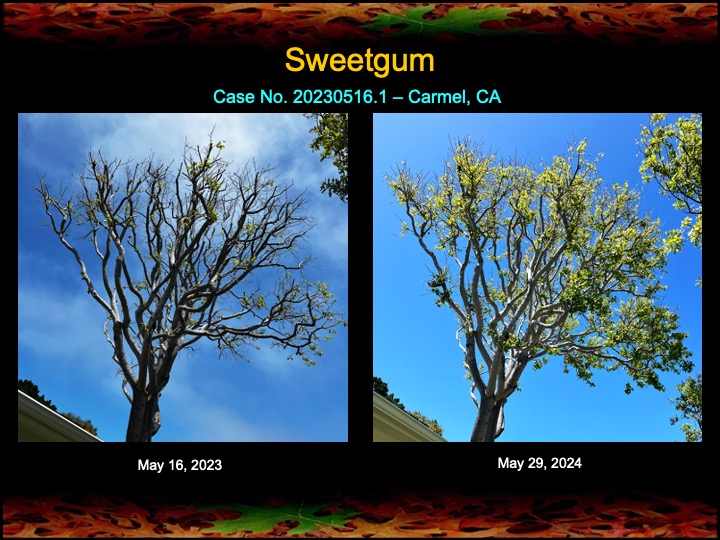
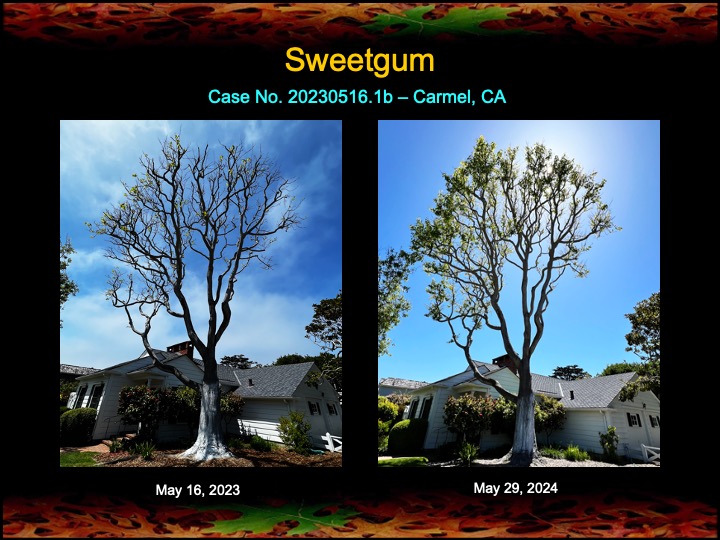
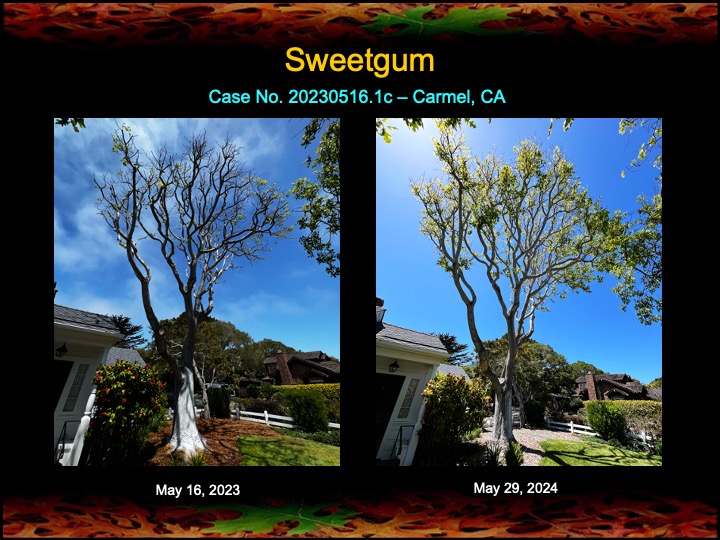
Who knew? Sweetgum too!

29 05 2024

Last year a good friend’s mother contacted me about a sick sweetgum tree at her home in Carmel. I inspected the tree and saw that it was nearly dead. Although I had never treated a sweetgum tree before, as there seemed little likelihood that the tree would survive, I proposed we try a fire mimicry experiment. She agreed, so a major limb that was all but dead was removed, a surgery was done to remove a severe wood rot infection, the soils around the tree were amended with shells, ash, biochar, and compost tea, and a limewash was applied to the trunk. One year later …


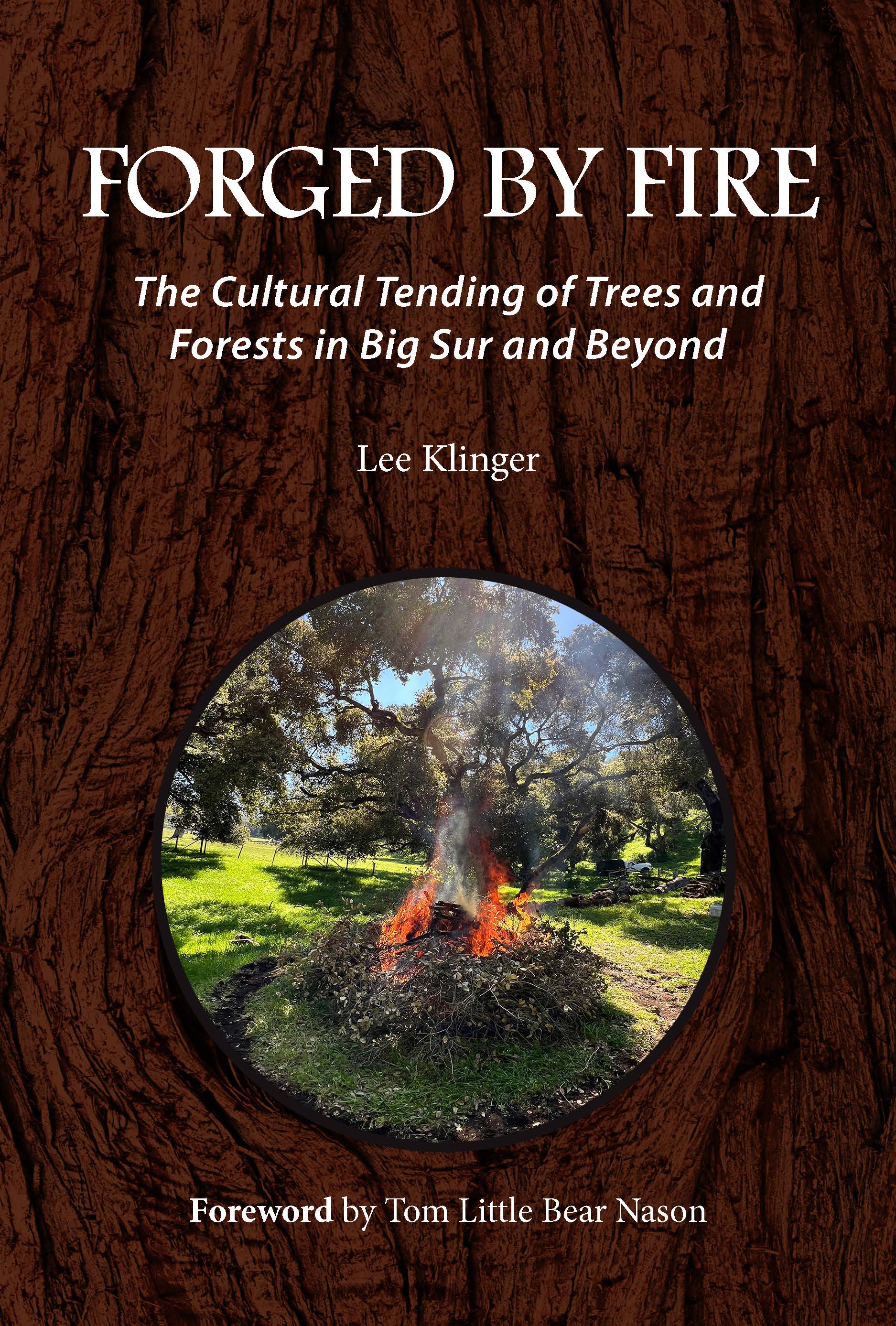
New Release – “Forged by Fire: The Cultural Tending of Trees and Forests in Big Sur and Beyond”

29 05 2024

“Big Sur is home to many remarkable trees, including ancient groves of oddly shaped oaks and peculiar groupings and strange fire scars in old-growth redwoods, all dating from a time when the Esselen People were the sole human occupants of the region. Upon close inspection, these oddities are found to be the result of cultural burning and other tending practices by the Esselen. Now, however, too many of these living artifacts are dying and perishing in flames from the stresses imposed by our modern culture. By bringing together both Western science and Traditional Ecological Knowledge systems, the solutions to these problems become self-evident — either reintroduce cultural fire to the land or, if that is not possible, mimic its effects using materials and practices that emulate fire.”

Available for now at Amazon. It’ll be in bookstores eventually.

Amazon paperback link:

Read the rest of this entry »


Oaks after 3 years and 12 years

29 05 2024

Here are some oaks that I’ve been treating with fire mimicry for 12 years, along with several oaks I’ve been treating for 3 years. Enjoy!

Read the rest of this entry »


Redwoods, pines, and fire mimicry

28 05 2024

While the focus of my work is on oak trees, I have several recent examples of fire mimicry treatments improving the health of redwoods and pines. The first five photo sets are of coast redwoods after two years and seven years of treatments. Below the redwoods are photo sets of a Monterey pine after 12 years of treatments (every other year), and a bishop pine after three years of treatments. I’m pretty pleased with these results!

Read the rest of this entry »


Los Altos oaks and redwoods after my 7 years of care

25 05 2024

Seven years ago I began fire mimicry treatments on four coast live oaks, as well as two redwood trees in Los Altos, CA. I reported on the progress of these trees back in 2020.and in 2018. For obvious reasons, the property owner has asked me to continue treating these trees, so they have received five treatments over the past seven years. These results tend to support my intuition that when trees have not responded to my treatments, it is likely because I did not do enough care, rather than having done too much.

And don’t miss the final photo set of this series showing the results with redwoods.

I look forward to seeing these trees outgrow the frames of my original photos (as is already starting to happen) in years to come!

Read the rest of this entry »