The Many Lives of James Lovelock by Jonathan Watts

10 01 2025

Last night I finished reading the new biography of my dear friend and mentor, the late Jim Lovelock. It was (is) a fascinating read of the man, the men, and the women who helped bring Gaia to our scientific consciousness. I know (knew) many of the people mentioned in this book, so the read was particularly engaging as well as revealing about matters and affairs that previously had me confounded. Here is a closing passage that moved me deeply:

“Despite a hermetic reputation, Jim’s great contribution to [Gaia] theory was the identification of relationships: ‘My role has been to bring separated things and ideas together and make the whole more than the sum of the parts.’ Curiosity drove him. Accuracy delighted him. But it was always about feeling as well as data. That is why Gaia continued to have appeal and relevance. ‘YOUR UNCONSCIOUS MIND CAN HANDLE CONCEPTS THAT YOUR CONSCIOUS MIND CANNOT handle nor speak in language. It’s rebellious,’ he said [emphasis mine]. Deep down he never stopped believing that the goddess was more than a metaphor. Right to the end, he was convinced the planet was truly alive.”

From – The Many Lives of James Lovelock by Jonathan Watts


Video recording of “Forest restoration theory and practice based on Indigenous cultural tending”

17 11 2020

Here a Youtube video of my recent lecture and discussion in the course FORESTS, hosted by the Humanities Center of Texas Tech University. Many thanks to Bruce Clarke and Michael Borshuk for facilitating this talk!


Upcoming zoom lecture (Thursday, Nov. 12) – “Forest restoration theory and practice based on Indigenous cultural tending”

7 11 2020

This Thursday, November 12, (5:30 pm Pacific Time) I will be conducting a zoom lecture and discussion for the online course FORESTS, hosted by Texas Tech University, on the topic of “Forest Restoration Theory and Practice Based on Indigenous Cultural Tending”. The points I will be addressing are: Gaia theory, ecological succession, fire ecology of California, evidence of cultural modification of trees and landscapes, and approaches to forest restoration. The lecture is open to all, just be sure to register beforehand. Follow the embedded link to register.


Lovelock Centenary talk by Lee Klinger recorded on July 31, 2019

7 09 2019

Here is my presentation “Indigenous-based forest management: Looking to the past for a way forward” at the recent Lovelock Centenary conference at the University of Exeter, UK

My talk begins at 59:38 and ends at 117:00. Enjoy!


Invited talk – “Indigenous-based forest management: Looking to the past for a way forward”

23 07 2019

UPDATE: Here is the video of my talk – https://suddenoaklifeorg.wordpress.com/2019/09/07/lovelock-centenary-talk-by-lee-klinger-recorded-on-july-31-2019/

I am heading to England soon to attend and speak at the Lovelock Centenary (July 29-31), a meeting of Gaian scientists sponsored by the Geological Society of London and the University of Exeter, and inspired by the 100th birthday of James Lovelock, who developed the theory that the earth is a living system (Gaia). James Lovelock will happily be attending and speaking at the conference.

I first met James Lovelock in 1988 at an American Geophysical Union meeting in San Diego, CA hosted by my postdoctoral advisor Stephen Schneider. I presented results that supported Lovelock’s contention that “Gaia likes it cold”, as discussed in Lovelock’s book The Ages of Gaia.

safe_image

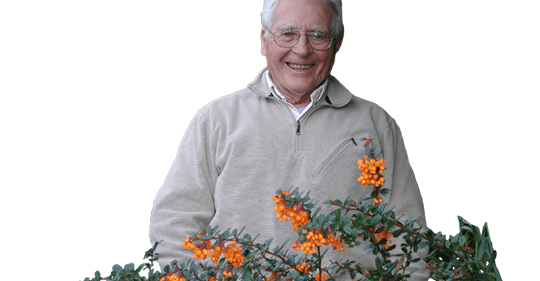
James Lovelock

After attending the “Gaia in Oxford” meetings in the 1990s I worked with James Lovelock and Susan Canney (University of Oxford) to help found the Gaia Society, which later became the Gaia: Earth System Science specialty group of the Geological Society of London.

My talk at the upcoming meeting will focus on the topic of Applied Gaia, which, as the name implies, is the application of Gaia theory to solving real world problems. I will be speaking on the ways in which indigenous cultures can inform us on how to improve our forest management in California. Dr Susan Canney will follow up with a talk on her successful work applying Gaia theory to elephant conservation in western Africa. The conference program is listed here.

The entire conference will be lived streamed and I encourage you to watch, as there are few chances to see this many Gaian scientists speaking in one setting.

Lovelock Centenary talk final


Gaia University Webinar on Climate Change

3 05 2017

Earth

On May 16 I’ll be giving a free online seminar titled “Gaia and Climate Change” via Gaia Radio (sponsored by Gaia University). Please visit the following site to register for the seminar:

http://myaccount.maestroconference.com/conference/register/UAC3G8CV0FI0SXJS


Talk on Gaia and trees for Gaia University

21 06 2016

A few weeks ago I gave a talk on “Applying Gaia theory to forest restoration”. The talk was arranged and recorded by my lovely daughter Ava Klinger, who works for Gaia University. I’m also proud to be involved with Gaia University as an external reviewer of students.

The link to talk is here. Enjoy!

AK Eklutna Clouds copy


Scientific meeting on Gaia at the Geological Society of London – November 11, 2015

5 10 2015

Carlsbad caverns. Photo by Lee Klinger.

Carlsbad caverns. Photo by Lee Klinger.

On November 11, 2015 there will be a meeting entitled “Puzzle of Earth’s Uninterrupted Habitability” to be held at the Geological Society of London (GSL). This meeting will have a strong emphasis on Gaia theory and several prominent Gaian scholars will be speaking, including Tim Lenton, David Wilkinson, Toby Tyrrell, and David Schwartzman. As a Fellow of the GSL I have been invited to speak at this meeting. Here are the title and abstract of my talk:

Biological mediation of acidity and alkalinity: Does habitability require regulation of environmental pH?

Lee Klinger, Independent Scientist, Big Sur, CA USA

Abstract – Climatic cycles such as ice ages represent large excursions in global temperatures and are associated with significant changes in atmospheric CO2, non-sea salt sulfate, and dust, as recorded in ice cores. Ice age excursions in the pH of marine waters are predicted to result from the altered concentrations of CO2 in those waters. In addition, there are a number of biologically mediated processes affecting the pH of terrestrial and marine environments.

During interglacials terrestrial ecosystems are dominated by forests and grasslands that experience frequent disturbances, especially fire, which tends to alkalinize the soils. At the onset of glaciation higher latitude fire regimes subside and the forests become podzolized, with a corresponding decrease in soil pH. Many of these areas are eventually paludified, owing primarily to the acidifying and swamping effects of mosses and lichens, which eventually dominate the expanding peatlands. Mosses and lichens are known to stimulate silicate weathering rates to levels that could significantly reduce atmospheric CO2, and the cooling effects of peatlands are thought to play a role in ice age initiation. There is evidence that the production of iron-rich organic acids by peatlands greatly enhances phytoplankton blooms in adjacent coastal areas. Rainfall chemistry from the Pacific northwest points to the occurrence of biogenic acid rain likely originating from DMS and other biogenic sulfur compounds emitted by the phytoplankton. A feedback results through the nss-sulfate deposition enhancing the growth of mosses.

As ice ages progress and glaciers grow, dust levels in the atmosphere are also seen to rise. Much of this dust is due to an increase in glacial loess. The iron content of the dust stimulates marine productivity in open ocean areas. Oceanic inputs of iron from volcanic ash and glacial outwash are also seen to increase during glacial periods.

The culmination of the glacial period is defined by feedbacks involving the expansion of glaciers into areas formerly occupied by peatlands. The high mineral content of the glacial loess, along with episodes of volcanic ash would tend to alkalinize the terrestrial ecosystems and discourage the proliferation of mosses and other acidifying organisms.

Thus, the pH excursions in the ice age cycle may be related to the biogeochemical coupling of the iron and sulfur cycles. This coupling could have its roots in the Precambrian banded iron formations (BIFs), cyclic depositions of iron-rich minerals that are likely biogenic in origin. BIFs are seen to be closely associated with snowball earth conditions.




Life and the Planet – Part 3 (The Hockey Stick still lives in 2011)

23 05 2011

The Hockey Stick graph, presented in May 2011 by Dr Jan Zalasiewicz as evidence for unprecedented anthropogenic warming

The final talk of the meeting was by Jan Zalasiewicz titled ‘Looking back from the future at the Anthropocene’. It is clear from this talk that some geologists have already decided humans are having a dramatic effect on the earth, which reinforces efforts to give the current geological period of the earth a separate classification, the Anthropogene. I find this kind of science disturbingly self-serving. A few days after the talk after I wrote Dr. Zalasiewicz the following letter: Read the rest of this entry »


Ecoliteracy in Action

29 11 2010

On December 18 I will be speaking at the Ecoliteracy in Action course being held at Esalen Institute in Big Sur, CA at the invitation of Kat Steele, the course coordinator. The title of my talk is “Gaia theory and climate change”. Prior to my talk on the 18th my good friend Daniel Peterson will be presenting on “Primitive skills and the Esselen tribal ways”, a discussion and hands on workshop relating to living off the land and crafting tools from natural materials. See the flyer below: