Today’s KSQD show Talk of the Bay with host Christine Barrington features my work with the Esselen Tribe, and includes a few spoilers from my new book “Forged by Fire”.
With regards to the recent catastrophic wildfires burning in LA, please consider what I have to say. I am a survivor of a wildfire that burned here in Big Sur several years ago which, despite my fire-fighting skills, took my home. As a PhD scientist my understanding of the ecology of the California forests and their decline runs deep, which has proven useful in consulting with landowners on how to prevent the decline of their trees and reduce the fire hazard on their properties. I served for many years as a volunteer and paid firefighter and, with respect to climate change, I worked as a staff scientist for 14 years at the National Center for Atmospheric Research (NCAR). Currently I serve as the Staff Ecologist with the Esselen Tribe of Monterey County.
Climate change is so often invoked as the “cause” of these wildfire disasters, that it is hard for most folks to parse the more nuanced explanations of what is really going on. In my opinion, the wildfire problem in California and elsewhere has been hijacked by climate activists, who wish to divert the attention of wildfires to climate change, despite knowing that climate is only part of the problem. This emphasis on climate change leaves people with few real-world solutions to the wildfire problem. Buy a Tesla perhaps?
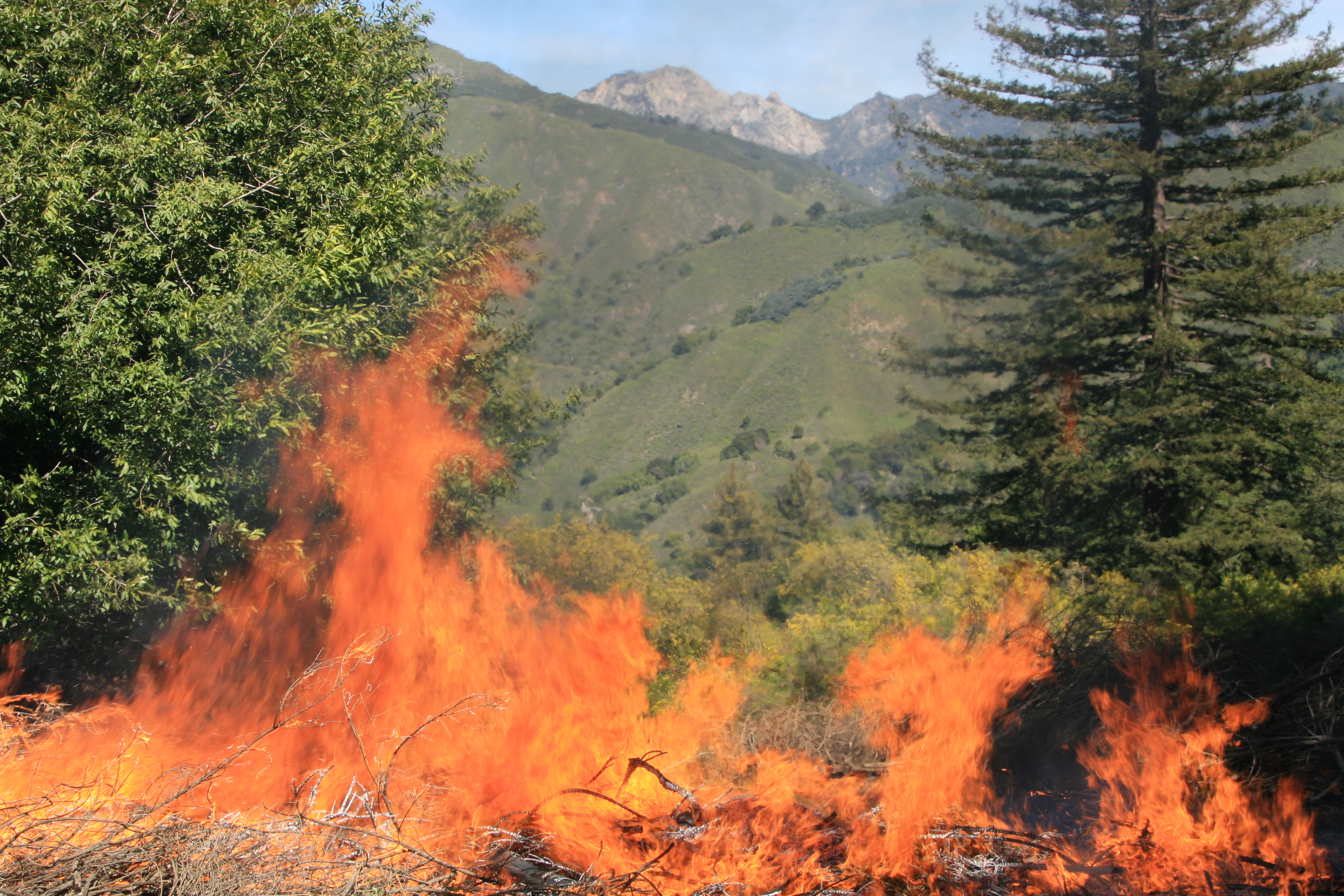
But the LA fires were preventable, without changing the climate. How do I know? Because of the real world work I do which has not only saved homes, it has also saved entire forests – and I didn’t change the climate!
To put it simply, in my opinion, if climate change was not happening, or even if we were able to stop or reverse climate change right now, these wildfires would still happen. Present day climate change may be exacerbating the frequency of these events, but the wildfires would still happen. Suppose we were to develop better firefighting technologies and skills, the wildfires would still happen. Let’s rebuild with more fireproof homes, well then maybe not so many homes would be lost, but the wildfires would still happen!
The catastrophic wildfires in California and elsewhere are NOT the result of an altered climatology, they are the result of an altered ecology. For thousands of years the forests, chaparral, and prairies of California were managed by the Native Peoples, mainly with fire. Now that the Native People have been largely removed, the lands are no longer being tended. This has resulted in rapid shifts in the succession of ecosystems. Prairie ecosystems are being invaded by chaparral and oak savannas are quickly becoming overcrowded oak forests.
Thankfully, the Native Peoples have solutions, which they are willing to share. Maybe it’s time to listen and learn!
Many are asking about my thoughts on the LA fires. I plan to eventually share these once the scope of the tragedy is better known. For now let me show some images depicting the transformation of the land of my youth. Even though this place is in Ohio, the ecological changes happening here are dramatic and relevant to the devastating fires currently burning in Los Angeles.
Historically, grasslands in Ohio were maintained by a combination of cultural burning by the Native Peoples and grazing by the native herbivores. After colonization, although there were fewer fires, the grasslands in many areas persisted mainly due to cattle grazing.
When I first arrived at my Uncle Huck and Aunt Joan’s southern Ohio farmhouse in the late 1950s it was surrounded by cattle pasture as far as I could see. I remember how my cousin Scooter and I would climb the fence and throw stones at the Brahma bull, who then charged at us until we safely retreated behind the fence. I will never forget being reprimanded by Aunt Joan after she eventually caught us. We never did THAT again.
Anyway the point of this post, besides allowing me to wax nostalgic, is the transformation I’ve observed on this land over my lifetime. Below are two photos of the Huck’s farmhouse, one from 1956 and the other from 2014 taken from nearly the same spot. Farmhouse is still there, but mostly hidden by trees. The photo from 2014 was taken after cattle grazing had ended in the early 1970s. All of the previously grazed areas are now either mowed to maintain the grasses or are covered in dense deciduous forests. That may be OK (for now) in the midwest, but here in California the SAME THING is happening, and that is not OK! Our lands need more tending!
Last night I finished reading the new biography of my dear friend and mentor, the late Jim Lovelock. It was (is) a fascinating read of the man, the men, and the women who helped bring Gaia to our scientific consciousness. I know (knew) many of the people mentioned in this book, so the read was particularly engaging as well as revealing about matters and affairs that previously had me confounded. Here is a closing passage that moved me deeply:
“Despite a hermetic reputation, Jim’s great contribution to [Gaia] theory was the identification of relationships: ‘My role has been to bring separated things and ideas together and make the whole more than the sum of the parts.’ Curiosity drove him. Accuracy delighted him. But it was always about feeling as well as data. That is why Gaia continued to have appeal and relevance. ‘YOUR UNCONSCIOUS MIND CAN HANDLE CONCEPTS THAT YOUR CONSCIOUS MIND CANNOT handle nor speak in language. It’s rebellious,’ he said [emphasis mine]. Deep down he never stopped believing that the goddess was more than a metaphor. Right to the end, he was convinced the planet was truly alive.”
From – The Many Lives of James Lovelock by Jonathan Watts


 Sudden Oak Life by Lee Klinger
Recent Comments