Acid rain in Big Sur – December 2010

3 01 2011

Big Sur coast, December 2010 (photo by Lee Klinger)

The December 2010 rain pH data for Big Sur are in and the results are posted in the table below. Note that I was away on travels during November 2010 , so I do not have pH data to report for that month. Rainfall amount, however, was recorded and totaled 1.89″ (h/t Lauren Gamblin). Read the rest of this entry »


Acid rain in Big Sur – October 2010

31 10 2010

The first rains of the season have fallen here in Big Sur and the data are rather surprising . . .

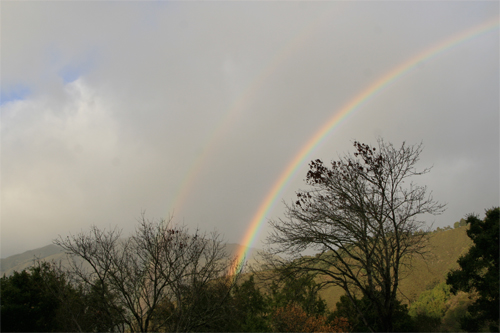
Another double acid rainbow in Big Sur (photo by Lee Klinger)

Read the rest of this entry »


Acid rain in Big Sur – 2009-2010 rain year summary

16 06 2010

During the 2009-2010 rainy season the precipitation gauge at my home here in Big Sur received a total of 36.24” of rain, which was more than the totals for any of the previous three years. It was a particularly long rainy season, lasting from October 13, 2009 to May 28, 2010.

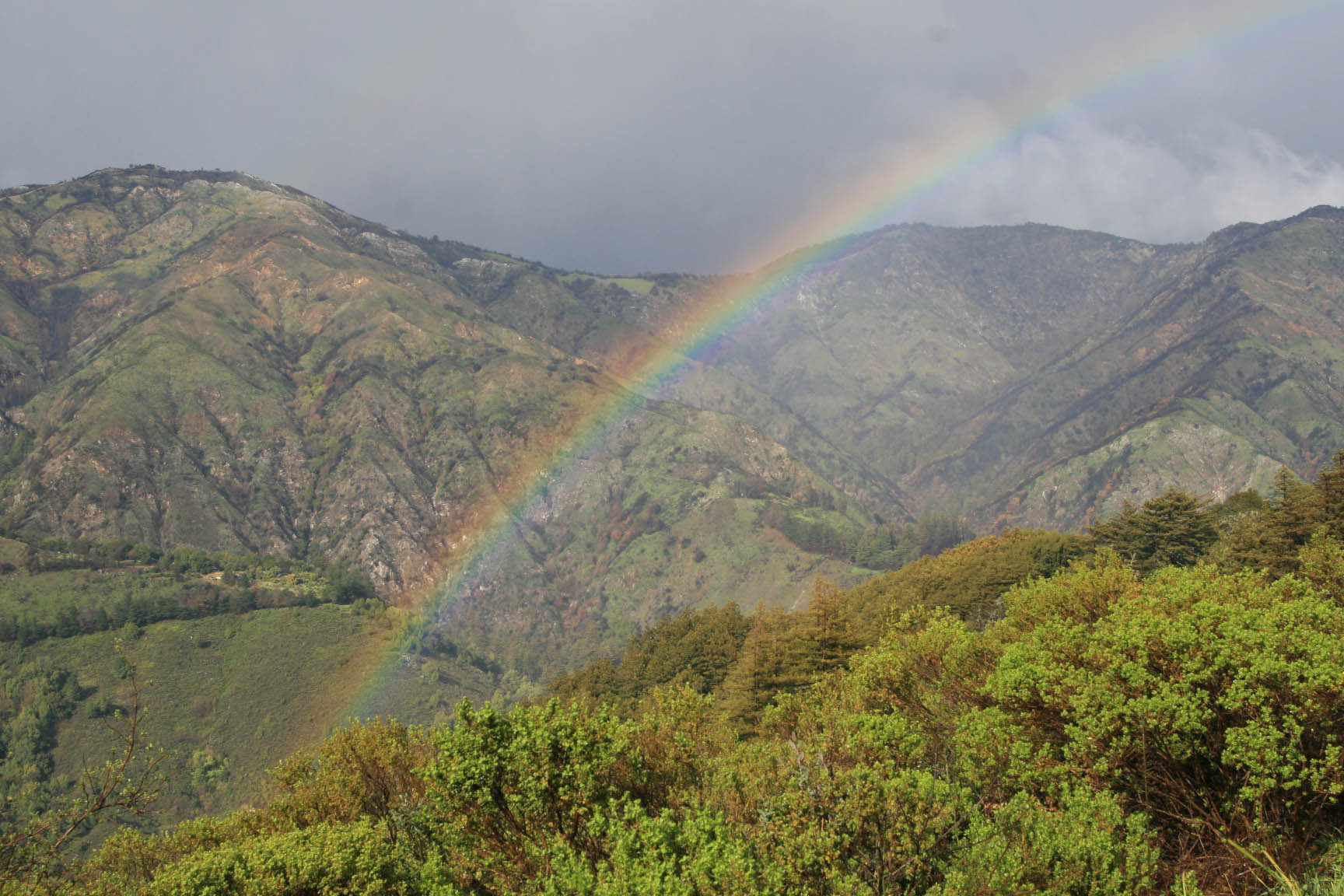
Double acid rainbow in Big Sur (photo by Lee Klinger)

With regards to rain pH there were 39 measurable events with a mean volume-weighted pH (± s.d.) of 4.80 ± 0.13. The lowest pH reading this past rain year was 4.37 recorded on December 27, 2009, and the highest pH reading was 5.65 recorded on May 18, 2010. Read the rest of this entry »


Acid rain in Big Sur – April 2010 update

1 05 2010

Acid rainbow over Big Sur (photo by Lee Klinger)

April numbers are in for the rain pH in Big Sur. Precipitation total was 6.12″ for April and pH readings were made for seven rainfall events. The April values shown below are tending slightly higher (less acidic) than previous readings (see here, here, here, here, and here).

Rainfall amounts and pH in Big Sur - April 2010


Acid rain in Big Sur – March 2010 update

7 04 2010

Another acid rainbow in Big Sur (photo by Lee Klinger)

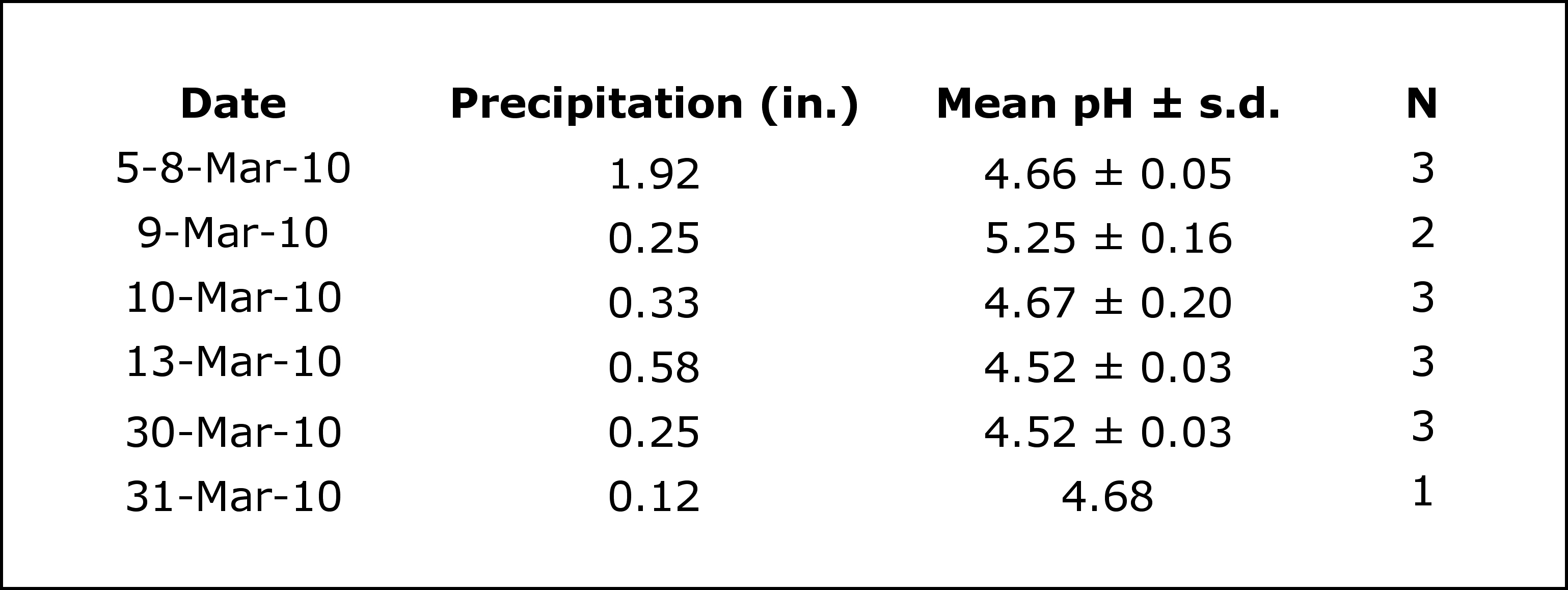
Below are the rainfall amounts and pH results from Big Sur for March 2010. With the notable exception of one rainfall event on the 9th, the pH values in March were a bit lower (more acidic) than average over the past four years (see here, here, here, and here).

Rainfall amounts and pH in Big Sur - March 2010


Acid rain in Big Sur – Feb. 2010 update

8 03 2010

Acid rain falling on Big Sur (photo by Lee Klinger)

Below are the rainfall amounts and pH results from Big Sur for February 2010. In general the pH values are a bit higher (less acidic) than average over the past four years (see here, here, and here).

Rainfall amounts and pH in Big Sur - February 2010

What these and other rainfall pH data show is that the average pH of rainfall events in Big Sur over the past four years fluctuates significantly, with values spanning an entire unit of pH. This means that some events are 10 times more acidic than other events. Who knew that the rainfall pH of individual weather systems varies to such a degree?

Could these fluctuations be due to sampling error? Almost certainly not. After each set of measurements I check the accuracy of the pH meter and sensor using the 4.00 and 7.00 standards used in the calibration. For the 29 sets of samples measured so far this rainy season, the 4.00 and 7.00 standards were measured at 3.99 ± 0.02 and 6.99 ± 0.01, respectively. That darn good accuracy in my opinion.


What is fire mimicry?

8 02 2010

People often ask me why the oaks and other trees in California need to be tended. Oaks have been growing in California for many thousands of years, so why would they need our help now?

The answer is clear. The great oak woodlands and savannas of California are not the result of mother nature doing what she does best. The iconic oaks are largely the product of thousands of years of tending by Native Americans. It is well documented that the native people here managed the oaks with fire, keeping the ecosystem in an early successional state that is optimal for oaks. Acorns from the oaks were a primary food source for the native people of California.

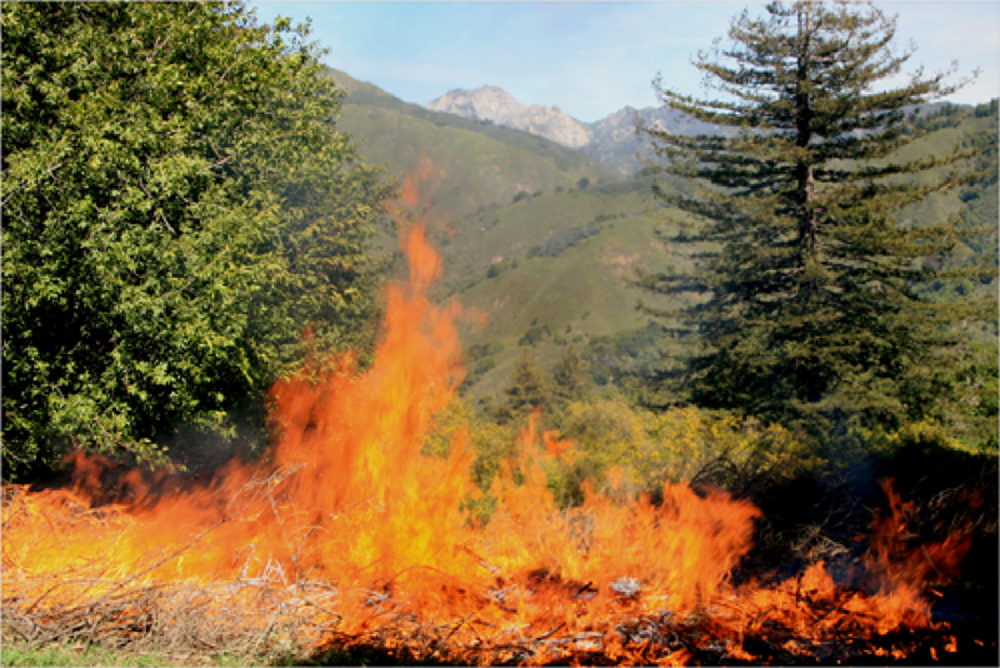
Tending the land with fire in Big Sur (photo by Lee Klinger)

Read the rest of this entry »


Ancient redwoods in decline

21 01 2010

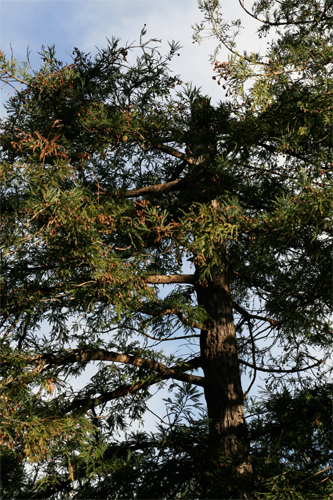
A week or so ago a large redwood tree growing near my home here in Big Sur lost its top. The wind blew hard and broke off the upper part of the redwood as shown in Photo 1. In many places around Big Sur ancient redwood trees have lost their tops during the winter storms. Some of these tops are more than three feet in diameter and you don’t want to be around when they come crashing to the ground.

Photo 1 (photo by Lee Klinger)

I realize, of course, that it is not unusual for large trees to succumb to high winds, but what does seem unusual is that in some groves nearly half of the ancient trees have lost their tops within the past 20 years or so. By all appearances these redwoods have grown healthily together in these groves for three, four, five centuries or more, so why are they suddenly losing their tops?

The answer is not too hard to figure out. Yes, there is acid rain falling in Big Sur (see here, here, and here) and that no doubt has some effect on the redwood ecosystem. But recent changes in land practices, most notably fire suppression, are causing dramatic shifts in the successional status of the redwood forests. In the past the native people set fires that revitalized the soil and kept the young redwoods from crowding out the older ones. Read the rest of this entry »


Acid rain in Big Sur – Dec. 2009 update

5 01 2010

Acid rain continues to fall at my home here in Big Sur. During December 2009 there were seven measurable days of rain with the following values:

Date        Amount      Mean pH          N

Dec. 7         0.29″           4.74              3

Dec. 11       0.42″           4.53              3

Dec. 12       0.53″           4.31              3

Dec. 13       0.62″           4.71              4

Dec. 22       0.20″           4.52              2

Dec. 27       0.19″           4.36              2

Dec. 30       0.23″           4.60              2

The pH readings from Dec. 12 are some of the lowest (highest acidity) yet recorded here in Big Sur in over three years of measurements.

Meanwhile, oaks, pines, and bays are dying by the thousands. Don’t suppose there’s a connection, eh?


A holistic approach to mitigating pathogenic effects on trees

25 12 2009

For those of you who would like to read more about the details of the science and techniques involved in fire mimicry practices for oak restoration, here is a paper I wrote last year:

A holistic approach to mitigating pathogenic effects on trees

by Lee Klinger MA PhD

Presented at: Treework Environmental Practice Seminar XII
National Museum Cardiff, Cardiff, UK – 13th November 2008

Summary

The conventional ‘disease model’ approach to tree health focuses on identifying and controlling a specific pathogen (or pest) implicated as the causal agent of tree decline. Alternatively there are more holistic approaches in tree health that address a broader suite of processes occurring at the ecosystem level which may be predisposing the trees to infection by disease. Here I describe a holistic methodology that takes into account not only the proximal agents involved in tree decline, but also the age and structure of the forest, the abundance of cryptogams, the fire history, the acidity of the precipitation, the fertility of the soil, and the historical land care practices. This methodology is being implemented in the oak forests of coastal California which are experiencing high levels of mortality attributed, by most scientists, to the pathogen Phytophthora ramorum (aka sudden oak death). Evidence reported here of 1) acid rain, 2) acidifying effects of mosses and lichens, 3) the presence of acidic and nutrient deficient soils, and 4) a much lowered incidence of disease in recently burned areas, points to the likelihood that fire suppression has radically altered the structure and successional status of the forests, leading to enhanced competition and systemic acidification. Case study results of sick and diseased coast live oaks receiving holistic care, aimed not at treating P. ramorum but at reducing the environmental acidity, fertilizing the soils, and otherwise mimicking the effects of fire, show noticeable improvement in the health of the oaks after one year (78%, n=152), with further improvement in years two (84%, n=134) and three+ (81%, n=80). While the results do not indicate that the incidence of P. ramorum has changed significantly in the population of treated oaks, there is evidence that the sick, non-diseased trees are better able to resist infection.

Download the complete paper here.