Acid rain in Big Sur – March 2011

10 04 2011

Quadruple rainbow over Black Rock desert in Nevada, 2010. Photo by Valerie Velardi.

Update: After a bit of searching I have found that the photo above actually depicts a supernumerary rainbow, not a true quadruple rainbow.

March was a particularly wet month in Big Sur with 8.81” of rain measured at my home, compared to the March average of 5.60” over the past 10 years measured at Big Sur station, just a mile or so away. The wet March triggered landslips and mudslides that closed Highway 1 and prevented me from getting home to record the pH during the height of the rains. (As of this writing, Highway 1 is still closed between Big Sur and Carmel with a projected opening date of early May.) However, I was able to record the pH of four rainfall events and the data are shown below. Read the rest of this entry »


Hearst Castle oaks after five years of fire mimicry

13 01 2011

Last week I visited Hearst Castle and re-photographed the oaks that have been undergoing treatments with fire mimicry for the past five years. Below are the results. Note that the last two oaks of this series are included as untreated controls. Last year’s results can be seen here.

Read the rest of this entry »


Acid rain in Big Sur – December 2010

3 01 2011

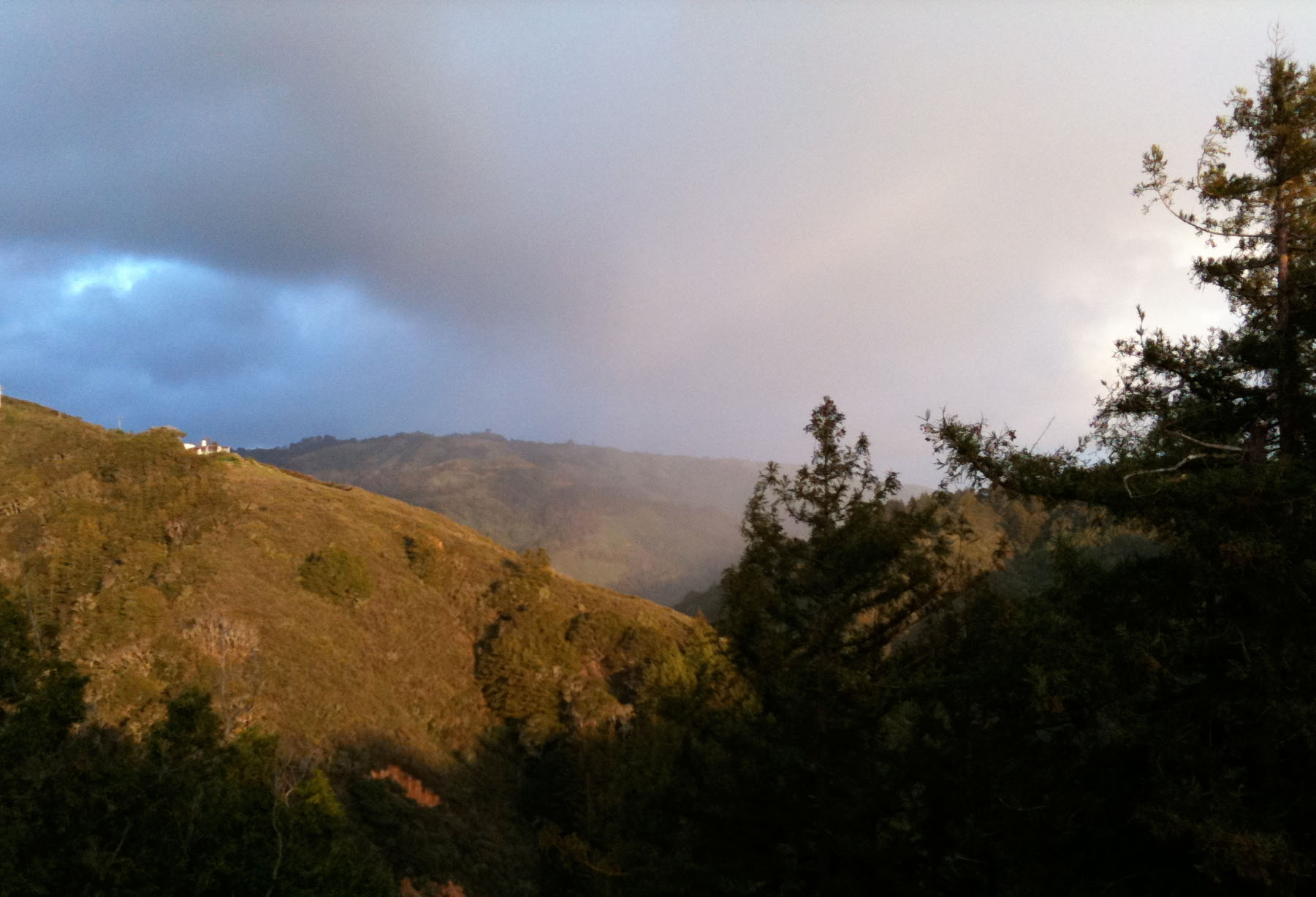
Big Sur coast, December 2010 (photo by Lee Klinger)

The December 2010 rain pH data for Big Sur are in and the results are posted in the table below. Note that I was away on travels during November 2010 , so I do not have pH data to report for that month. Rainfall amount, however, was recorded and totaled 1.89″ (h/t Lauren Gamblin). Read the rest of this entry »


Ecoliteracy in Action

29 11 2010

On December 18 I will be speaking at the Ecoliteracy in Action course being held at Esalen Institute in Big Sur, CA at the invitation of Kat Steele, the course coordinator. The title of my talk is “Gaia theory and climate change”. Prior to my talk on the 18th my good friend Daniel Peterson will be presenting on “Primitive skills and the Esselen tribal ways”, a discussion and hands on workshop relating to living off the land and crafting tools from natural materials. See the flyer below:


Acid rain in Big Sur – October 2010

31 10 2010

The first rains of the season have fallen here in Big Sur and the data are rather surprising . . .

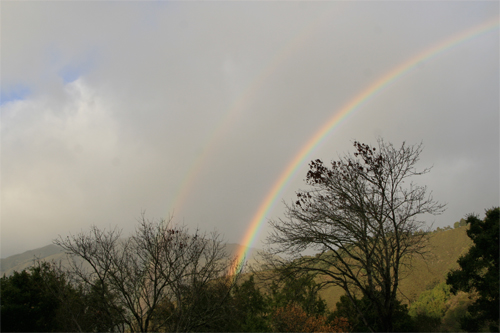
Another double acid rainbow in Big Sur (photo by Lee Klinger)

Read the rest of this entry »


Acid rain in Big Sur – 2009-2010 rain year summary

16 06 2010

During the 2009-2010 rainy season the precipitation gauge at my home here in Big Sur received a total of 36.24” of rain, which was more than the totals for any of the previous three years. It was a particularly long rainy season, lasting from October 13, 2009 to May 28, 2010.

Double acid rainbow in Big Sur (photo by Lee Klinger)

With regards to rain pH there were 39 measurable events with a mean volume-weighted pH (± s.d.) of 4.80 ± 0.13. The lowest pH reading this past rain year was 4.37 recorded on December 27, 2009, and the highest pH reading was 5.65 recorded on May 18, 2010. Read the rest of this entry »


Acid rain in Big Sur – April 2010 update

1 05 2010

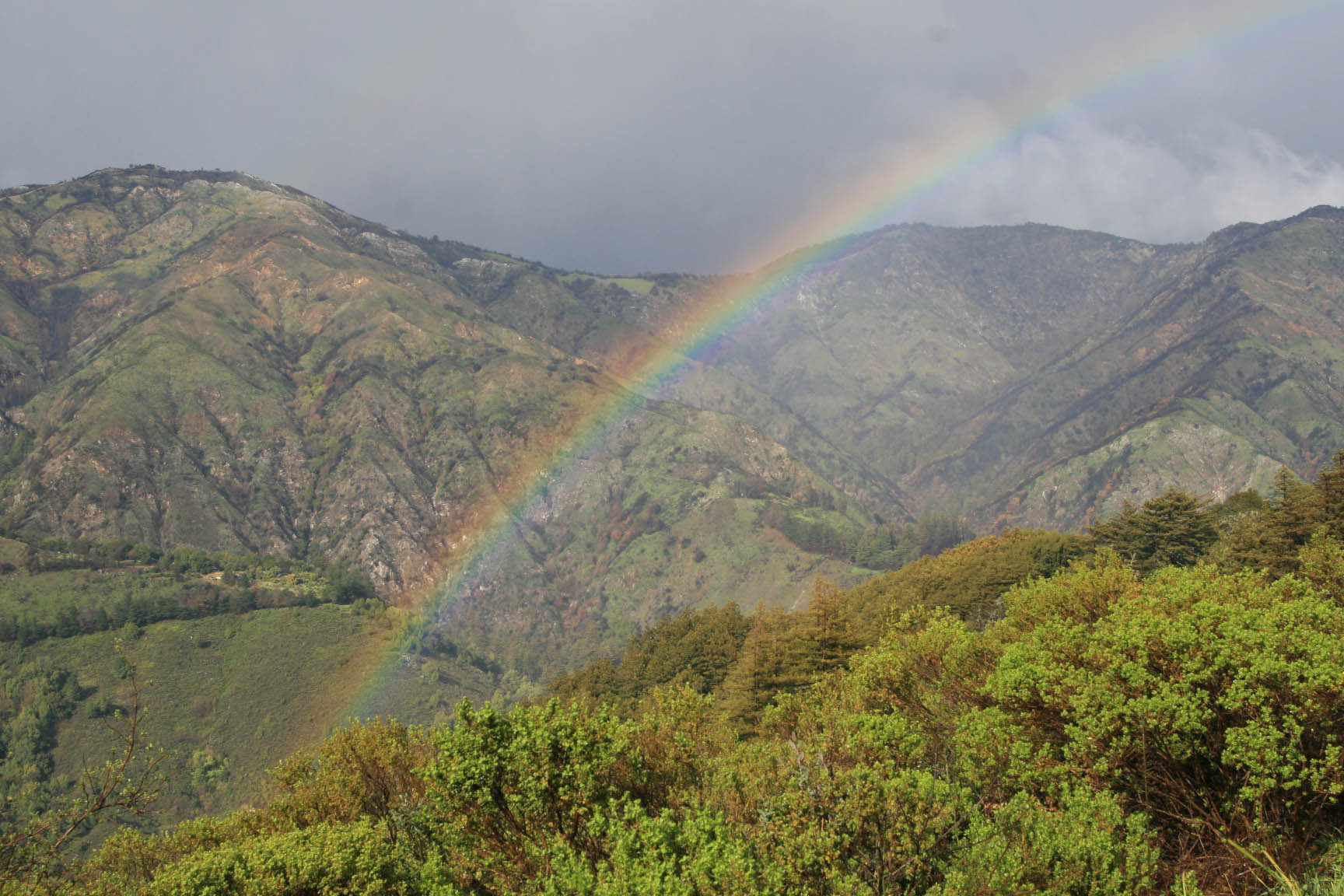
Acid rainbow over Big Sur (photo by Lee Klinger)

April numbers are in for the rain pH in Big Sur. Precipitation total was 6.12″ for April and pH readings were made for seven rainfall events. The April values shown below are tending slightly higher (less acidic) than previous readings (see here, here, here, here, and here).

Rainfall amounts and pH in Big Sur - April 2010


Acid rain in Big Sur – March 2010 update

7 04 2010

Another acid rainbow in Big Sur (photo by Lee Klinger)

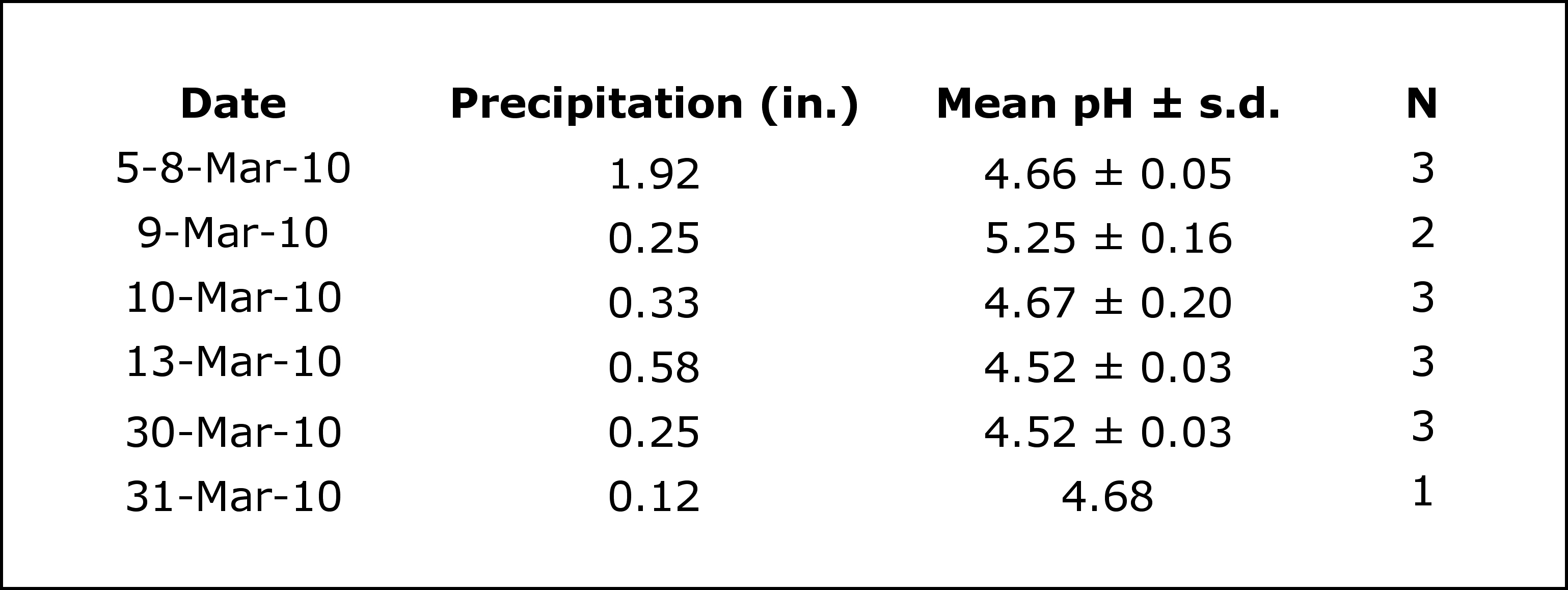
Below are the rainfall amounts and pH results from Big Sur for March 2010. With the notable exception of one rainfall event on the 9th, the pH values in March were a bit lower (more acidic) than average over the past four years (see here, here, here, and here).

Rainfall amounts and pH in Big Sur - March 2010


Acid rain in Big Sur – Feb. 2010 update

8 03 2010

Acid rain falling on Big Sur (photo by Lee Klinger)

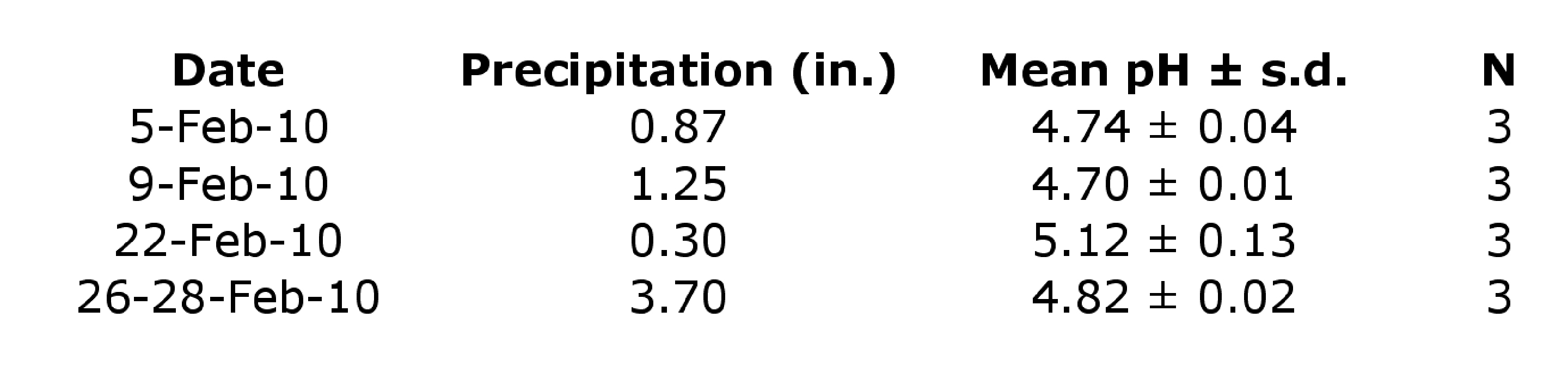
Below are the rainfall amounts and pH results from Big Sur for February 2010. In general the pH values are a bit higher (less acidic) than average over the past four years (see here, here, and here).

Rainfall amounts and pH in Big Sur - February 2010

What these and other rainfall pH data show is that the average pH of rainfall events in Big Sur over the past four years fluctuates significantly, with values spanning an entire unit of pH. This means that some events are 10 times more acidic than other events. Who knew that the rainfall pH of individual weather systems varies to such a degree?

Could these fluctuations be due to sampling error? Almost certainly not. After each set of measurements I check the accuracy of the pH meter and sensor using the 4.00 and 7.00 standards used in the calibration. For the 29 sets of samples measured so far this rainy season, the 4.00 and 7.00 standards were measured at 3.99 ± 0.02 and 6.99 ± 0.01, respectively. That darn good accuracy in my opinion.


What is fire mimicry?

8 02 2010

People often ask me why the oaks and other trees in California need to be tended. Oaks have been growing in California for many thousands of years, so why would they need our help now?

The answer is clear. The great oak woodlands and savannas of California are not the result of mother nature doing what she does best. The iconic oaks are largely the product of thousands of years of tending by Native Americans. It is well documented that the native people here managed the oaks with fire, keeping the ecosystem in an early successional state that is optimal for oaks. Acorns from the oaks were a primary food source for the native people of California.

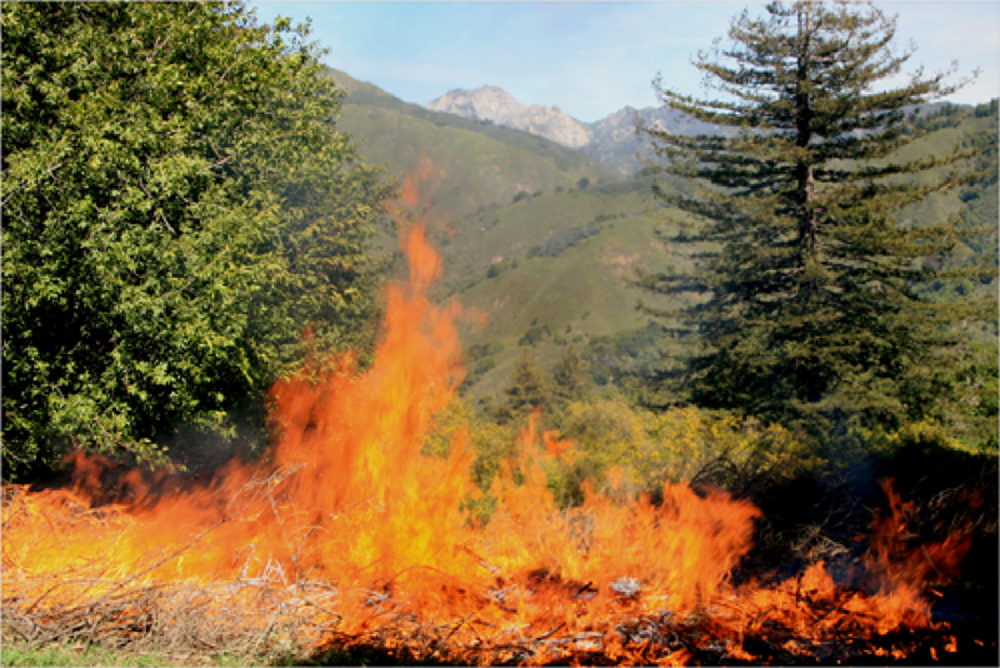
Tending the land with fire in Big Sur (photo by Lee Klinger)

Read the rest of this entry »