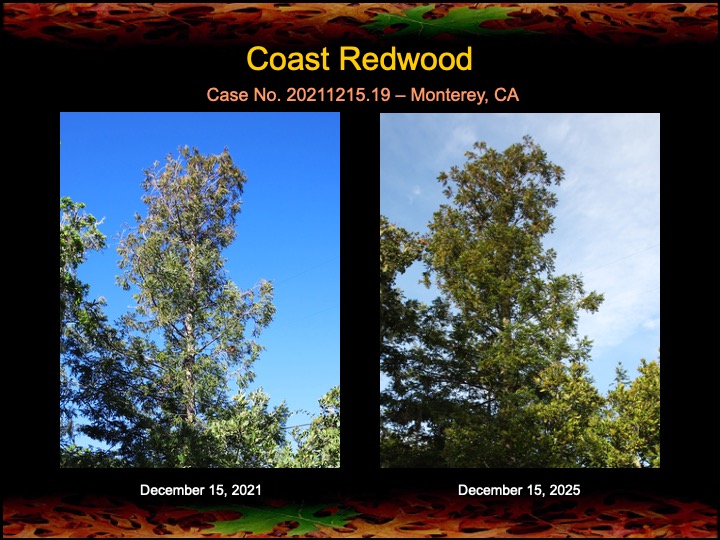
Tomorrow is winter solstice and I would like to celebrate by sharing with you a redwood tree that I’ve been tending with fire mimicry for the past four years. All images were taken on the same date and at the same time of day. Enjoy!
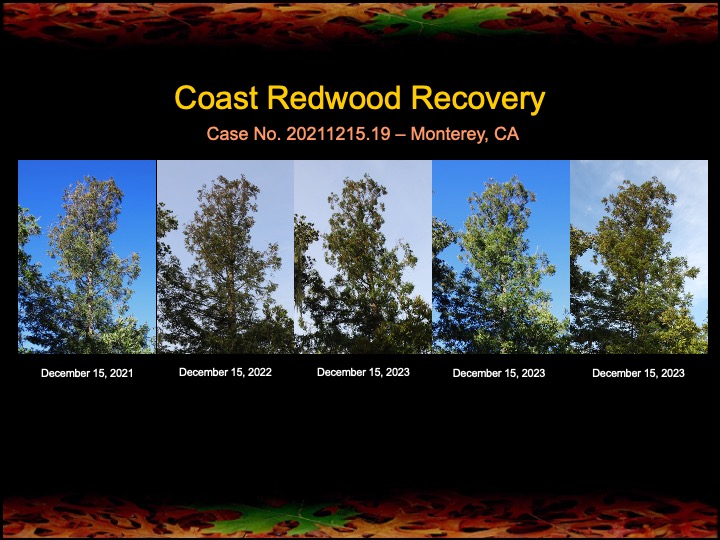
Tomorrow is winter solstice and I would like to celebrate by sharing with you a redwood tree that I’ve been tending with fire mimicry for the past four years. All images were taken on the same date and at the same time of day. Enjoy!
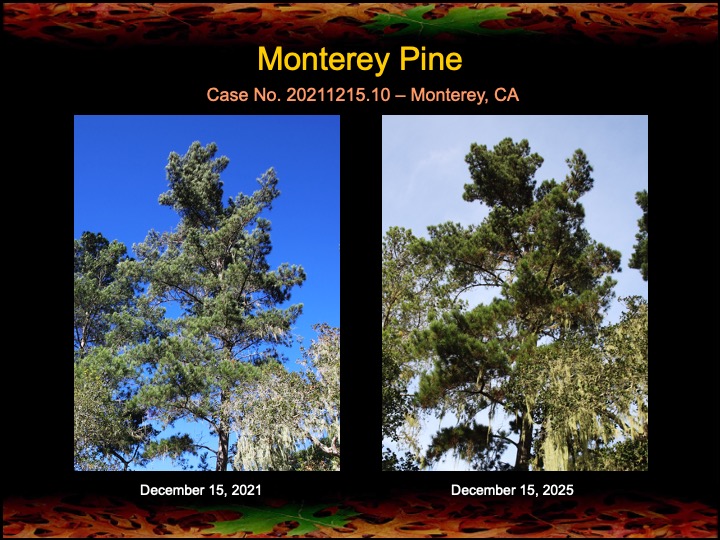
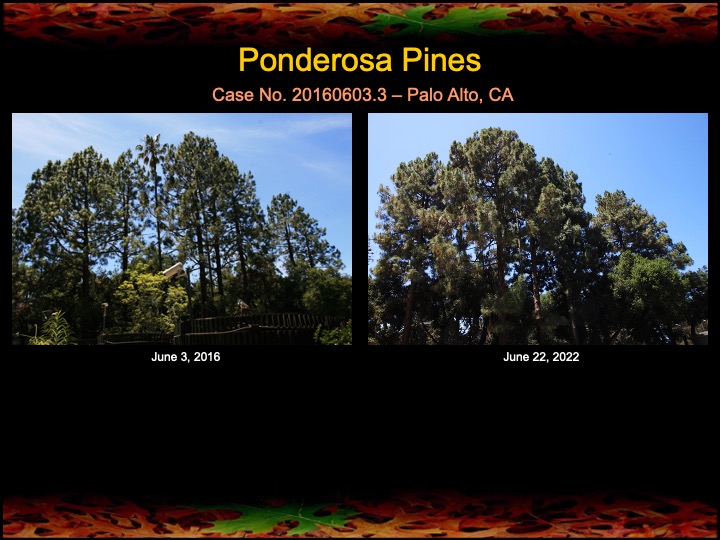
Yesterday I checked up on a grove of Monterey pines that have had a couple of fire mimicry treatments …
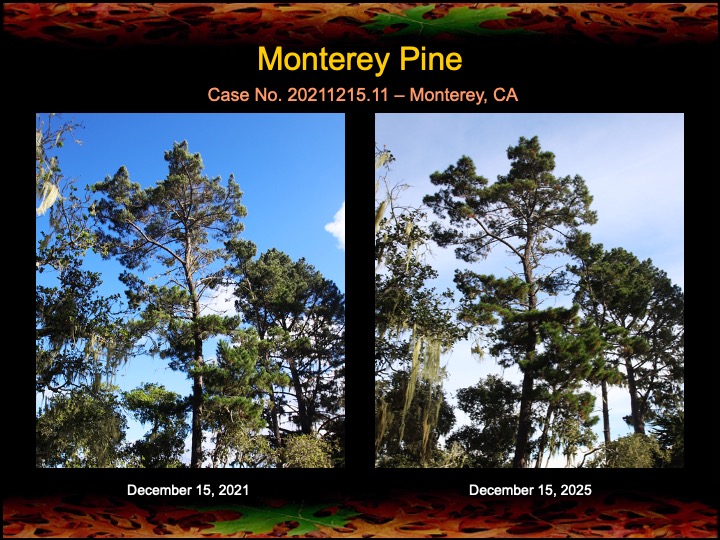

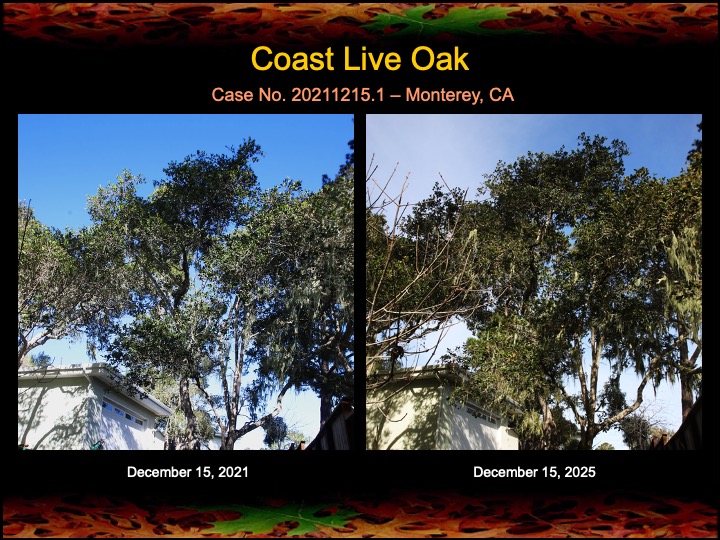
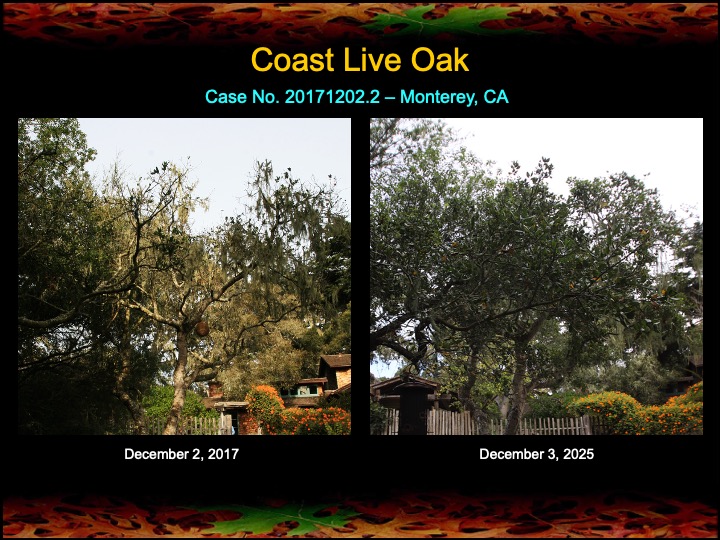
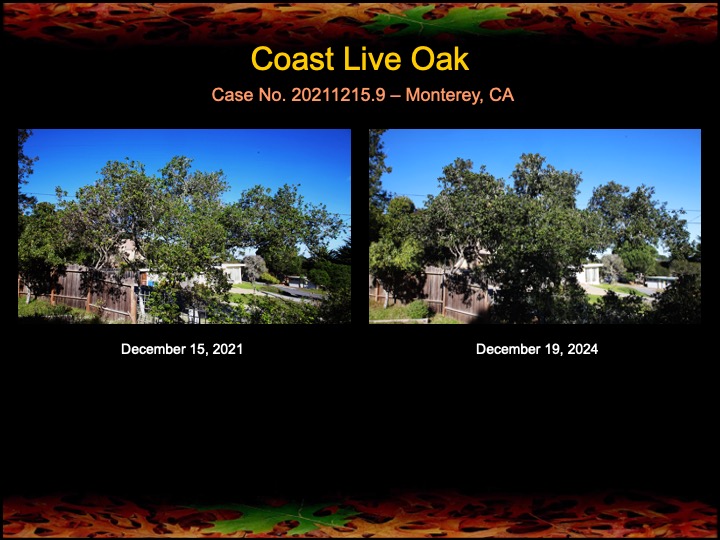
Four years ago I began fire mimicry treatments on a grove of coast live oaks overlooking Monterey, CA. I’m quite pleased with the results but I’ll let trees speak for themselves …
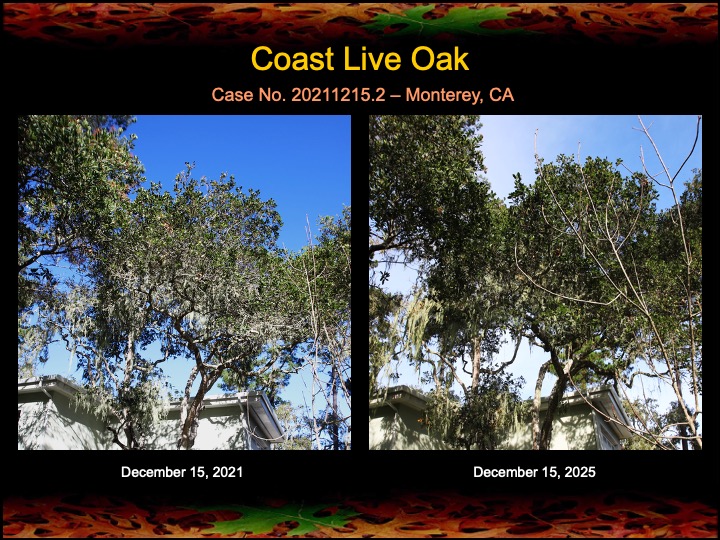

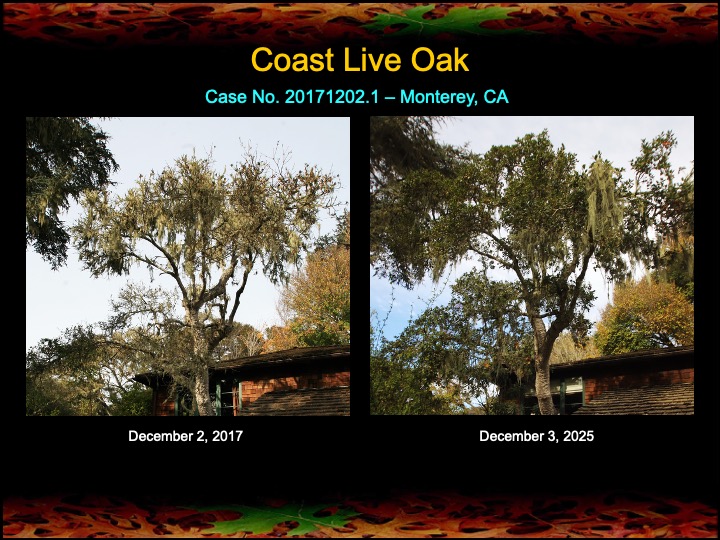
Last year I shared a post on a non-toxic treatment for oakworm infestations here on the Central Coast of California. In that post I stated:
“In 2017 there was a severe oakworm infestation of coast live oaks in the Monterey region and elsewhere. I’m often contacted at these times by property owners concerned about their oaks. Many wish to spray the trees with insecticides to reduce the infestation. Upon my advice, I tell property owners that spraying chemical insecticides is not necessary for the oaks to recover from these infestations, provided they are given proper care. Since the oakworm infestations are related to a lack of cultural fires, which controlled their populations in the past, a way forward is to emulate fire effects on the forest ecosystem.
Thus, rather than using chemical sprays as is typically recommended by arborists, I prefer using fire mimicry treatments to oak trees infested with oakworm. In the present case study I recommended to the property owner to do fire mimicry treatments instead of spraying the oaks. Never knowing for sure, I explained to them that the oaks would likely recover from the infestation, and that they would show continued improvement in the following years. A second set of fire mimicry treatments were preformed the following year (2018).”
The repeat photo sets shown last year and the new ones from this year indicate that the oaks have continued to maintain healthy canopies following the 2017 oakworm infestation.
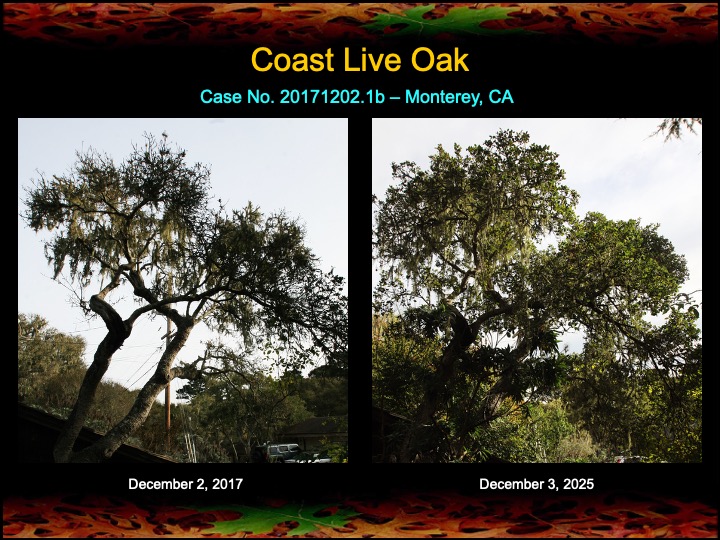

This is a 2017 image of an old-growth coast live oak in Monterey that I’ve been treating with fire mimicry for eight years. At that time it had bleeding stem canker infection, possibly Sudden Oak Death disease or Armillaria (oak root rot), at the base of the trunk. After the initial soil fertilization treatments I performed a surgery on December 2, 2018 to remove, cauterize, and poultice the canker infection.
Here are the results:

After seven years the surgical wound has shown continuous healing with no residual signs of infection! The oak’s canopy density has also increased during this time (see photo set below).
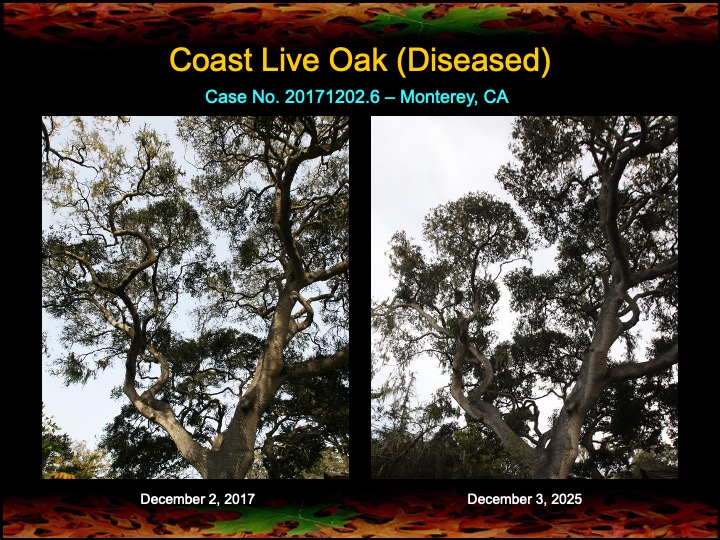
I’m calling this a win against oak disease!

Yesterday I examined a grove of coast live oaks that have undergone fire mimicry treatments for the past five years. Some of these oaks are centuries old and show signs of being tended by the Native Awaswas People. Here are the latest before-and-after photos showing a significant increase in health of the canopy foliage in ALL of the treated oaks. Enjoy!


(The above photo set may appear to be of different locations, but they are both taken from nearly the same spot.)
Read the rest of this entry »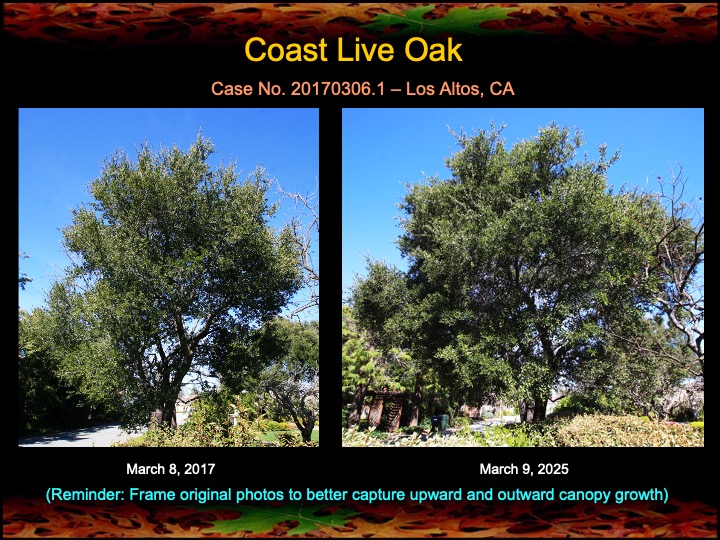
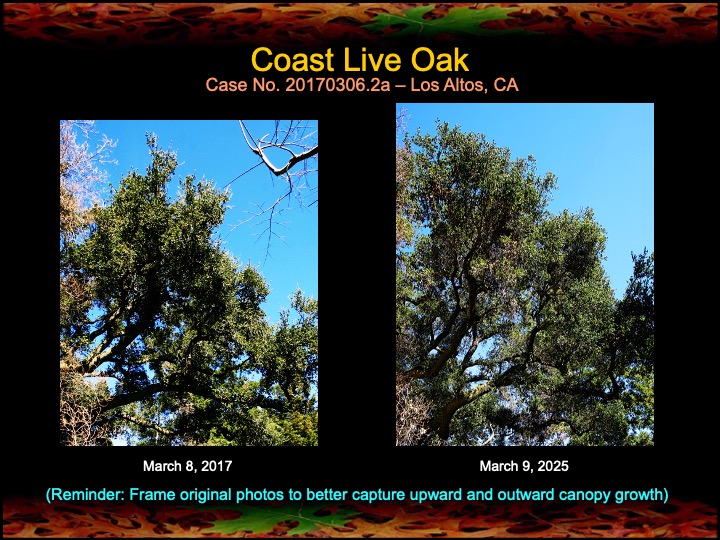
Eight years of tending these coast live oaks and coast redwoods with fire mimicry. (Note to self – widen frames of original photos to better capture future upward and outward canopy growth)


Here I present new findings of the positive effects of fire mimicry of which I was previously unaware. On several occasions I’ve documented, via time-lapse videos, the process of clearing, thinning, and pruning of oaks to eliminate the ladder fuels and reduce the competition from shrubs and young trees. The above video is a compilation of several time-lapse videos coast live oaks I’ve treated with fire mimicry. When examining these videos carefully, it is clear to me that there is an additional consequence of these treatments that I had not previously realized, which is that the level of the lower canopies, and in some cases even the upper canopies, is noticeably increased in height after fire mimicry treatments. Higher branches allow more sunlight to leaves, thus increasing photosynthetic rates, all while reducing the fire hazard. That seems pretty cool!
For more than two decades the decline and death of California’s oaks has been a matter of serious concern. In 2000 the California Oak Mortality Task Force (COMTF) was formed and members of the task force have received over $50 million in funding to address this problem. I attempted to become a member of the COMTF in the early 2000’s and applied several times for funding, but to no avail. The problem was seen then, as it still is, as pathological (say the pathologists) not ecological (say me).
That cold shoulder turned out to be a fine move for the dying oaks, as it forced me to stop studying the problem and start trying to fix it. Hence “Sudden Oak Life” was born and ever since I have been showing the fruits of my labor. While the title of this post may be news to many, it is old news to the long-time followers of this work. In the archives of this blog that span two decades are photos of THOUSANDS of oaks showing that in most cases their decline can be reversed.
Shown here are photo sets of 16 ailing coast live oaks in Monterey CA treated with fire mimicry showing their progress after three years. Most of the oaks exhibit a notable increase in canopy density and many appear greener.
More evidence that California oak mortality is reversible! Enjoy …



 Sudden Oak Life by Lee Klinger
Recent Comments