

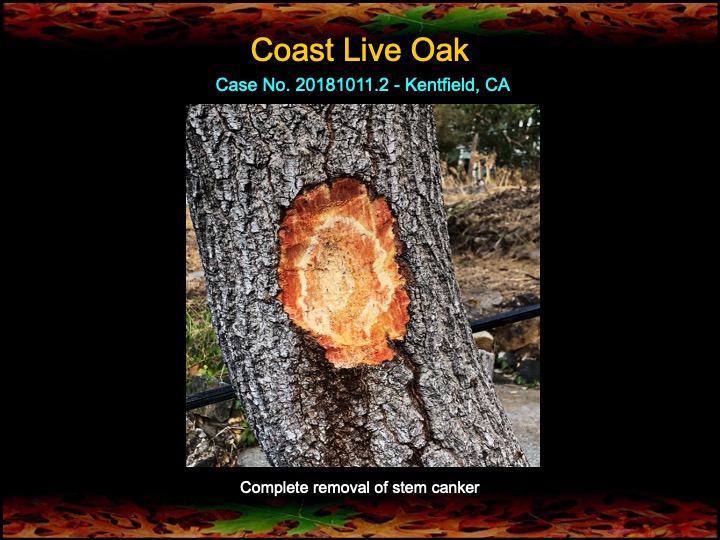
In 2018 I began fire mimicry treatments on a grove of coast live oaks in Kentfield, CA. One of the oaks started showing signs of a stem canker infection (probably Sudden Oak Death disease) in 2019. So I performed a surgical procedure to remove the canker, and have continued to treat this oak with compost tea, mineral-rich soil fertilizers, and limewash. Here are photos of the surgery and recovery of the wound and canopy. Be sure to look at the last picture of this series …


Here are various coast live oaks that have continued to respond to fire mimicry treatments over the course of 5, 8, and 10 years. Several have been affected by stem canker disease, probably Sudden Oak Death, but all have survived and most have improved in canopy density and lushness.


My latest results of coast live oaks before and after fire mimicry treatments.


Here is a sick coast live oak with a stem canker infection (probably Sudden Oak Death). At that time a surgical procedure was performed to remove and cauterize the canker (see original post here). After one and a half years this oak has made a significant recovery, both in the healing of the surgical wound and in the lushness of the canopy. Note that there is no further bleeding or other symptoms of stem canker infection. More evidence for the efficacy of fire mimicry.


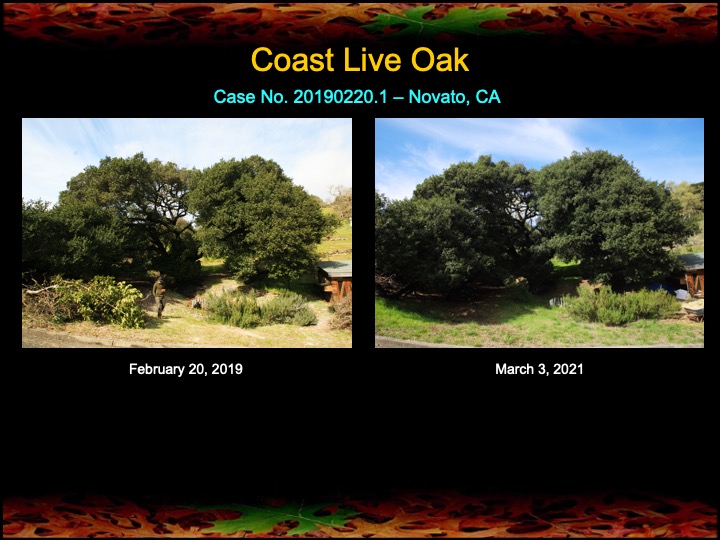
The coast live oak above is about 5 feet in diameter and clearly dates from a time when the Coast Miwok Indians tended the land. The oak has obvious signs of being pollarded, with numerous lateral boles growing outward from a point about 4 feet above the base of the trunk. I suspect this tree is around 500 years old.
Two years ago we treated this oak and neighboring trees with fire mimicry, which involved clearing brush, pruning, removing moss and lichens from the base, fertilizing the soils, and applying a imewash to the trunk. Last year I returned to fertilize the soils again, reapply the limewash, and to surgically remove a stem canker infection (probably Sudden Oak Death) from the trunk of the large oak above. A few days ago I inspected the trees and found significant improvement in their health after only two years! Keep in mind that this past year this region has been in a significant drought. Seems these trees have something to say about taking an ecological/cultural approach to their care …


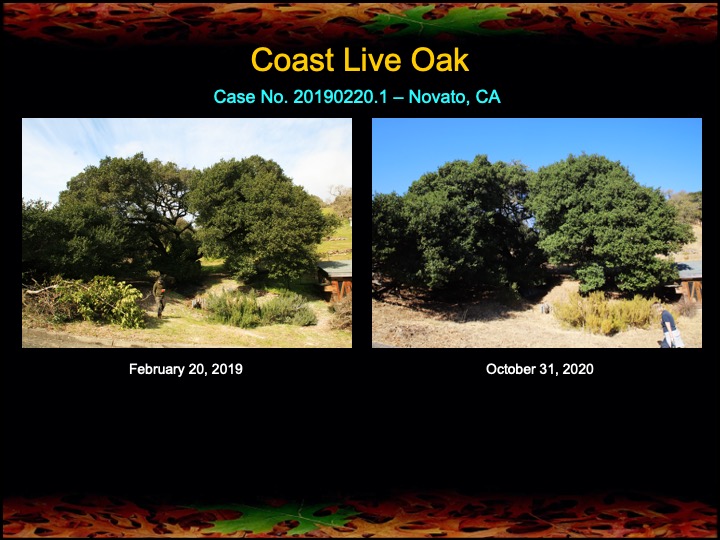
The above coast live oak is a ~500 year old coast live oak that was clearly pollarded by resident Coast Miwok people. I recently inspected this and several other coast live oaks treated with fire mimicry in February of 2019. Due to the difference in time of year of the photos these results are not exact comparisons. Still, significant improvement in canopy density and lushness is apparent in all the oaks, except for the untreated (control) oak shown in the final image.


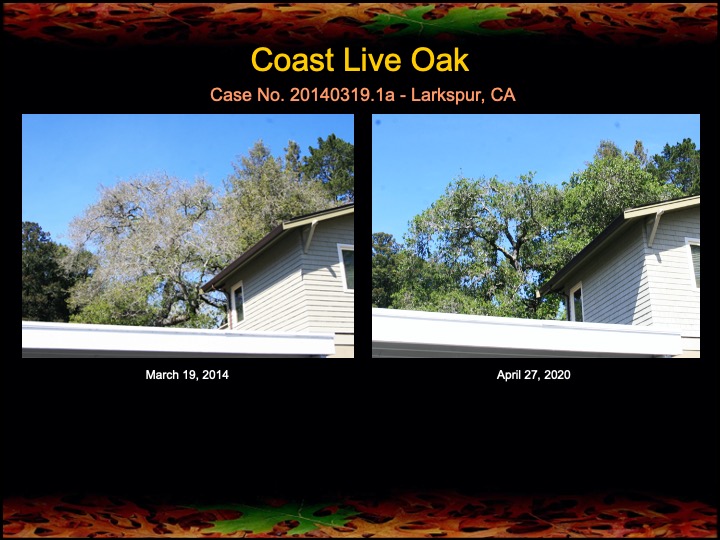
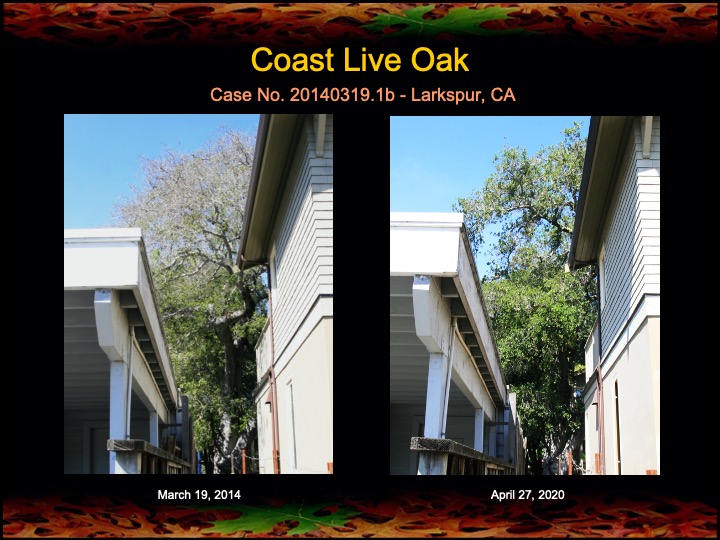
Last week I inspected several coast live oaks that have received fire mimicry treatments for the past four years. The above and below photos show the results. Most of the oaks are showing noticeable imrpovement in canopy density, although two of the oaks do not show much change. Fortunately, these oaks have remained mostly free of disease.
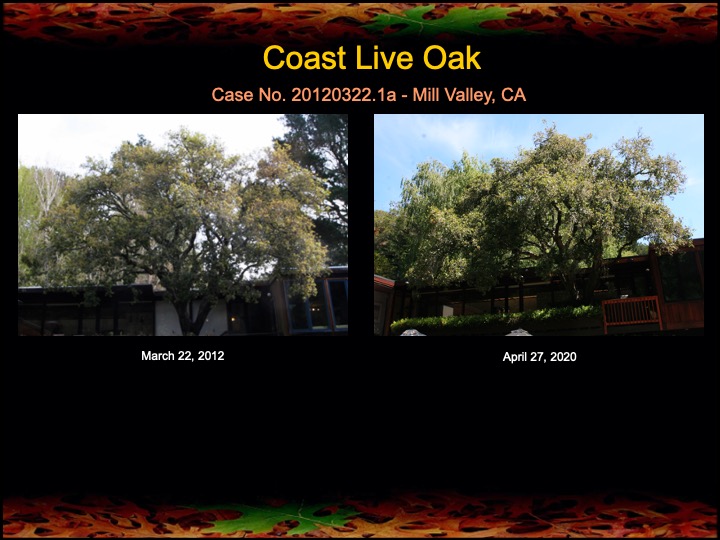
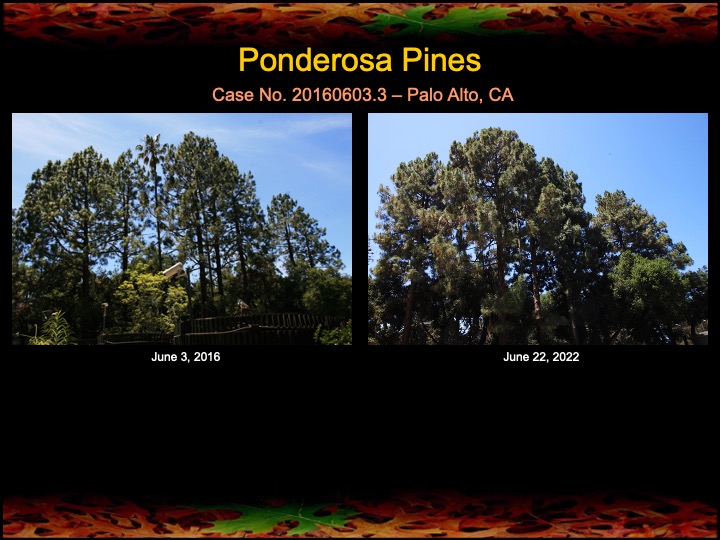
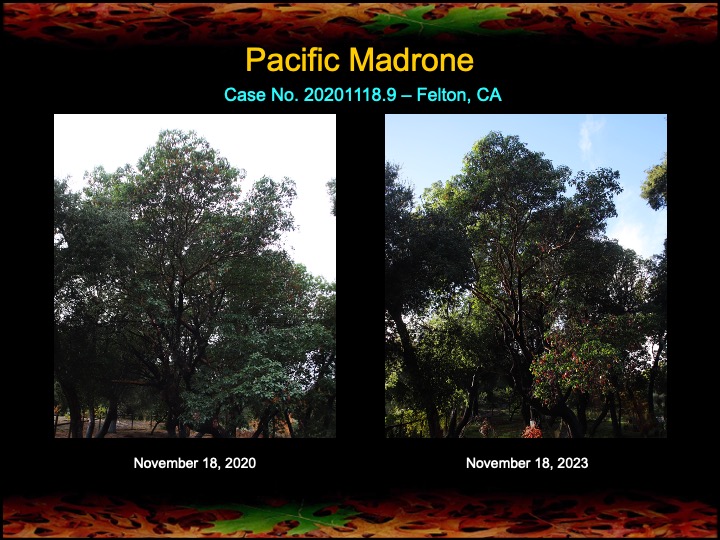
Today I inspected several oaks, pines, and redwood trees that have received fire mimicry treatments in recent years. The coast live oak above has been treated periodically for 8 years. The results shown above and below provide encouraging news about our ability to bring sick and diseased trees back to health using an ecological approach to tree care.
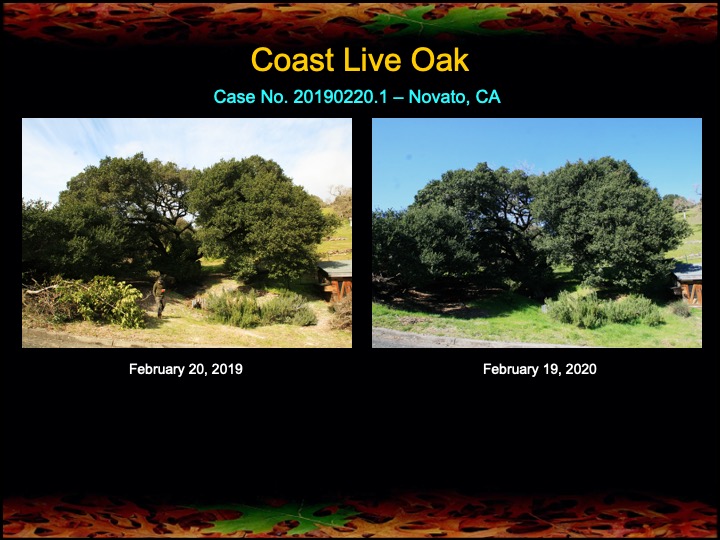
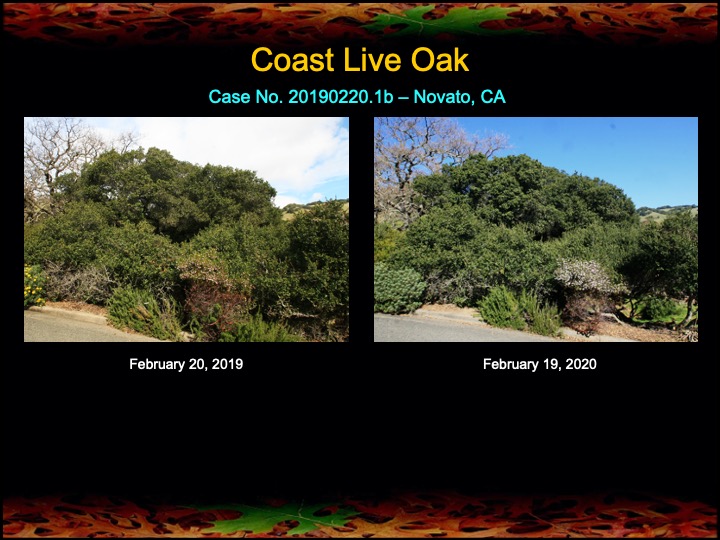
Last year I began fire mimicry treatments on three coast live oaks in Novato, CA. The first oak, shown in the images above and below (Case Nos. 20190220.1 & 20190220.1b), is an ancient Miwok-era oak with an estimated age of more than 300 years. It was in fairly good health when I treated it and is now showing an even denser canopy than before. Also, note that the last photo set in this series shows two oaks, one treated and the other untreated. The untreated oak is showing some increased browning of the canopy, while the treated oak is showing a clear increase in canopy density.


 Sudden Oak Life by Lee Klinger
Recent Comments