A single fire mimicry treatment is not effective for longterm oak recovery

30 04 2016

Slide1

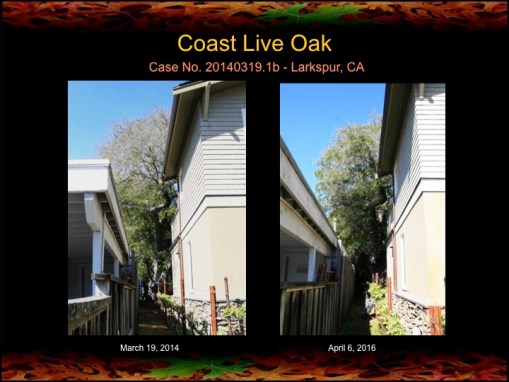
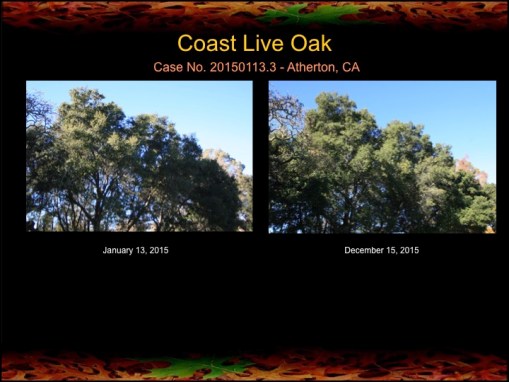
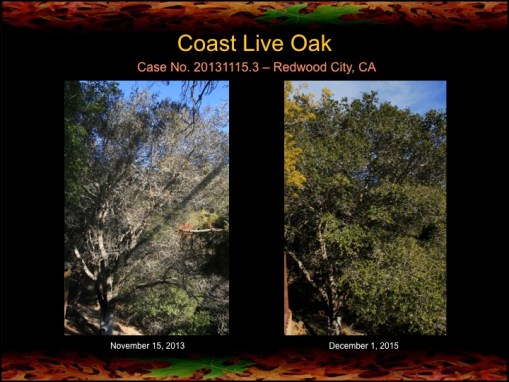
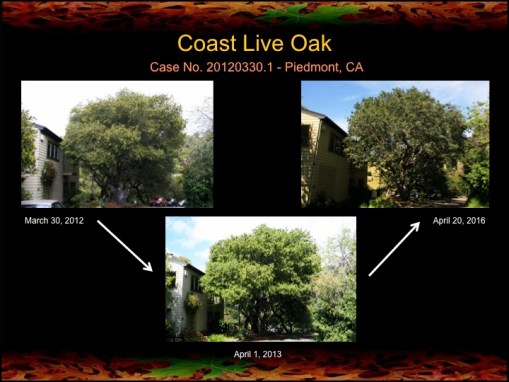
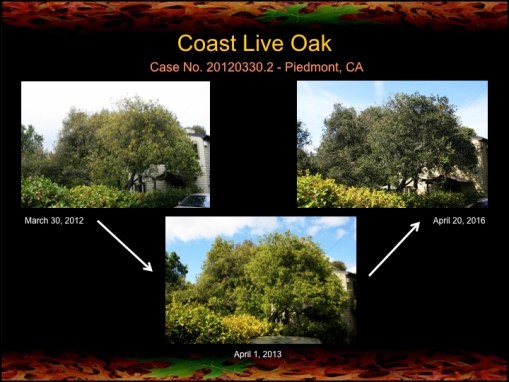
I recently inspected a grove of oaks that I treated with fire mimicry methods four years ago. Two of these oaks have stem canker infections, possibly Sudden Oak Death, that were present before the oaks were treated. As the photo sets show, the oaks responded dramatically after only one year. The property owners, pleased with the results, opted to not continue treatments of their oaks despite my recommendation that the oaks receive at least three annual treatments. While some of the oaks are still showing improvement four years after the 2012 treatment, these photos demonstrate that the oaks have undergone a clear decrease in canopy density after the initial response. I believe this decline is because they did not receive followup treatments.

Consider the huge volume of soil encompassed by the roots of an oak tree. These soils have been undergoing nutrient depletion for however long its been since a fire last burned, decades, perhaps centuries ago. Reconditioning this large volume of soil by replacing lost nutrients, especially alkaline-rich minerals, takes a significant effort that requires fertilization over several years.

These results further demonstrate the efficacy of the fire mimicry approach. Not only is there a positive response when we apply these methods, there is also a negative response when we forgo these methods.
Slide2 Read the rest of this entry »


Diseased oaks in Marin respond quickly to fire mimicry

25 04 2016

Slide1

Last April (2015) I was contacted by a home owner in Ross, CA (Marin County) regarding a very sick coast live oak tree (above) growing near his home. I promptly inspected the oak and found it was badly infected with a stem canker disease (probably Sudden Oak Death) and told him that I was not optimistic it could be helped. During my inspection I found few other oaks with SOD-like cankers. He asked that I try the fire mimicry techniques to see if they would help his sick oaks.

I visited the oaks last week to inspect and photograph their response. The photos show that the very sick oak has surprisingly responded with a nice flush of leaves in just one year. Several of the other sick oaks have also shown a good response (see below). The sick oak still has a severe stem canker infection and may not survive in the long run, but this is further evidence that we can improve the health and extend the lives of diseased oaks.

Slide2 Read the rest of this entry »


Oak restoration at Esalen Institute

24 04 2016

Slide4

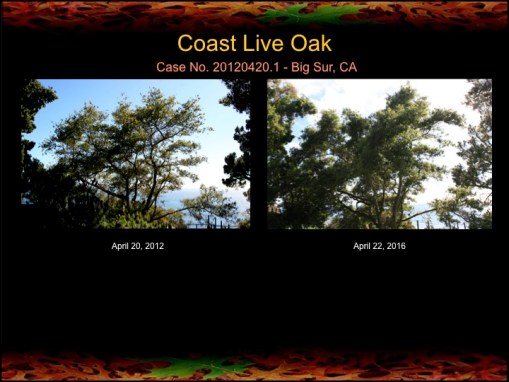
This past Earth Day (April 22) I visited Esalen Institute in Big Sur and spoke on results of forest restoration using fire mimicry in California to the farm and garden staff. I also had the occasion to inspect and photograph several oaks that were treated with fire mimicry at an Earth Day event in 2012. These photos show pretty remarkable improvement in the canopy size and density of the oaks over the past four years, with one exception. The last oak in the photo sets below is in a very windy location. It has shown slight improvement over the years, but this year is exhibiting some browning of the leaves. I suspect this browning is a result of the very dry conditions in 2015. All of these oaks will receive another round of care this spring. Many thanks to the Esalen community for their support of this oak restoration effort!

Slide1 Read the rest of this entry »


Ponderosa pines responding to fire mimicry

10 04 2016

There is a small grove of ponderosa pines up in Sonoma county being tended with fire mimicry techniques. I’ve been tracking their progress for 6 years and, while slow to respond initially, they are now showing noticeable improvement in canopy density. All the pines below have been treated EXCEPT for the last pine.

Slide24

Slide23 Read the rest of this entry »


Marin and Sonoma oaks respond to fire mimicry

10 04 2016

Below are photo comparisons of several coast live oaks that have been treated with fire mimicry techniques over the past few years. Some of the oaks have bleeding stem cankers, possibly Sudden Oak Death disease, though most appear uninfected. Positive responses in canopy density are visible in most of the oaks.

Slide2

Slide1

Slide2 Read the rest of this entry »


Rapid response by oaks to fire mimicry treatment

16 12 2015

Slide02

The coast live oaks and one bay laurel in these photos were treated nearly one year ago with fire mimicry. Several of these oaks had stem canker infections (probably Sudden Oak Death), so I used a surgical procedure to remove the cankers on these oaks. The near-term results are impressive and show that oaks can respond rapidly (less than one year) to mindful tending of the plants and soils.

Someday many others will awake to this revolution happening in the oaks forests of California. For my part, that day will arrive one tree at a time . . .

Slide03 Read the rest of this entry »


Oaks responding to fire mimicry after just two years

4 12 2015

Slide3

I started fire mimicry treatments on these oaks just two years ago. I’ll let these photos tell you the rest of the story . . .

Slide2 Read the rest of this entry »


Eleven years of fire mimicry . . .

2 12 2015

Slide1

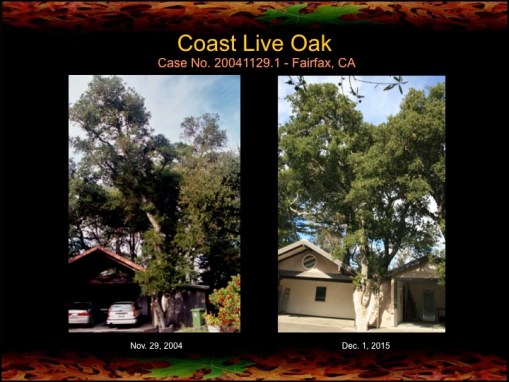
Eleven years ago I began fire mimicry treatments on several coast live oak trees in Fairfax, CA. These oaks represent the longest record of fire mimicry results to date. The oak shown above has had a bleeding canker (probably Sudden Oak Death) for the entire time, and clearly demonstrates that infected trees can survive with proper care for many years. For most of the time, Leith Carstarphen has been implementing the treatments, and as you can see from the photos here he has done and excellent job! Please check out Leith’s website at ecologiclandscaping.com.

Slide2 Read the rest of this entry »


Grandfather oak revisited

4 08 2015
Grandfather oak before and after 7.5 years of healing.

Grandfather oak before and after 7.5 years of healing.

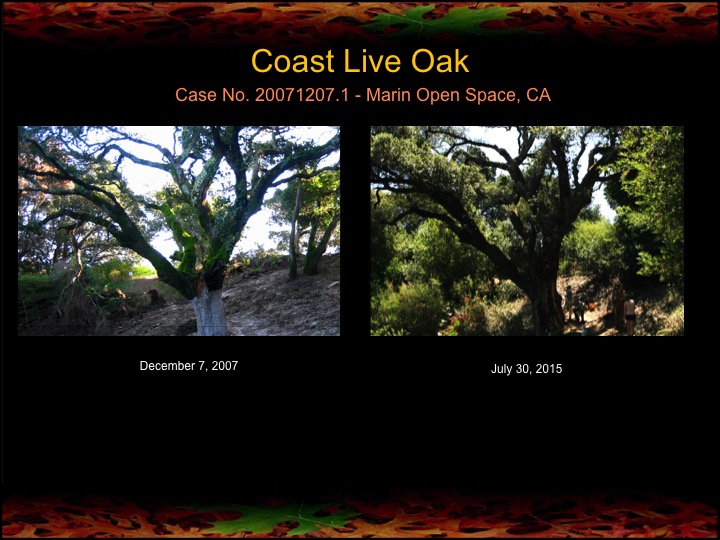
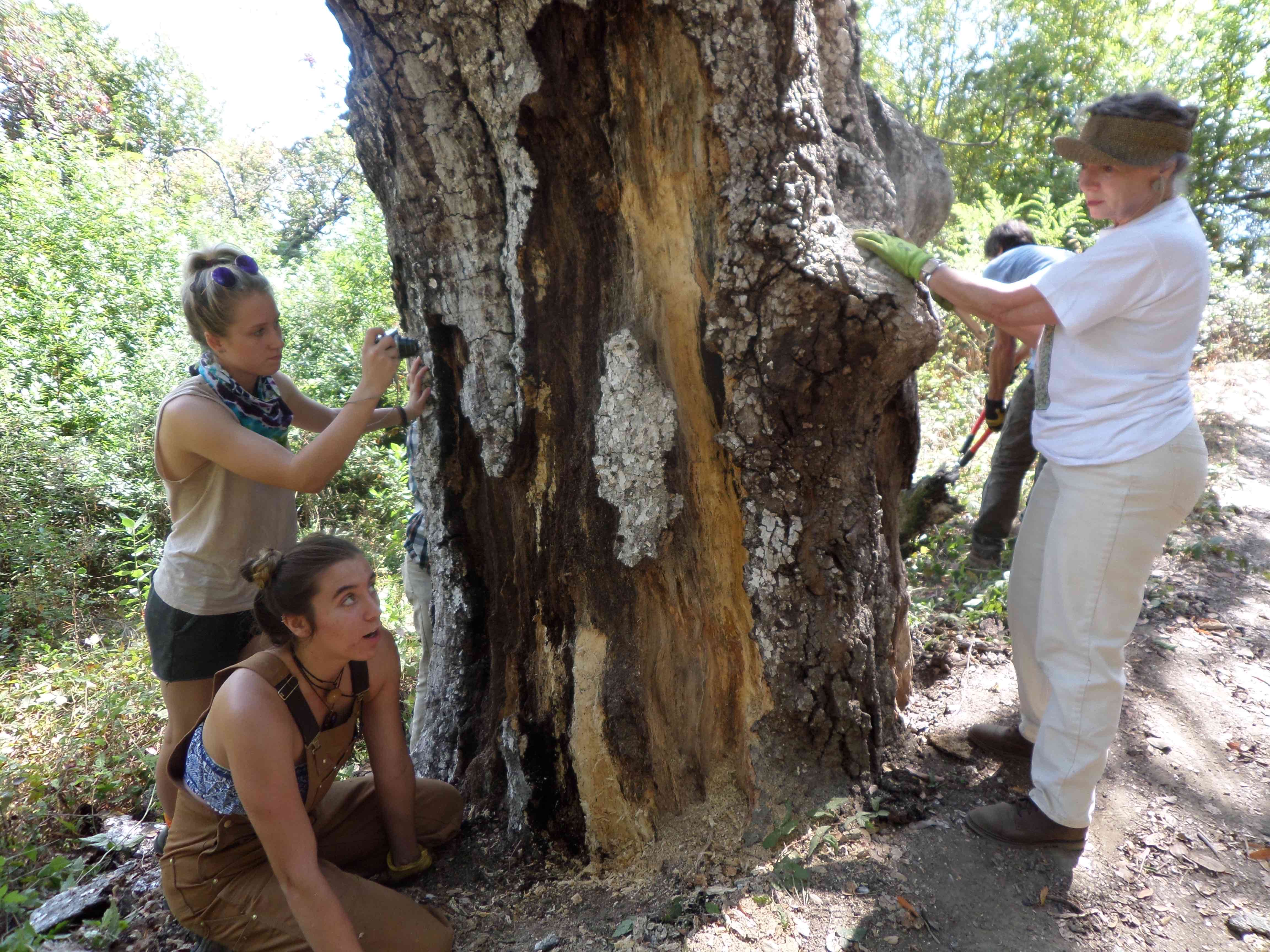
Last week a group of volunteers, assisted by Greg Laden of Marin County Open Space, visited a 400+ year-old coast live oak growing on King Mtn. I have reported on the progress of this oak in two previous posts: Grandfather oak and Grandfather oak – April 2011 update. This oak lies along the main trail up King Mountain and has captured the attention of many a hiker. Donna Shoemaker is one of those hikers. In the Fall of 2007 Donna contacted me about her concerns for the health of this oak. When I inspected it I found it was indeed in poor shape with signs of disease and insect infestation. I proposed a plan to her that could help the oak, but I was not optimistic that it would ever be cured. Donna organized a volunteer party to treat the oak and in December of 2007 we gave the oak its first of several fire mimicry treatments. There was an article by Richard Halstead in the Marin IJ (Sudden Oak Death Roars Back) that described the event, adding that “scientists studying the disease expect the (fire mimicry) treatments will prove futileā€.

SAMSUNG CAMERA PICTURES

Volunteers assisting in the fire mimicry treatment of Grandfather oak, July 2015

Grandfather oak volunteers - July 2015

Grandfather oak volunteers – July 2015

Well, I’m happy to report that 7.5 years later have NOT proved futile (UC scientists take note!). Grandfather oak is still alive and is noticeably healthier than before treatments began (see photos). The scientists studying sudden oak death have yet to come to terms with the success of fire mimicry. This is not surprising as their research is based on the disease model of forest health, whereas the fire mimicry approach is based on the ecological model of forest health. More than $100 million dollars has been spent studying one disease organism, Phytophthora ramorum, the pathogen that scientists claim “causes” sudden oak death. They are not about to disrupt that gravy train by expanding their scope of study to include ecological factors such as fire regime and soil pH. Their closed mindedness is our loss of so many oaks. Some day one oak too many will die and the mindshift will be inevitable . . . Read the rest of this entry »


California oak, pine, and toyon trees responding to fire mimicry

4 05 2015

Slide06

Here are some assorted results on oaks, pines, and one toyon tree that I collected over the past two weeks. All have been treated with fire mimicry. As you can see some trees are responding better than others. Some of the trees here are showing only a slight improvement in canopy size and density. But results are results, so here they are. Fortunately, I found no infections of sudden oak death disease in any of the oaks here.

Slide12 Read the rest of this entry »