Oaks in Monterey, CA respond to fire mimicry

1 01 2021

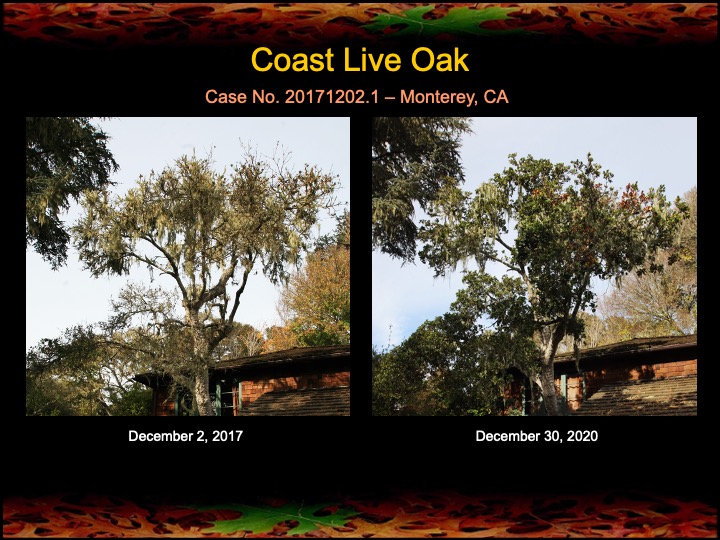
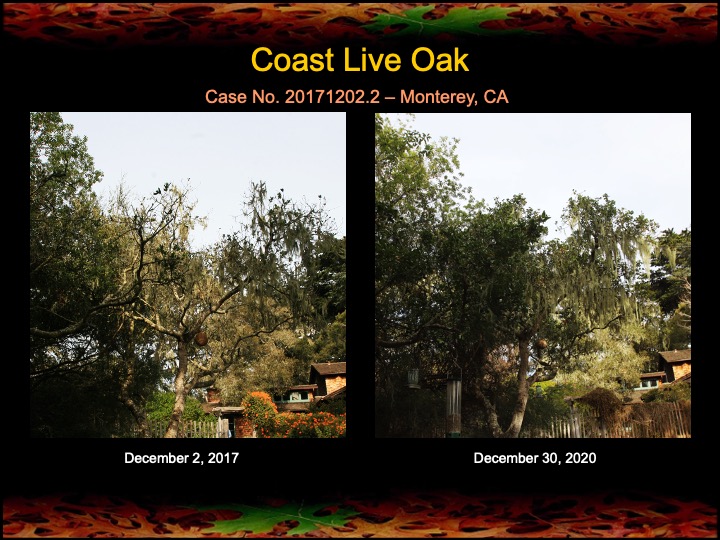
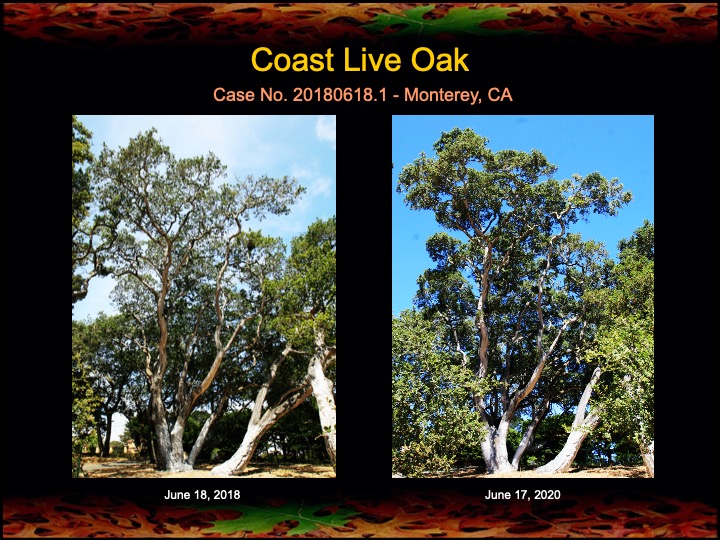
Three years ago I began fire mimicry treatments on a grove of very sick coast live oaks in Monterey, CA. the photos (above and below) indicate that most of the oaks have responded nicely, showing improvement in canopy density and lushness. Note that one severely diseased oak below (Case No. 20171202.6) had a surgery and cauterization procedure that appears to have been successful. At least for these trees, 2020 has ended on a positive note!

Read the rest of this entry »


Fire mimicry results with oaks in Novato, CA

2 11 2020

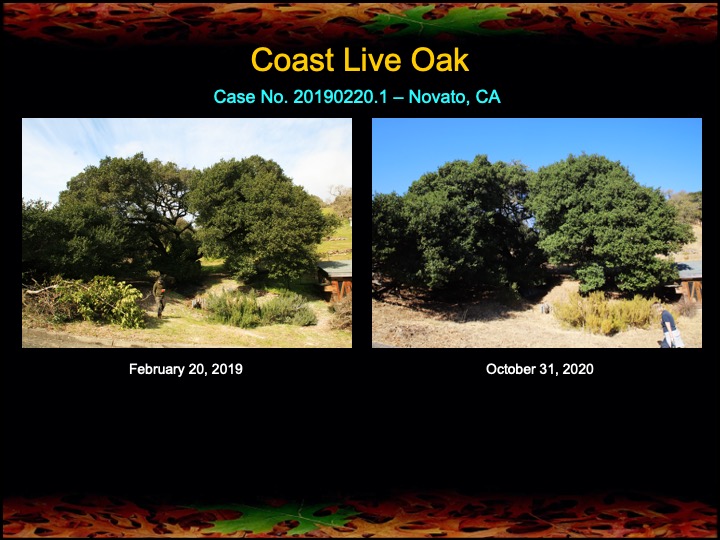
The above coast live oak is a ~500 year old coast live oak that was clearly pollarded by resident Coast Miwok people. I recently inspected this and several other coast live oaks treated with fire mimicry in February of 2019. Due to the difference in time of year of the photos these results are not exact comparisons. Still, significant improvement in canopy density and lushness is apparent in all the oaks, except for the untreated (control) oak shown in the final image.

Read the rest of this entry »


Fire mimicry results from Piedmont, CA

19 10 2020

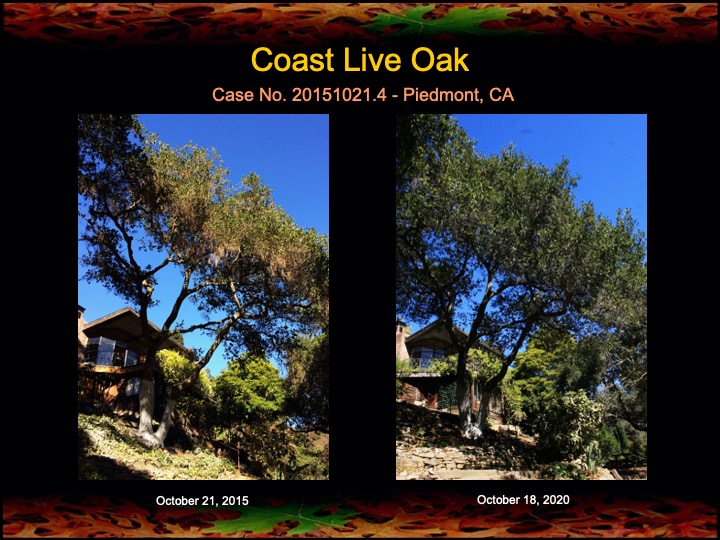
Here are some recent results from a grove of mature coast live oaks in Piedmont, CA treated with fire mimicry for the past 5 years. Most of the oaks are showing lusher, greener canopies, although one oak (shown below) has succumb to Sudden Oak Death. The remaining oaks have no sign of disease.

Read the rest of this entry »


Oaks in Pacific Grove, CA respond to fire mimicry

2 10 2020

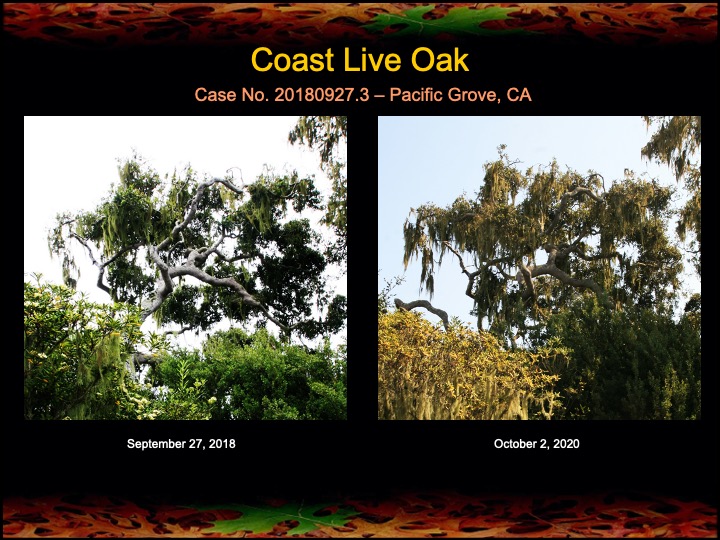
Two years ago I treated 21 coast live oaks with fire mimicry at Canterbury Woods, a senior retirement center in Pacific Grove, CA. Today I inspected the oaks and re-photographed them. Here are the results. Most of the oaks appear to have a denser canopy after two years. Please take a careful look at the photos and judge for yourself.

Read the rest of this entry »


Initial stages of fire mimicry in Soquel, CA

27 09 2020

The last few days my crew and I have been doing fire mimicry treatments in a grove of coast live oaks in Soquel, CA. Here are the before-and-after photos of the areas we cleared, mimicking indigenous ground fires. Ideally, these areas will not only protect nearby homes and structures, they will also keep the surrounding forests free of canopy fires. Thus, we are saving not only the homes, but the adjacent forests as well from catastrophic fires.

Read the rest of this entry »


Fire mimicry results with oaks in Carmel, CA

20 09 2020

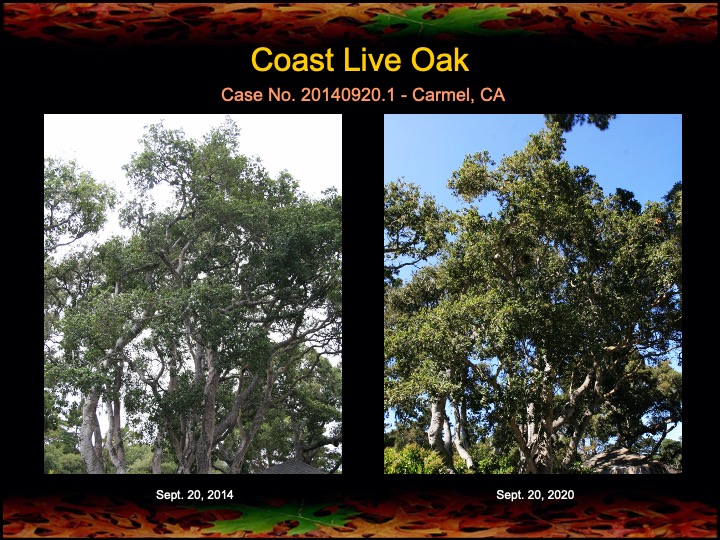
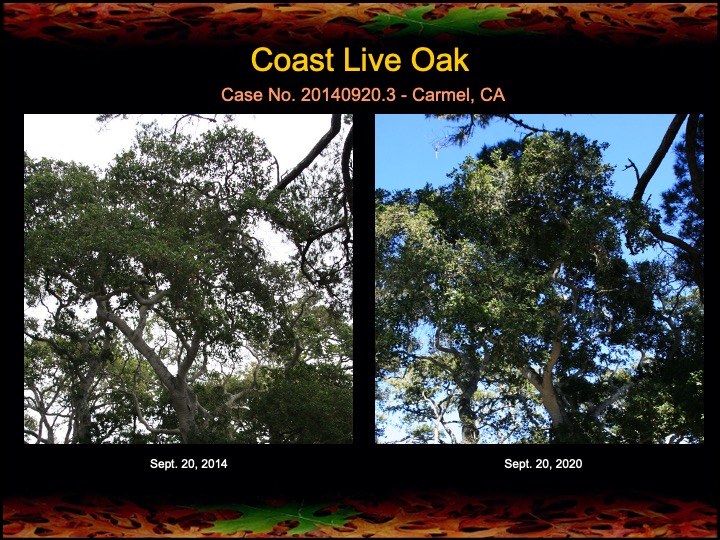
Six years ago I began fire mimicry treatments on several coast live oaks in Carmel, CA. Three were infected with Armillaria disease, so I also surgically removed and cauterized the Armillaria stem cankers. Here are the results from a few says ago. Most of the oaks are showing denser, lusher canopies, and 2 out of the 3 Armillaria surgeries I performed appear to be successful.

Read the rest of this entry »


Fire mimicry results from oaks in Fairfax, CA

30 08 2020

Slide2

Last week I inspected several coast live oaks that have received fire mimicry treatments for the past four years. The above and below photos show the results. Most of the oaks are showing noticeable imrpovement in canopy density, although two of the oaks do not show much change. Fortunately, these oaks have remained mostly free of disease.

Slide3 Read the rest of this entry »


Monterey oak responds to stem canker surgery

23 06 2020

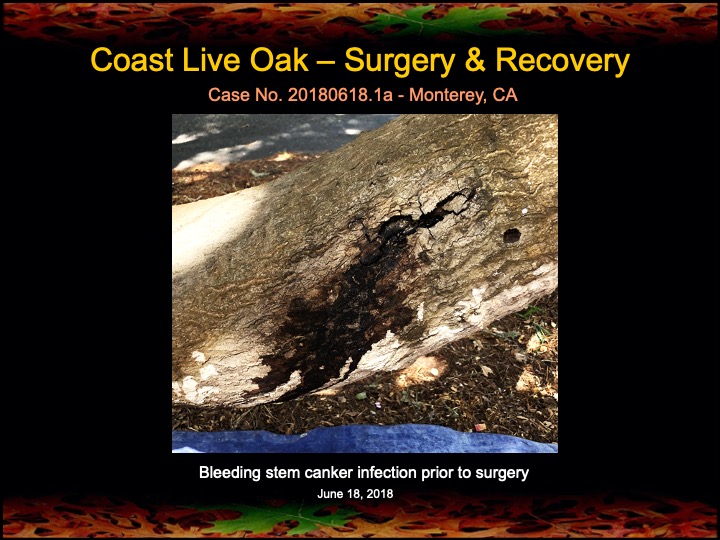
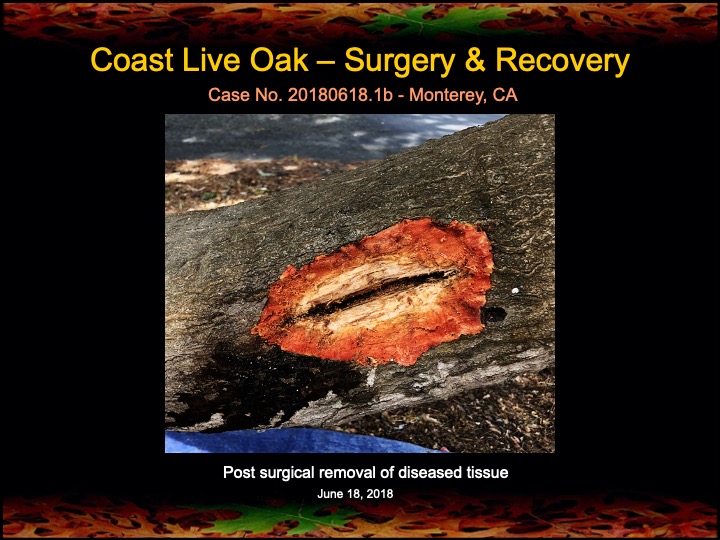
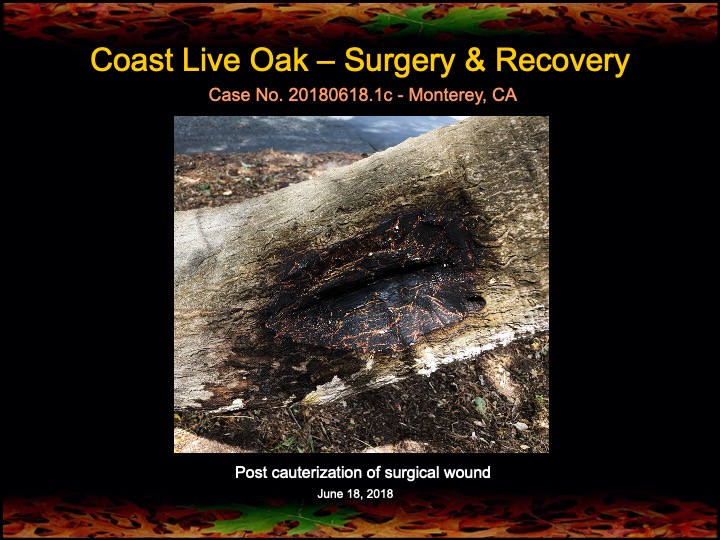
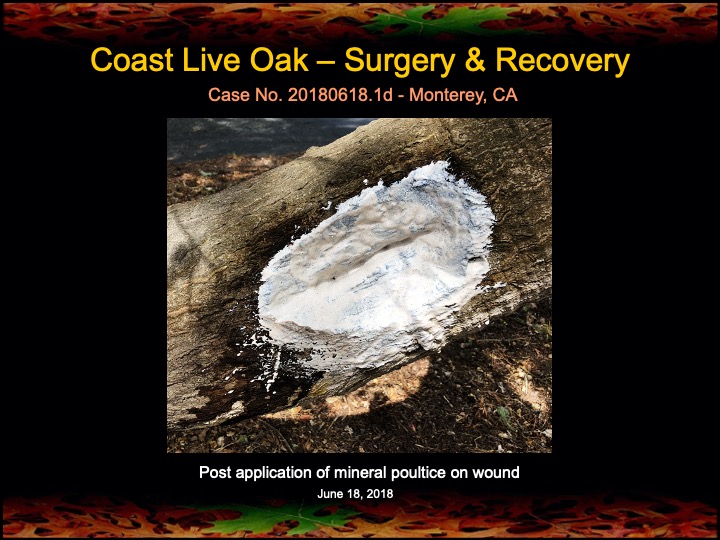
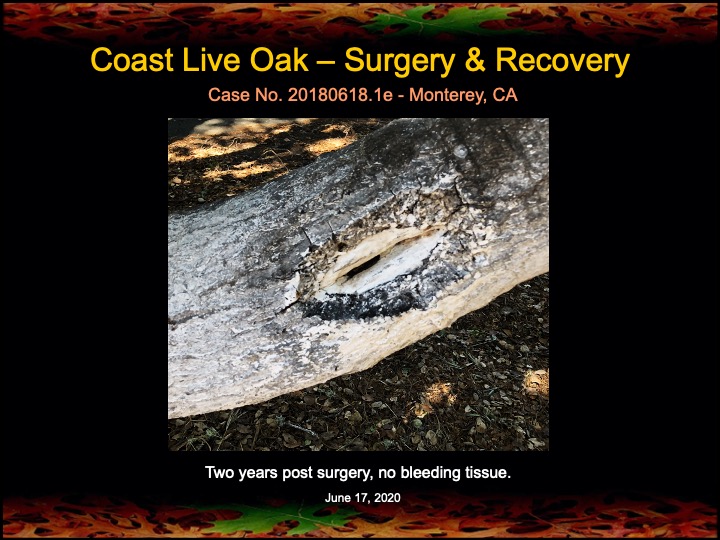
In June of 2018 I performed fire mimicry treatment of an old coast live oak in Monterey, CA. The work included the surgical removal and cauterization of a bleeding stem canker, possibly Sudden Oak Death. Below are photos showing the procedure and as well as the recovery of the oak after two years. Be sure to look at the last photo!

Slide6

Slide7

Slide8

Slide9

Slide10

Slide1


Fire Mimicry Step 1 – Clearing, thinning, and pruning

27 05 2020

Slide12

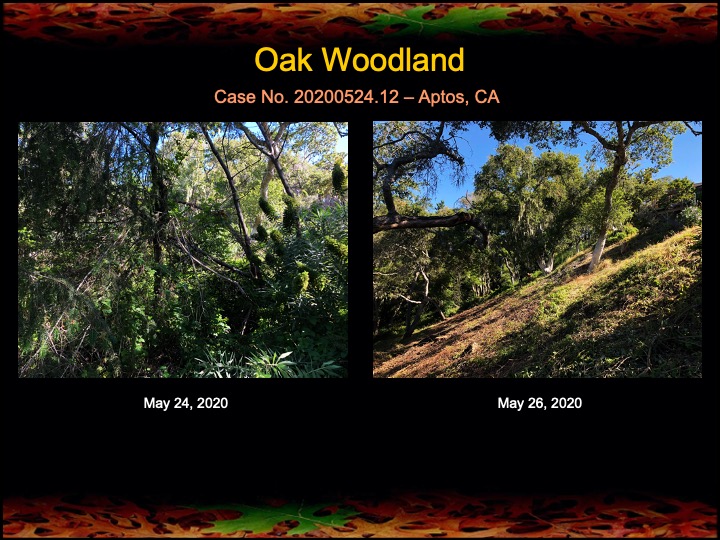
The iconic oak woodlands of California are the result of thousands of years of tending by the various native tribes. They put fire to the land regularly, in places every year or two, to create open, park-like conditions under which the oaks and other keystone species could thrive. As the native people were forced from their lands by western settlers the healthy ground fires that sustained the oaks ended. Now our oak woodlands have become overgrown by shrubs and small trees, and dead wood has piled up on the forest floor. The soils have become acidified and mosses and lichens have built up to unhealthy levels.

While cultural burning is still happening in a few places, most of the oak woodlands can no longer be burned due to the heavy buildup of fuel. The only hope to save these ecosystems is to introduce fire mimicry.

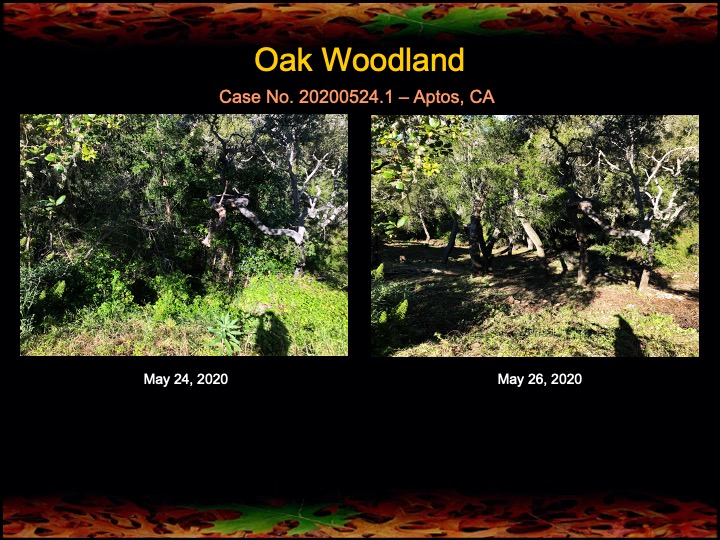
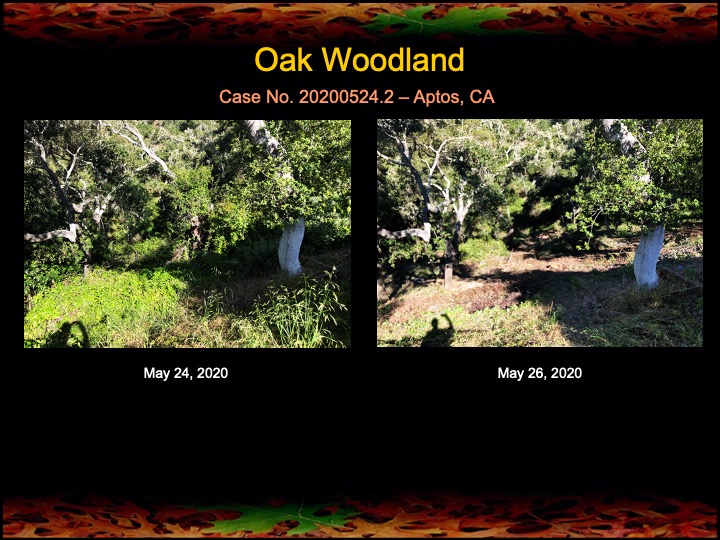
These past few days I have been implementing the first steps of fire mimicry on an ancient Ohlone Costanoan oak woodland in Aptos, California. This involves clearing most of the woody understory (including literally tons of poison oak), thinning young trees, removing dead and dying trees, and pruning the lower branches of the mature oaks. These photos show the progress after only two days of work with a hardy crew of four. We also started to amend the soils with compost tea and alkaline-rich fertilizers, and apply a limewash to trunks to control the mosses and lichens. Stay tuned …
Slide1

Slide2 Read the rest of this entry »


Fire mimicry results with Lebanese cedar, sycamore, redwood, and coast live oaks

7 05 2020

Slide1

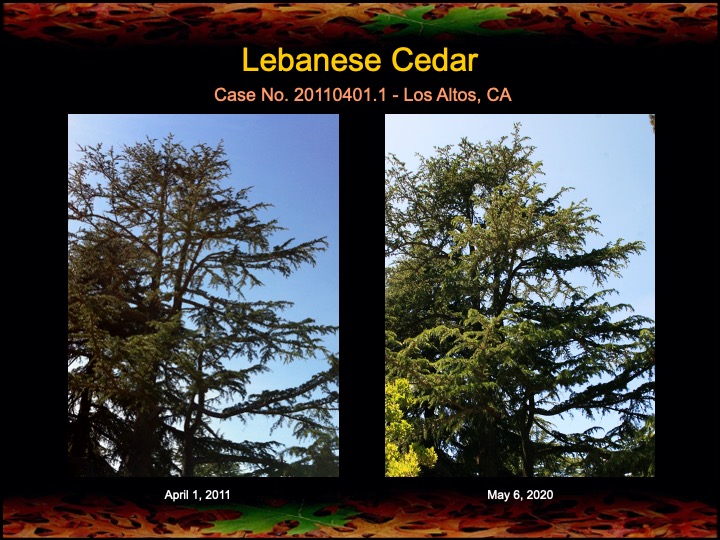
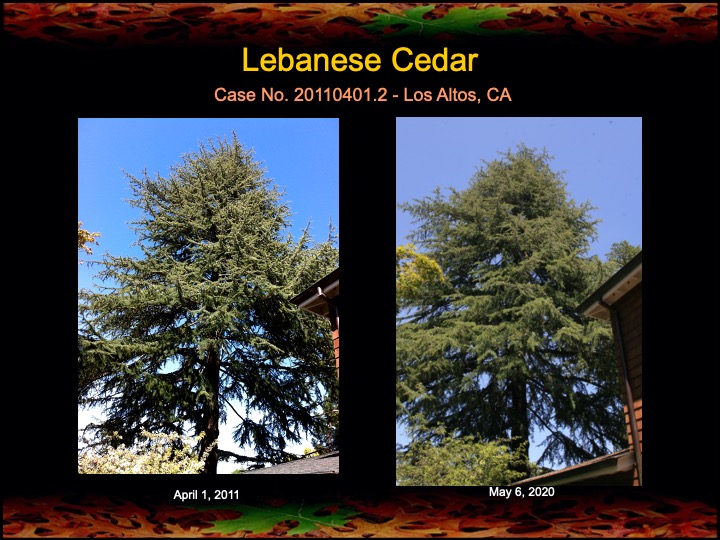
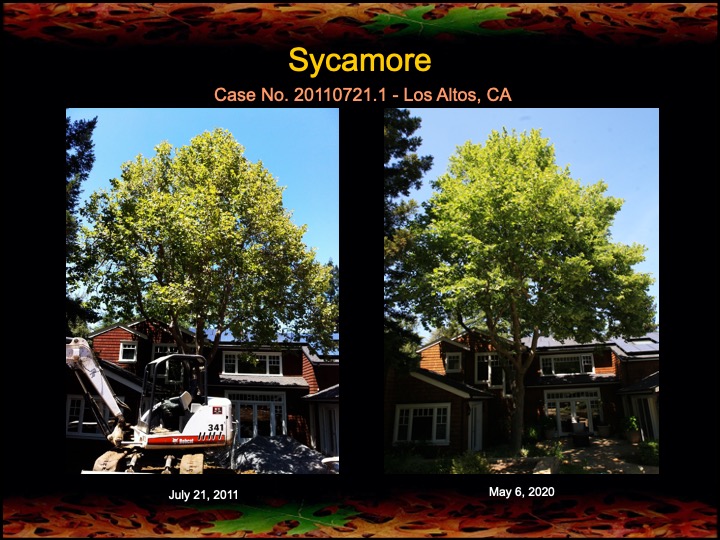
Several years ago I began fire mimicry treatments on some Lebanese cedar, sycamore, coast redwood, and coast live oak trees in Los Altos, CA. The before-and-after photos  shown here indicate that the treatments were effective in improving the health of the trees.

Slide2

Slide1 Read the rest of this entry »