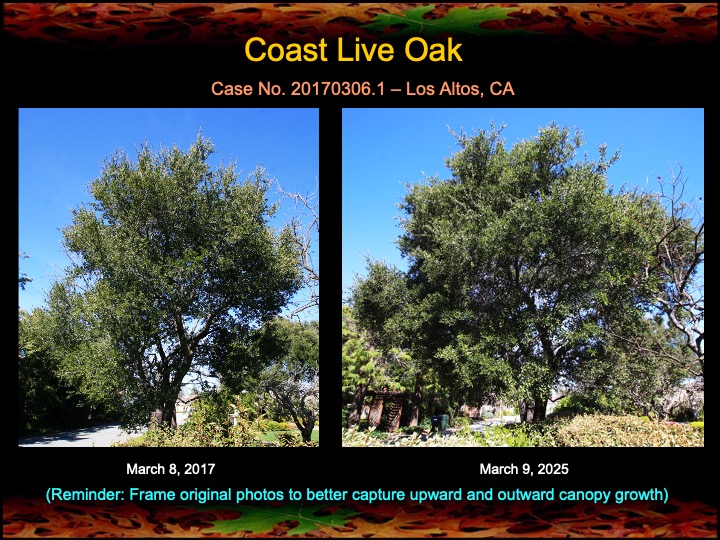
Eight years of tending these coast live oaks and coast redwoods with fire mimicry. (Note to self – widen frames of original photos to better capture future upward and outward canopy growth)
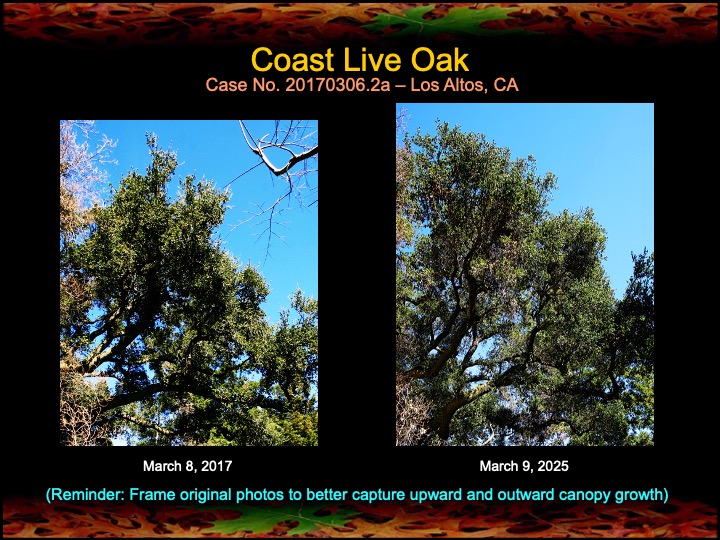


Eight years of tending these coast live oaks and coast redwoods with fire mimicry. (Note to self – widen frames of original photos to better capture future upward and outward canopy growth)
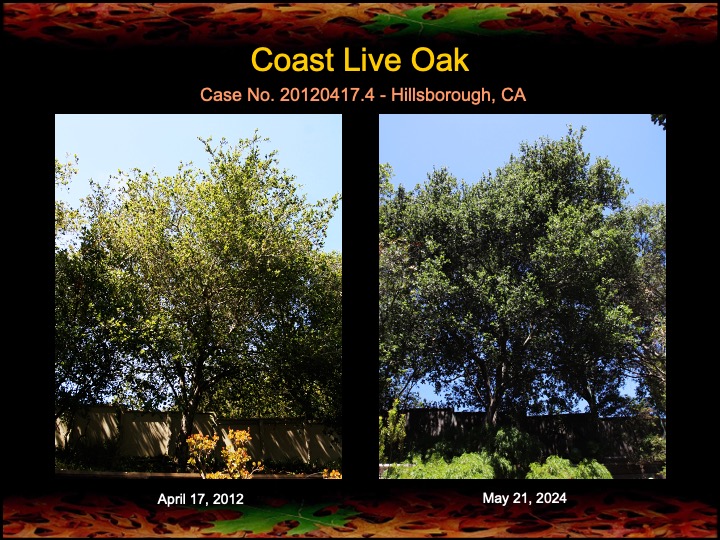
Here are some oaks that I’ve been treating with fire mimicry for 12 years, along with several oaks I’ve been treating for 3 years. Enjoy!

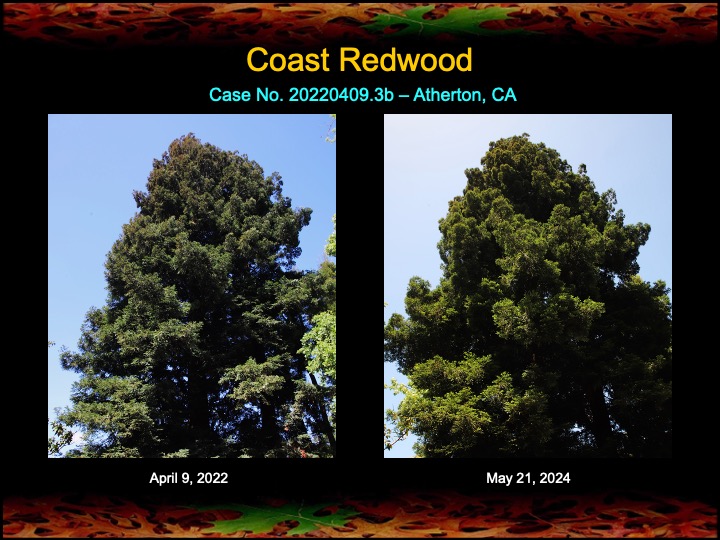
While the focus of my work is on oak trees, I have several recent examples of fire mimicry treatments improving the health of redwoods and pines. The first five photo sets are of coast redwoods after two years and seven years of treatments. Below the redwoods are photo sets of a Monterey pine after 12 years of treatments (every other year), and a bishop pine after three years of treatments. I’m pretty pleased with these results!


Seven years ago I began fire mimicry treatments on four coast live oaks, as well as two redwood trees in Los Altos, CA. I reported on the progress of these trees back in 2020.and in 2018. For obvious reasons, the property owner has asked me to continue treating these trees, so they have received five treatments over the past seven years. These results tend to support my intuition that when trees have not responded to my treatments, it is likely because I did not do enough care, rather than having done too much.
And don’t miss the final photo set of this series showing the results with redwoods.
I look forward to seeing these trees outgrow the frames of my original photos (as is already starting to happen) in years to come!


I’ve haven’t been posting many results lately due to my focus on a major writing project that you will hear more about soon. Thanks for your patience! Meanwhile, let me take some time and share some recent results in the next few posts.
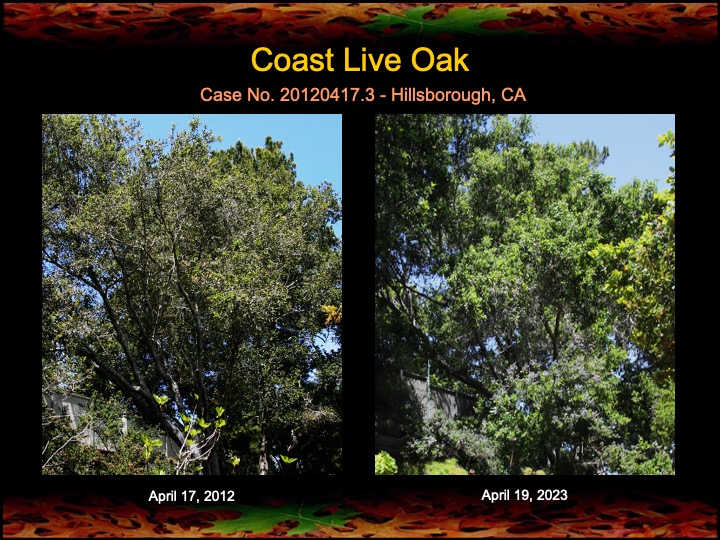
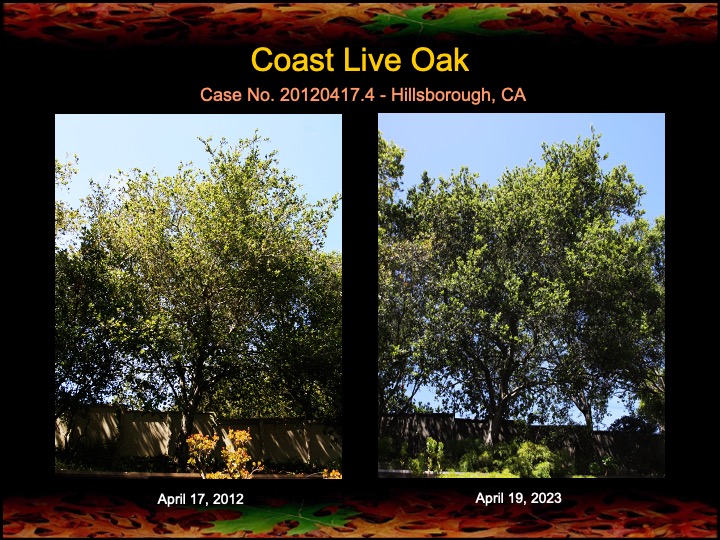
Today I want to show you a grove of oaks in Hillsborough, CA that I’ve been treating with fire mimicry every few years since 2012. Notice how the trees have developed denser, lusher canopies. This is mainly due improved soil fertility from compost tea and mineral amendments.

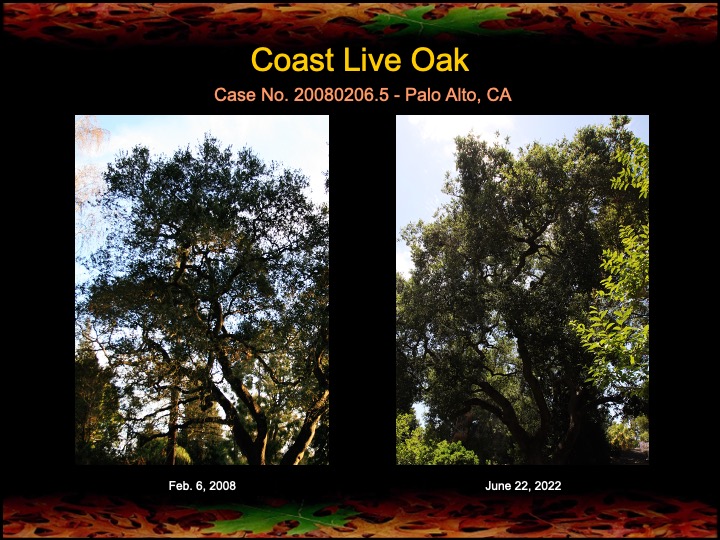
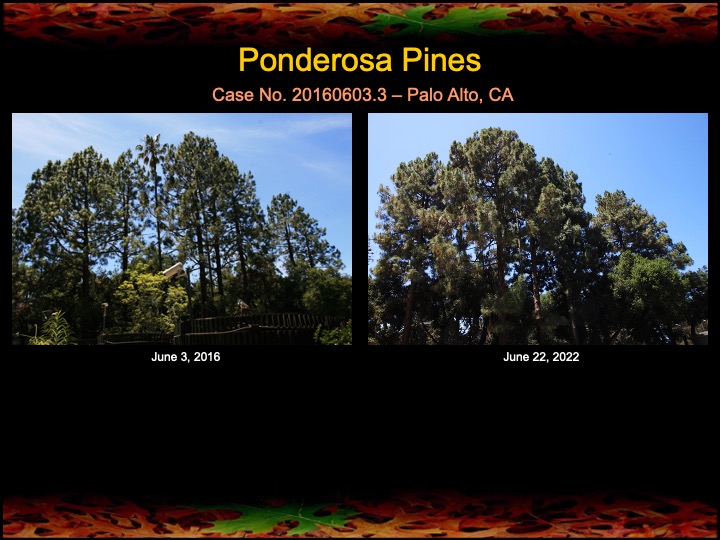
Yesterday I checked on several coast live oaks, ponderosa pines, a coast redwood, and a southern magnolia in Palo Alto, CA that I’ve treated with fire mimicry in recent years. The work began at one site about 14 years ago and at the other site 6 years ago. The photos at the 14-year site were taken at different seasons (winter vs. summer), so they are not an optimal comparison. Also, there was considerable construction around the trees and some limb removal since the original photos were taken. Still, it appears that these trees are thriving after fire mimicry treatments. Enjoy!


For the past two years I have been applying fire mimicry treatments to a grove of Ancestor oaks, ancient (300+ yr old) trees that have been pollarded and otherwise tended in the past by the Ohlone People for acorn production and other uses. Today, I inspected these oaks and see that most have made a modest, but noticeable improvement in canopy density, despite the current drought conditions. Please note the final photo set, which shows a neighboring oak that was not treated.

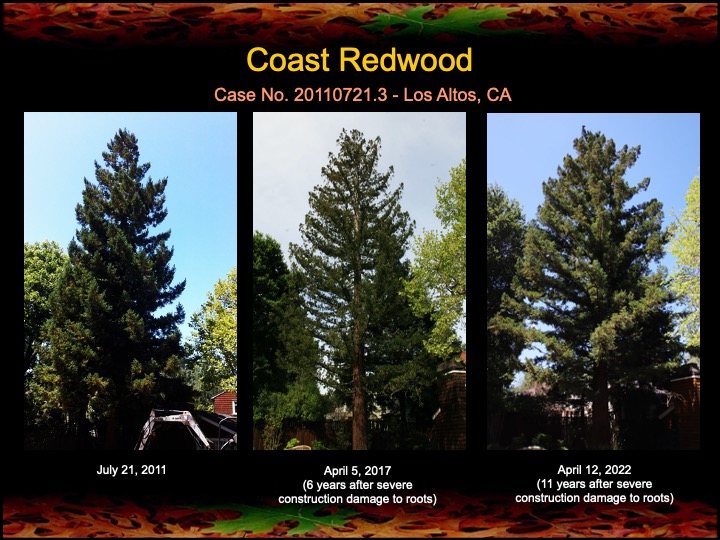
I’m often asked whether trees can withstand root amputation by construction activities. Generally, I’ve found that if the trees are tended with fire mimicry beforehand, there is a better chance of their survival. Above is an example of a redwood tree in Los Altos, CA that was treated with fire mimicry before and after construction damage. While the redwood suffered some canopy loss after construction, it has recovered and is now thriving!

Eleven years ago I began fire mimicry treatments on two Lebanese cedar trees in Los Altos, CA. At the time the owner had been advised by a local arborist that the cedar tree shown in the above photo was diseased and should be removed. Fortunately the owner resisted cutting down the tree and contacted me. I proposed treating this cedar (above) and another nearby cedar (below) with fire mimicry. At the time I had mainly been treating oaks and did not know if the cedars would respond in the same way. I’m happy to say that, after 11 years, the cedars are thriving!


 Sudden Oak Life by Lee Klinger
Recent Comments