Grandmother oak, year 3

9 03 2020

Slide1

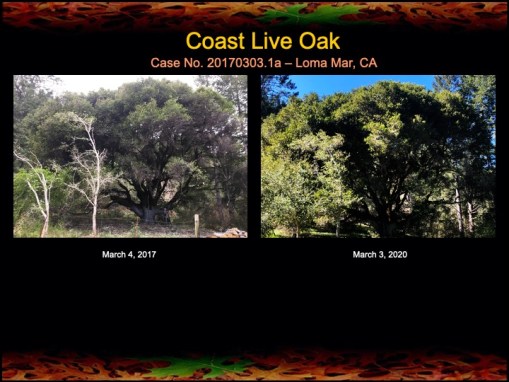
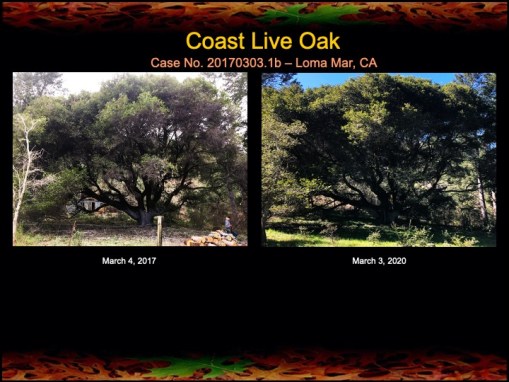
Three years ago I began fire mimicry treatments on an ancient coast live oak (estimated at over 500 years old) in Loma Mar, CA that shows clear signs of being pollarded and otherwise tended by the Costanoan Ohlone native people. As reported in a previous post on Grandmother oak, the massive tree was heavily overgrown with young bay laurel and Douglas fir trees under and around the canopy. Several of the limbs were dying and the canopy was thin and sickly. We cleared away the young trees, pruned some of the lower branches, removed the mosses and lichens from the trunk, fertilized the soils with compost tea and alkaline-rich minerals, and applied a limewash to the main trunk. The photo sets above and below show how well this oak has responded to the renewed care. Enjoy!
Slide2

Slide3


Diseased oaks in Los Altos, CA respond to fire mimicry

7 03 2020

Slide1

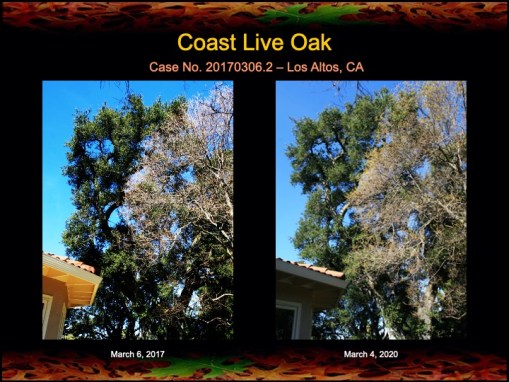
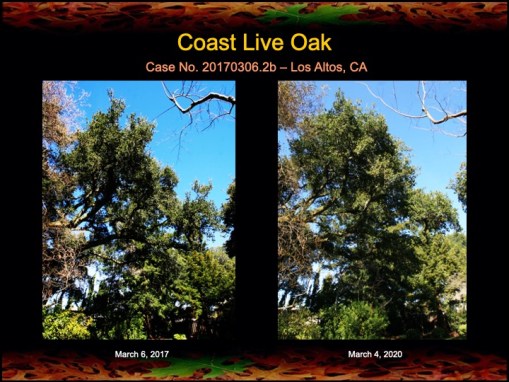
Three years ago I began fire mimicry treatments on several coast live oaks and redwood trees in Los Altos, CA. Three of the largest oaks, one of which appears to be an Indian-era tree, had bleeding stem cankers, probably Sudden Oak Death disease. In addition to fertilizing the soils with compost tea and alkaline-rich minerals, I performed several surgical procedures on the stem cankers. While I can’t say at this point that the oaks are free of disease, the photos do suggest that the oaks are on the mend. The two coast redwood trees in the last photo set also show a positive response to the treatments, although the larger redwood is starting to show signs of drought stress (e.g. thinning top). Otherwise, I’m pretty pleased with the results, as are the clients.

Slide2

Slide3 Read the rest of this entry »


A Decade of Fire Mimicry

30 12 2019
Oak dieback

Dead an dying coast live oak trees in Big Sur, CA

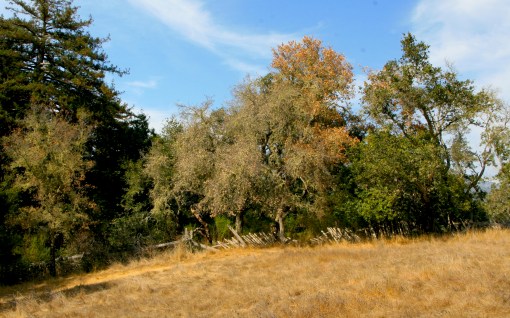
The past decade has been a tough one on California oaks. Tens of thousands of oaks have died and many more are in distress, simply because they are no longer being tended. For millennia the Indigenous People of California used, and still use, fire to improve the health of the native trees and forests.

Also over the past decade I and others have been tasked with restoring to health many of these oaks. During this time we have tended well over 1,000 oaks and other trees, with mostly positive, if not remarkable, results. Due to the severely overgrown nature of fire-suppressed forests, applying fire is not an immediate option. Therefore, we have been developing tending practices that mimic fire in ways that benefit the oaks.

Below are a selection of oaks, one per year of this past decade, that have inspired me to stay committed to tending our oaks. Many of these are legacies of the indigenous past and will, with our help, continue to be legacies in our future.

A decade of healing oaks . . .

20060104-1-4

Hearst Castle oak – 2010

20041129-1

Fairfax oak – 2011

Read the rest of this entry »


Fire Mimicry: Treated vs. Untreated

8 12 2019

Slide1

Slide2

As most of my clients chose to have me treat all of their oaks with fire mimicry, I don’t often get the chance to compare treated vs. untreated oaks in the same landscape setting. However, last year a client had me treat come oaks, but not the others. Here are the before-and-after photos of two oaks that were treated (above), compared to another that was not treated (below). One of the above oaks (Case No. 20181203.2) was infected with a stem canker disease (probably Sudden Oak Death), which was surgically removed in 2018.

Slide3


Culturally-modified Indian-era oaks respond to fire mimicry

15 11 2019

Slide1

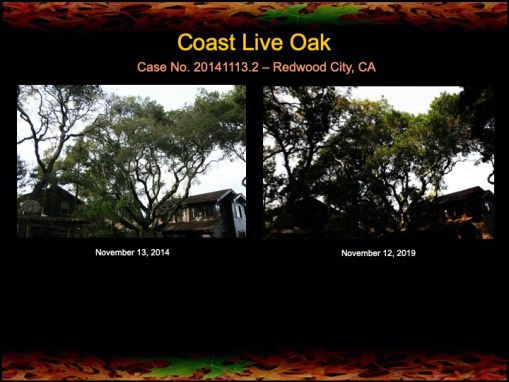
Five years ago I began fire mimicry treatments on a grove of ancient, Indian-era coast live oaks that have clear signs of being culturally modified (ie. pollarded). This past week I checked on the status of these oaks and the entire grove continues to show strong improvement in canopy density and greenness. And in an area of rapidly spreading Sudden Oak Death, none of these trees have contracted this disease.

Slide2 Read the rest of this entry »


Oaks and other trees in Atherton, CA respond to fire mimicry

7 06 2019

Slide1

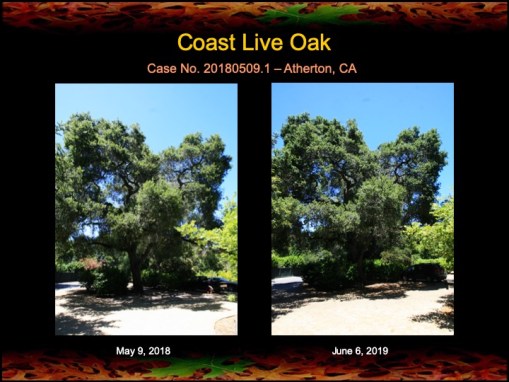
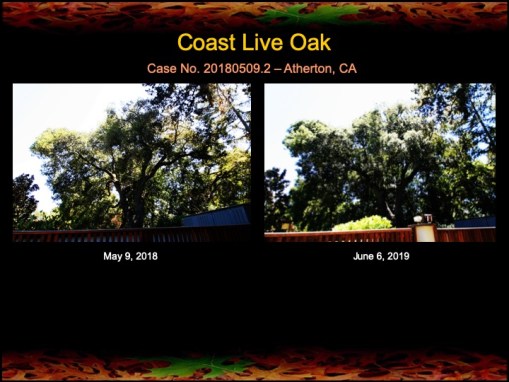
Last year I (and my dedicated crew) treated several coast live oaks along with a valley oak, a California buckeye, a jacaranda, and an ornamental pear with fire mimicry. Yesterday I inspected and re-photographed these trees. Here are the photos showing the results after just one year. I’m happy to report that most of the trees are showing a noticeable increase in canopy density and greenness. BTW, four of the coast live oaks are infected with a stem canker disease, probably Sudden Oak Death. Bet you can’t tell which oaks are infected!

Slide2 Read the rest of this entry »


Oaks in Burlingame, CA respond to fire mimicry

22 04 2019

Slide1

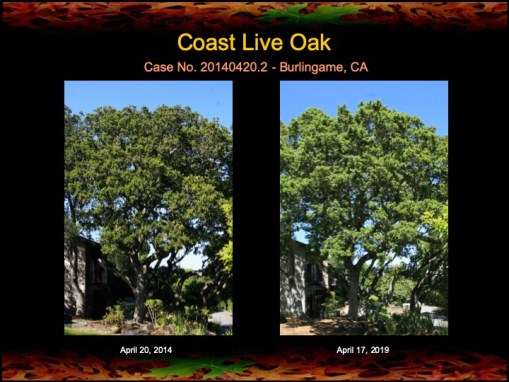
Last week I inspected a grove of oaks in Burlingame, CA that I’ve been tending with fire mimicry for five years. Here are recent photos showing their progress . . .

Slide2 Read the rest of this entry »


Fire mimicry results after 7 years in Hillsborough, CA

17 04 2019

Slide2

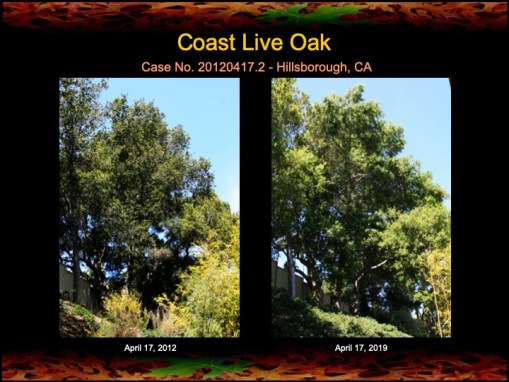
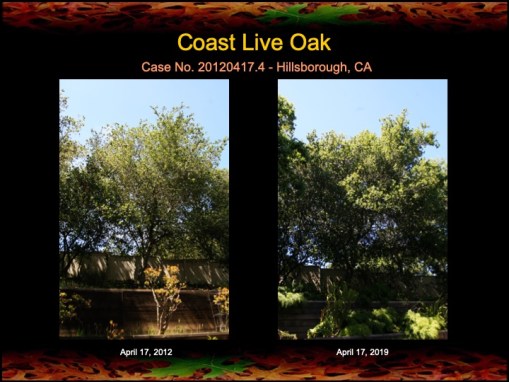
Today I inspected several coast live oaks that I began treating with fire mimicry in 2012. the photos above an below shoe the progress of these oaks over the past 7 years. If you believe that these results are due to the recent wet weather, please scroll down to see results from the drought years.

Slide3

Slide4 Read the rest of this entry »


Coast live oaks in Woodside, CA show modest response after single fire mimicry treatment

27 11 2018

Slide1

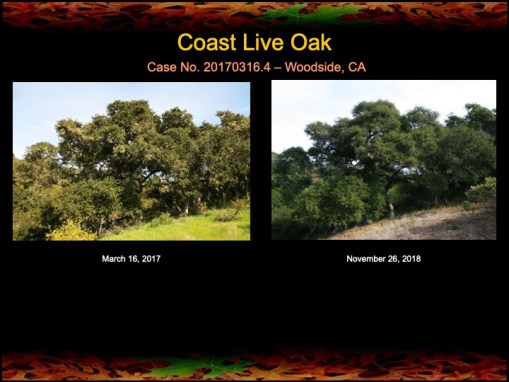
Yesterday I visited several coast live oaks in Woodside, CA that had been treated in March 2017 with fire mimicry. After about 1.5 years the oaks are generally showing a modest improvement, mainly in overall canopy greenness and increased density in the lower canopies.

Slide2


Slide3

Slide4 Read the rest of this entry »


Diseased coast live oaks in Portola Valley, CA respond to fire mimicry

29 10 2018

Slide1

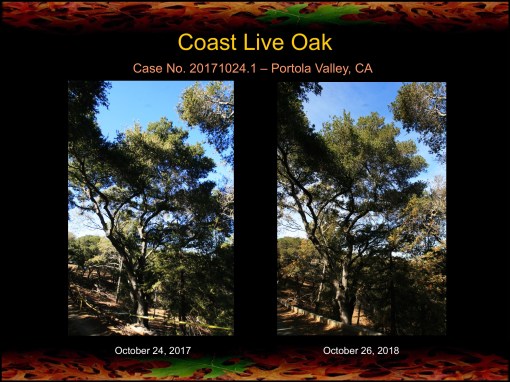
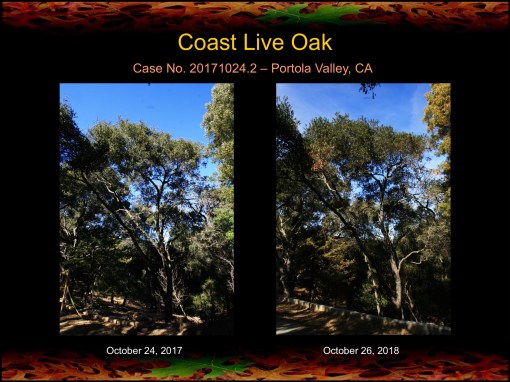
Last year I treated four diseased coast live oaks in Portola Valley using a fire mimicry protocol. Here are the results. Three of the four diseased oaks are showing improvement in canopy greenness and fullness. One treated oak is not showing much change in the last year. Note that the fifth photo in this series is a nearby coast live oak that was not treated. It is showing no noticeable improvement in canopy health.

Slide2 Read the rest of this entry »