Yesterday I examined a grove of coast live oaks that have undergone fire mimicry treatments for the past five years. Some of these oaks are centuries old and show signs of being tended by the Native Awaswas People. Here are the latest before-and-after photos showing a significant increase in health of the canopy foliage in ALL of the treated oaks. Enjoy!
(The above photo set may appear to be of different locations, but they are both taken from nearly the same spot.)
Six years ago I began a forest restoration project in Boulder Creek, CA using fire mimicry treatments to help improve the health of a grove of coast live oaks, some of which are likely more than 250 years old. Additionally, two of the oaks had bleeding stem cankers (probably Sudden Oak Death) that were surgically removed, cauterized, and poulticed.
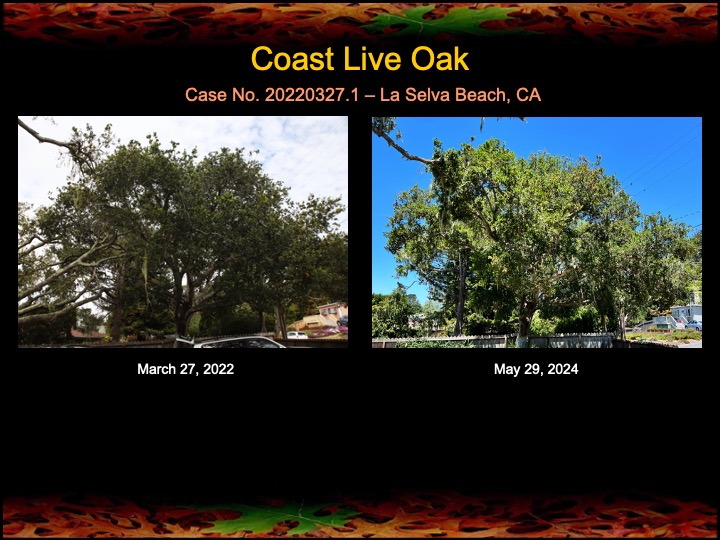
In 2022 most of the oaks were pruned to help reduce the canopy size, which lowers the risk of both wind and fire damage to the trees. The pruning also allows for more light to reach the lower branches resulting in improved density and lushness of the inner canopy foliage.
Last Tuesday I made my annual pilgrimage to this grove to re-photograph the oaks and to assess their response to the fire mimicry treatments. Here are the case study results showing canopy conditions at the time of initial treatment (2018) and a few days ago (2024).
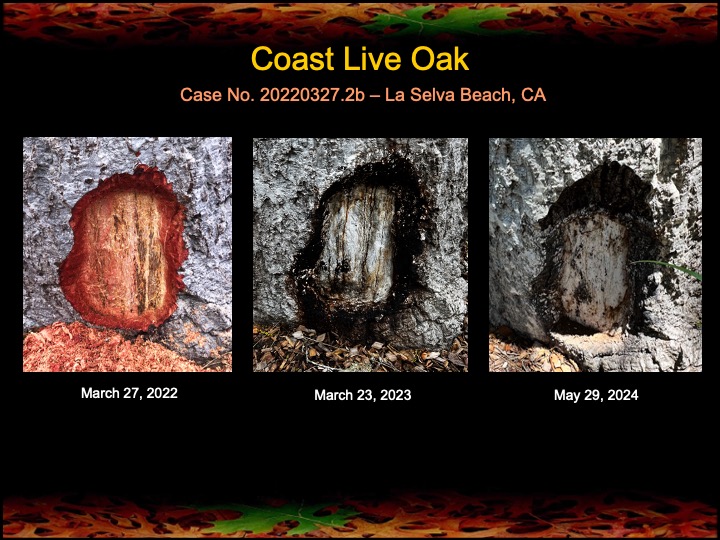
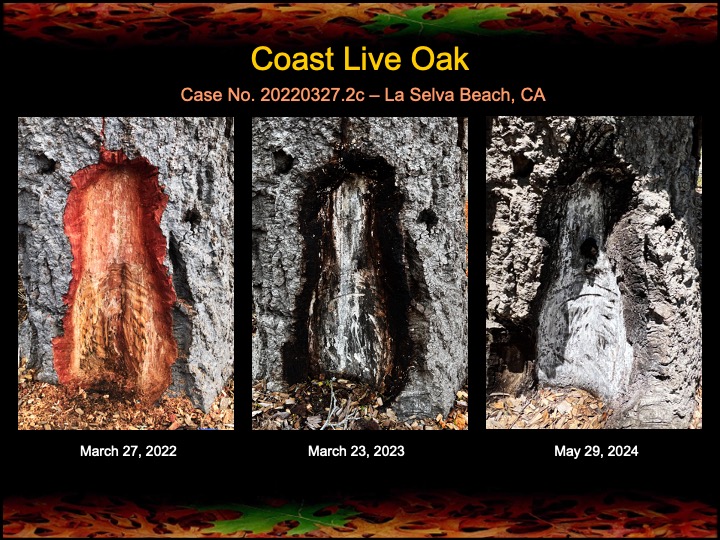
Note, also, the last two photo sets that show the rapid recovery of two surgical wounds (on the same old-growth oak). The absence of any residual bleeding from the wounds indicates that the surgeries were successful in removing the stem canker infections. I’m calling this a win!
Four years ago I began fire mimicry treatments on several coast live oaks, some of them centuries old. A few days ago I checked on their responses. Enjoy!
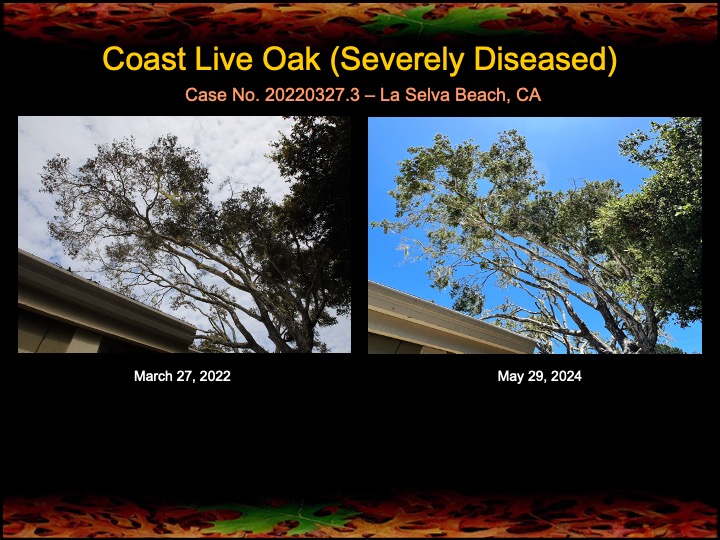
The coast live oak shown above was severely diseased with two large stem canker infections when I first arrived two years ago. Without promises of recover, I suggested two surgical procedures, as well as fire mimicry treatments to this and several non-diseased neighboring oaks. Below are the two surgical wounds depicting two years of healing. Note there is no residual bleeding or other signs of stem canker infection. Remaining photo sets below show the responses of the neighboring oaks to fire mimicry treatments. Happy to report that we’ll be returning soon to treat these oaks again.
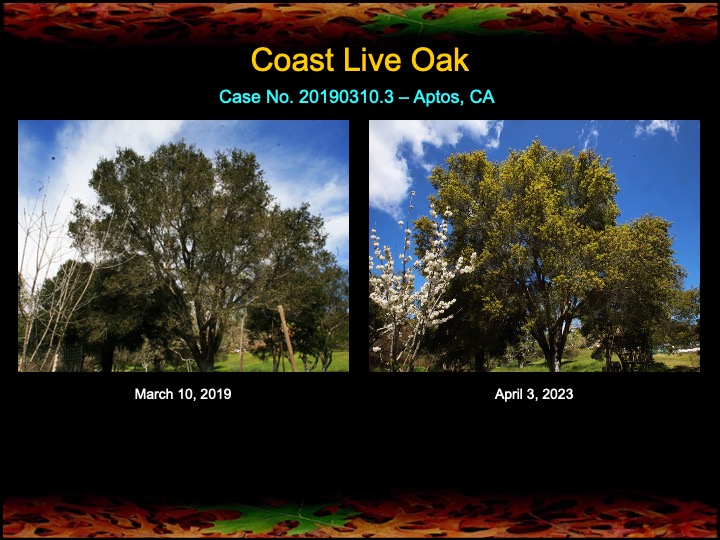
Five years ago I began fire mimicry treatments on several coast live oaks in Aptos, CA. Last week I checked on them and here are the results. Most of the oaks have responded well, although a few are not showing improvement. I’m planning to add more biochar in the next round of treatments.
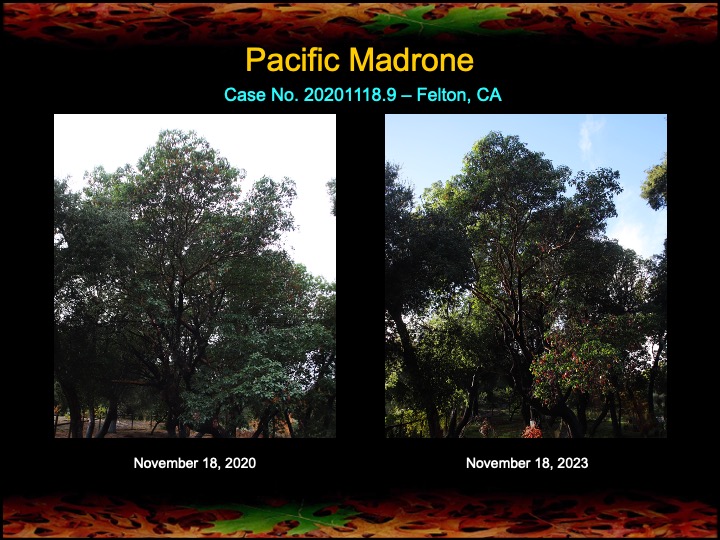
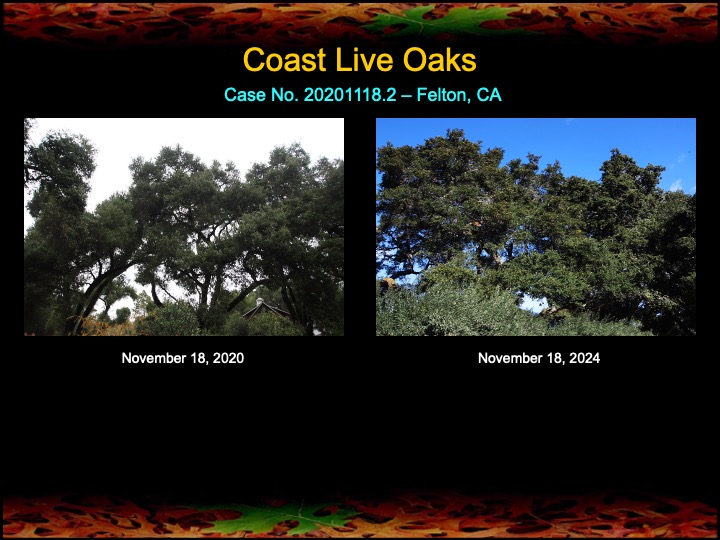
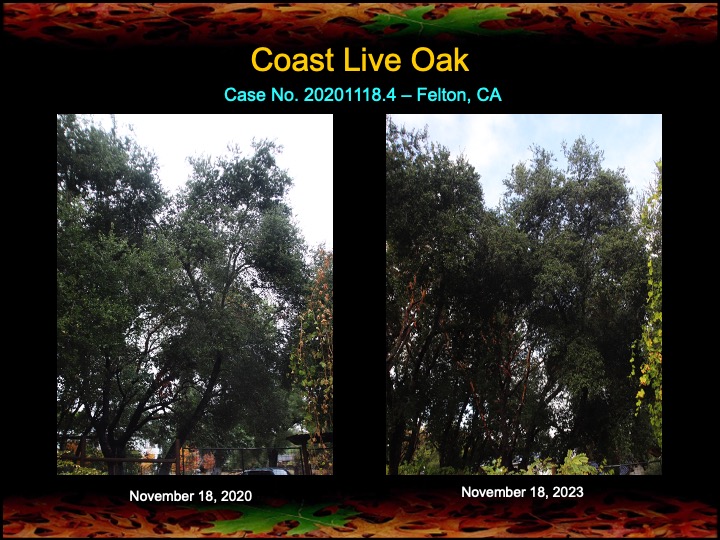
In November of 2000 I began fire mimicry treatments on several ancient coast live oaks and madrones in Felton, CA. Many of these oaks are likely over 400 years old and date from the time when the Ohlone were the sole occupants of the land. Earlier this week I checked on their progress. I’m please to report that, after three years, all the oaks are showing noticeable improvement, and all but one of the madrones also appear to be thriving. Here are the full set of results.
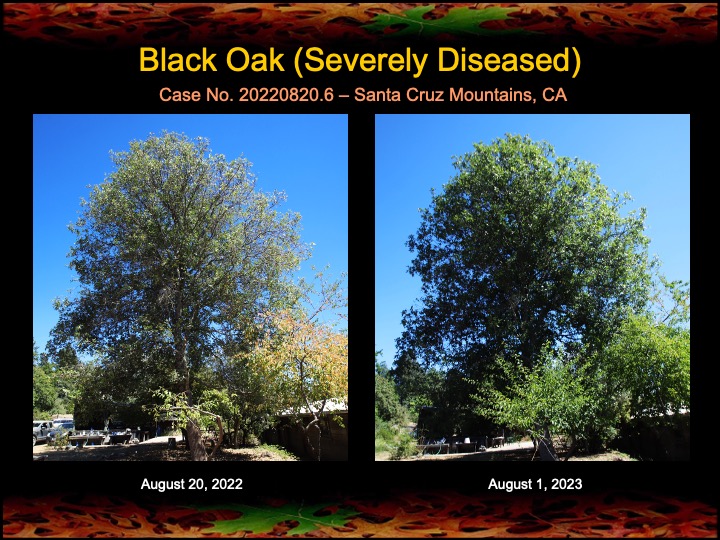
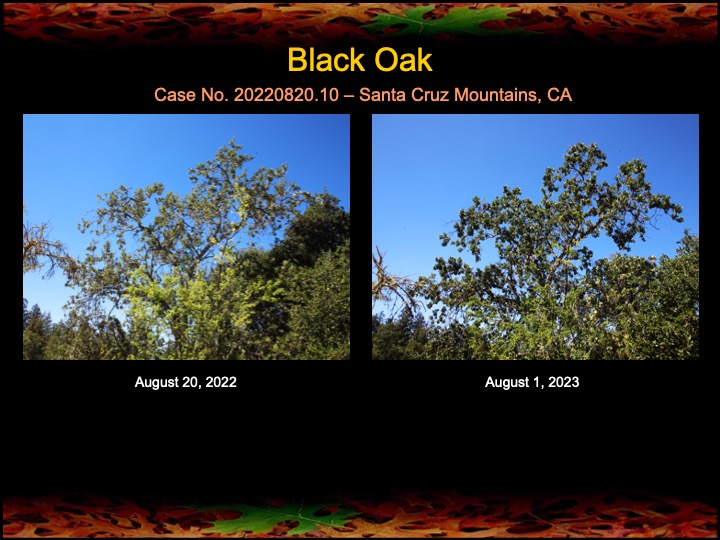
While most of my results are with coast live oaks, I also work with other kinds of oaks. Here are a set of results among black oaks I’ve obtained this past year using fire mimicry methods. Several of these black oaks were severely diseased with Sudden Oak Death infections. The oaks were given compost tea, soil mineral, and limewash treatments, as well as the surgical removal and cauterization of a Sudden Oak Death infection. The surgeries appear to have worked well, as the canopies have improved in lushness and density and there are no lingering infections in the remaining trunk tissues.
Fours years ago I initiated fire mimicry treatments on a grove of sick and diseased coast live oaks in Aptos, CA. Many of these are “Ancestor” oaks, centuries-old trees that thrived under the care of the Ohlone People – living Native artifacts if you will. Sadly, one of these ancient oaks was too sick to be saved, and died in 2021.
The images here indicate that most of the oaks have responded favorably to the treatments as seen in the increase in foliage density and lushness. It still truly amazes me that a few hours of work once a year can make such a difference for an oak grove.
Coast live oak with roots compromised by adjacent construction still faring well
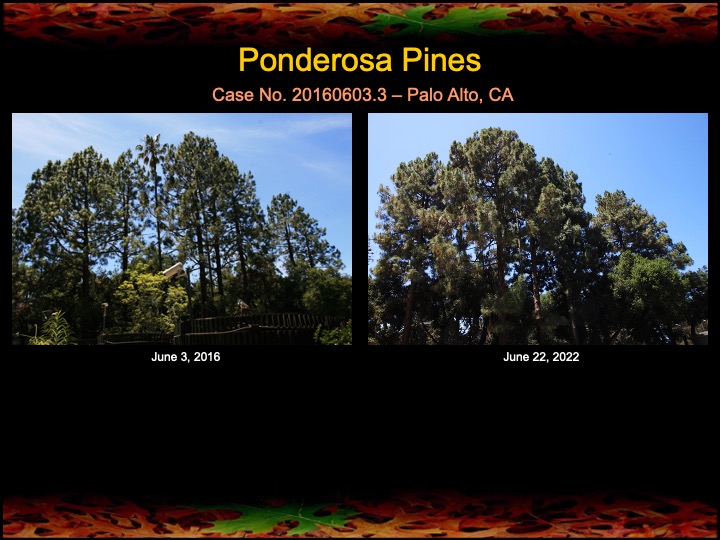
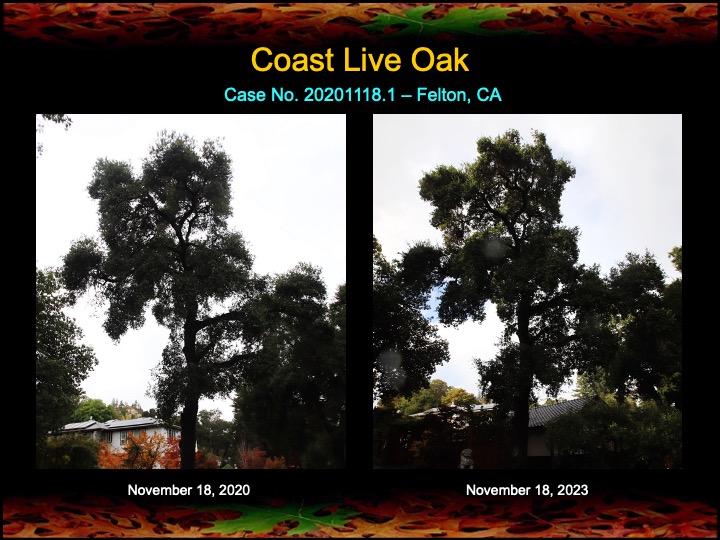
In November 2020 I began fire mimicry treatments on several coast live oaks and Pacific madrones in Felton, CA. Last year, when I checked on these trees, they were already showing a nice improvement (see here). Now after two years nearly all of the trees are showing noticeable positive responses to the treatments, even at the height of drought conditions. Several of the oaks have undergone major stem canker surgeries, but still seem to be on the mend. Hope you enjoy these results as much as these trees.












 Sudden Oak Life by Lee Klinger
Recent Comments