Marin oaks respond to fire mimicry

4 04 2015

20130302.1.2

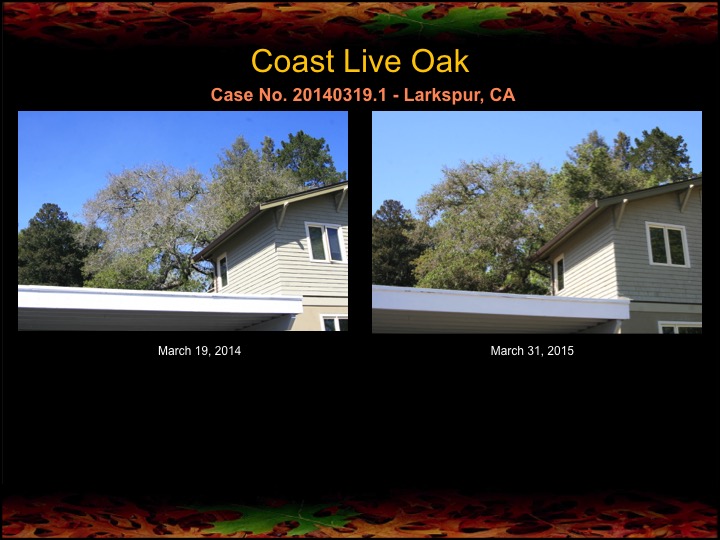
I’ve been away for the past 5 weeks, working on a project in Ireland. (Hint: the project made front page of the New York Times one week ago today.) While I was away I received messages from two clients concerned about the health of their oaks. In both cases they noticed a sudden browning of the oak canopy. The reports were definitely cause for alarm considering the prevalence of Sudden Oak Death, and other diseases and inspect pests that are afflicting the oaks in Marin.

Upon my return I promptly inspected the oaks and and am happy to report that in both cases the sudden “browning” was due to a heavy bloom of male flower clusters, which give the tree a brown appearance. I took photos of both trees, showing that they both are improving noticeably since their initial treatment with fire mimicry.

20130302.2.2

20140319.1.1

20140319.2.1

Ive


Fire mimicry shows promising results on oaks after just one year

1 02 2015

Slide3

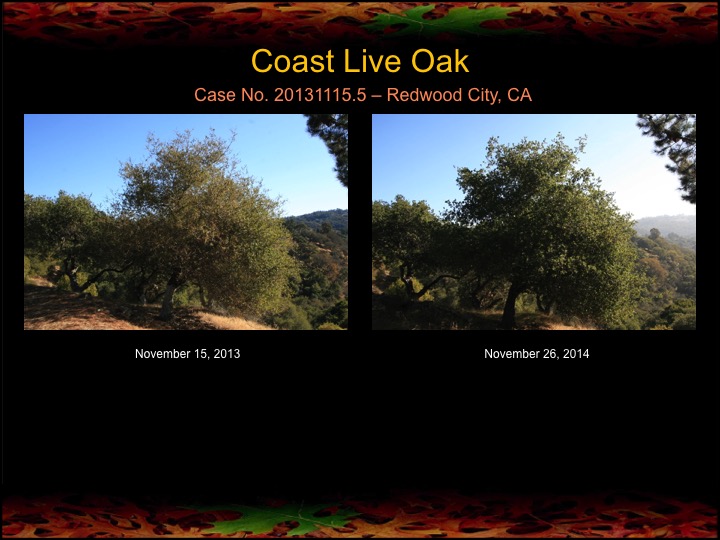
In November of 2013 I met with a property owner in Redwood City, CA who had some rather sick coast live oak trees. His wife had alerted him my work with fire mimicry and he was interested, though quite skeptical, of my approach to helping oaks. I provided a report of my findings and recommendations, and he responded with a number of good questions, showing me that he had done his homework on the subject. In the end he opted to try my approach, noting that his decision was swayed by the fact that the mineral and compost fertilizers I apply are all natural, non-toxic compounds typically used in organic agriculture.

One year later, in November of 2014, we met again as I did my annual inspection his treated oaks. Even before I had time to re-photograph the trees he admitted he had seen significant improvement in several oaks, and was no longer a skeptic of my work.

Bear in mind that these photos show the treated oaks after only one year’s time. A few oaks show no noticeable improvement in canopy density or greenness, nor do they show any noticeable decline. Other oaks have responded with clear improvement in canopy density and greenness.

Needless to say, the owner opted to treat his oaks again, and we’ll see their response again next year . . .

Slide5 Read the rest of this entry »


Oaks in Woodside, CA flourishing with fire mimicry

16 01 2015

Slide7

In 2010 I began fire mimicry treatments on a grove of coast live oaks in Woodside, CA, which are at risk of Sudden Oak Death. Here are the results after four years. None of the oaks has contracted disease, and their canopies are clearly showing an increase in size, greenness, and density. Some light pruning occurred in 2011.

Slide6 Read the rest of this entry »


Ten year milestone for Sudden Oak Life

31 12 2014

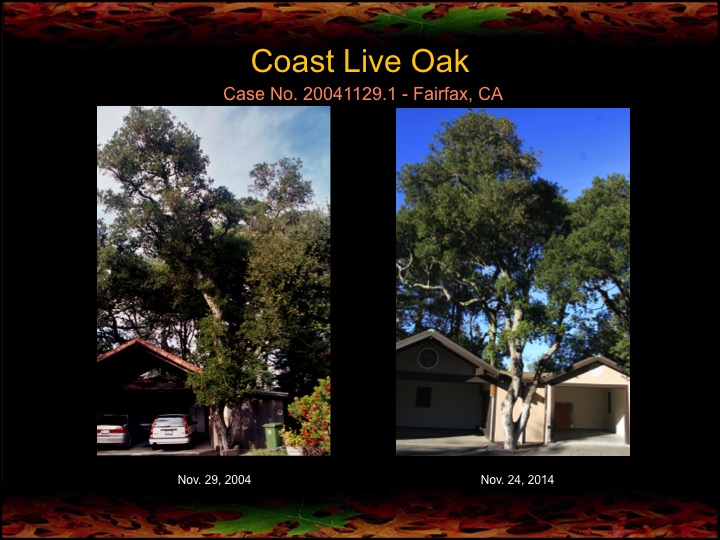
Thank you readers for your patience during the extended quiet time here on my blog in 2014. This year started off with the challenge of recovering from the loss of my home during the Big Sur fire in December 2013, where many of my friends and neighbors also lost their homes. Fortunately, with the generous help of the Big Sur community, family, and friends I’ve been able to set up a new home and am back doing my forest restoration work.

There are many results from the past year that I plan to show in coming posts in 2015. Let me start with a milestone, the first 10-year results of fire mimicry methods employed on oaks that I have documented. These results come from Fairfax, CA and much of the credit goes to Leith Carstarphen who has been applying the methods I showed him 10 years ago on the coast live oaks below.

20041129.1.10 Read the rest of this entry »


Decline in redwood trees abated with fire mimicry

7 09 2013

20120912.1

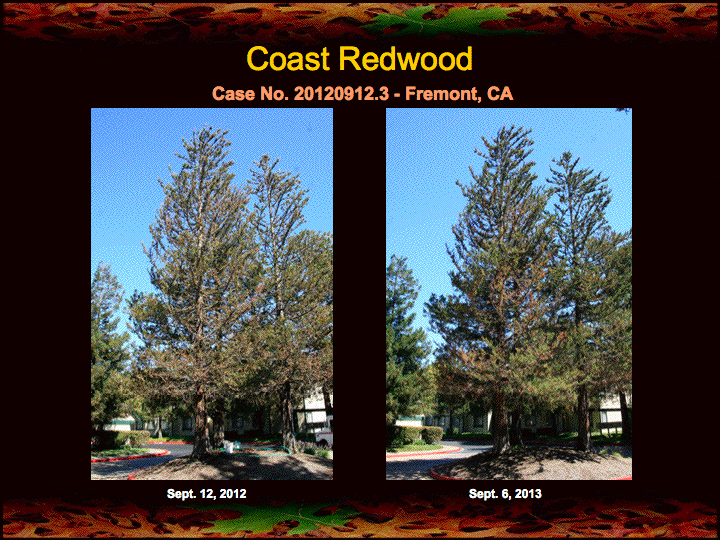
Last year I was contacted by the owners of a property in Fremont, CA with numerous redwoods that had been in decline for several years. Previous to my involvement, various conventional tree service companies and experts had tried helping the trees, but to no avail. Their recommendation was to remove the sick redwoods. Fortunately, the owners were reluctant to cut down the redwood trees and decided to ask for my help.

Upon my inspection of the redwoods I found evidence of soil acidification and nutrient depletion. The owners followed my recommendations for fire mimicry treatments involving moss removal, soil mineral amendments, and compost tea.

Here are the results after just one year. Most, although not all, of the sick redwood trees are showing noticeable improvement in canopy density. None of the redwoods appear to be exhibiting further decline. Note that in photo set 20120912.2 below, the redwood tree on the left was removed during the past year. It was the one redwood I felt could not be revived with treatments.

20120912.3 Read the rest of this entry »


Fire mimicry improving health of oaks, pines, and toyons

23 06 2013

20080612.1.5

For thousands of years the native people of California used fire as a tool to manage the lands and maintain healthy trees. Now-a-days, faced with the fact that we can no longer set fire to the land because of heavy fuel buildup from years of fire suppression, we must use alternatives, such as fire mimicry methods, in our work to keep California’s trees healthy.  Today I’m posting some recent results of fire mimicry treatments in restoring oak, pine, and toyon health.

Enjoy!

20100602.1.3 Read the rest of this entry »


Oaks in Carmel respond with vigor to fire mimicry treatments

27 05 2013

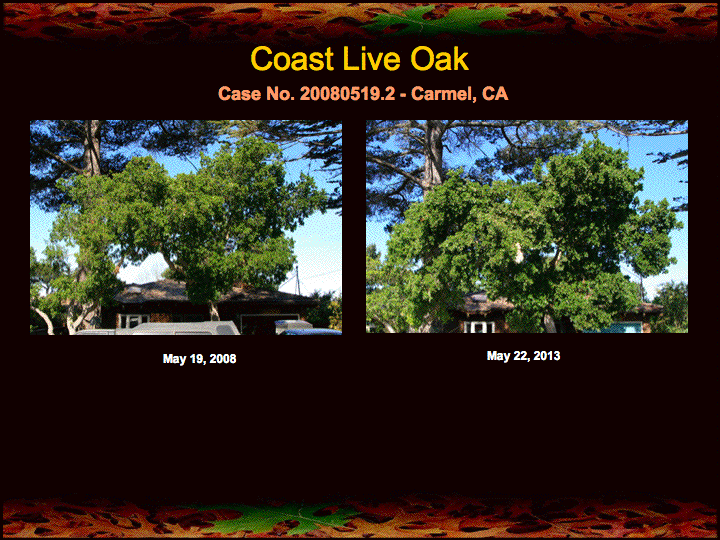
Five years ago I began fire mimicry treatments on these coast live oaks in Carmel, CA. Last week I checked on the oaks and re-photographed them. Here are the results:

20080519.1.5

20080519.2.5


Glen Ellen oaks on the mend

18 05 2013

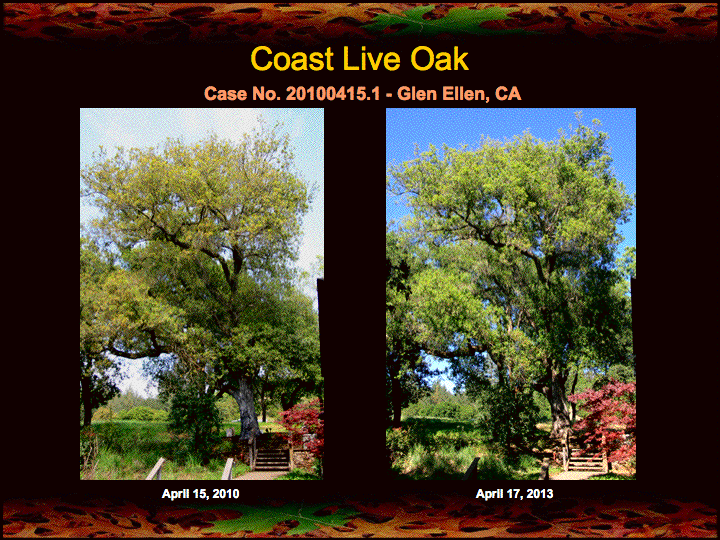
Three years ago I began fire mimicry treatments on a number of coast live oaks and valley oaks near Glen Ellen, in Sonoma County, CA. I recently did my annual checkup on these oaks and re-photographed them to assess their response. 

Here are the results.

20100415.1.3

20100415.6.3 Read the rest of this entry »


Hillsborough oaks respond to fire mimicry

3 05 2013

20120417.3

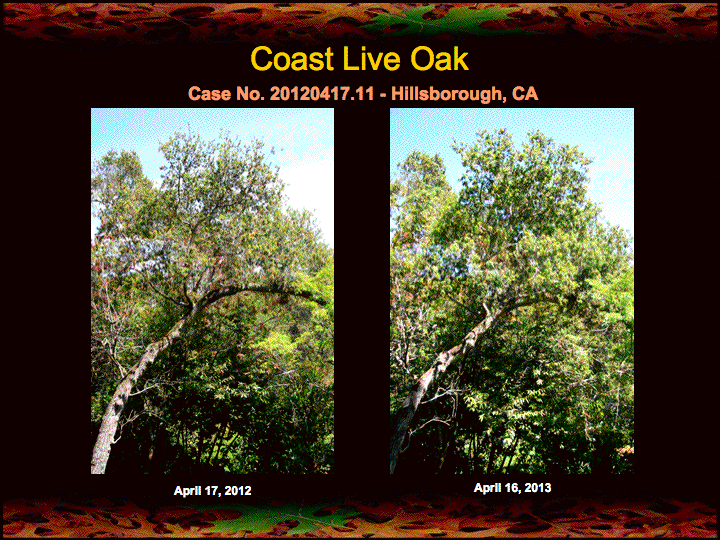
Last year I began restoration work using fire mimicry on a stand of oaks in Hillsborough, CA. I did some clearing of woody understory and moss removal from the trunks, and added alkaline-rich minerals and compost tea to the soils. I also applied a lime spray to the trunks.

Here are the results after just one year.

20120417.11

20120417.8 Read the rest of this entry »


Sick pines respond to fire mimicry

21 04 2013

20100415.24.3

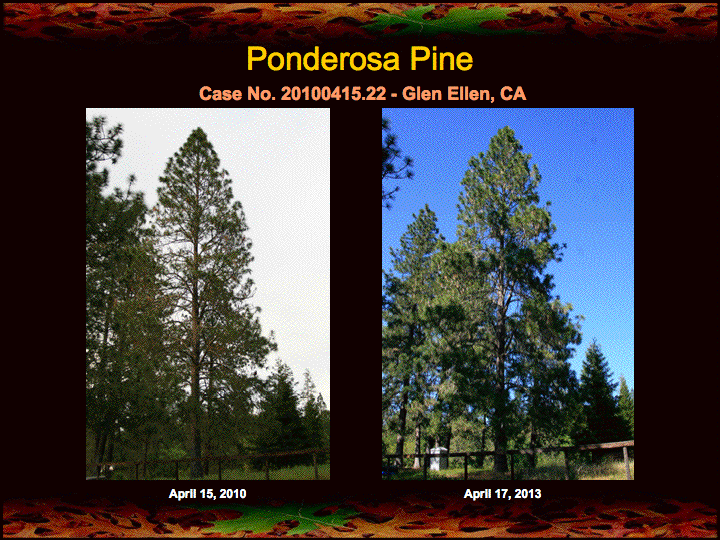
While the focus of work here at Sudden Oak Life is on oak health, there are lots of other kinds of trees that respond to fire mimicry treatments. Today I would like to share with you the results of some work being done on several ponderosa pine trees. These photo sets show how the pines have responded after three years of treatments. Note that the last photo set is of an adjacent UNTREATED pine.

20100415.22.3

20100415.23.3 Read the rest of this entry »