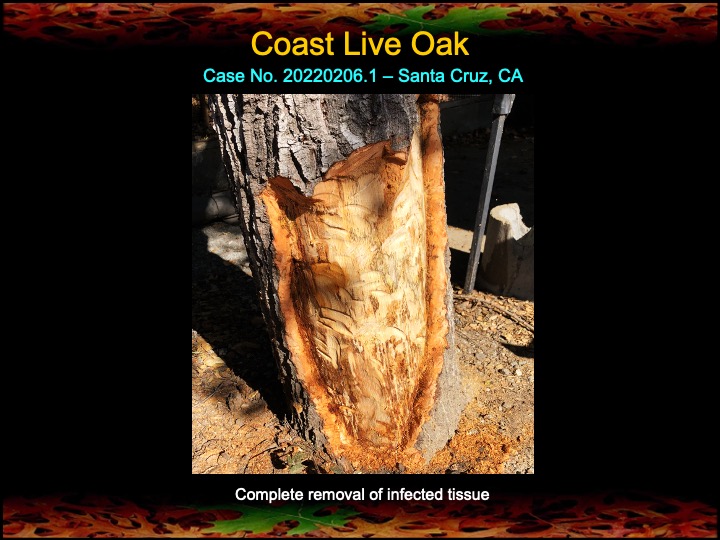
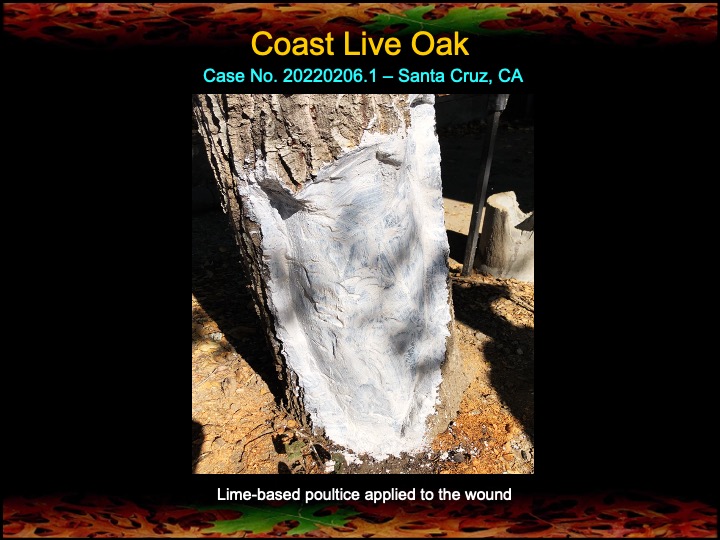
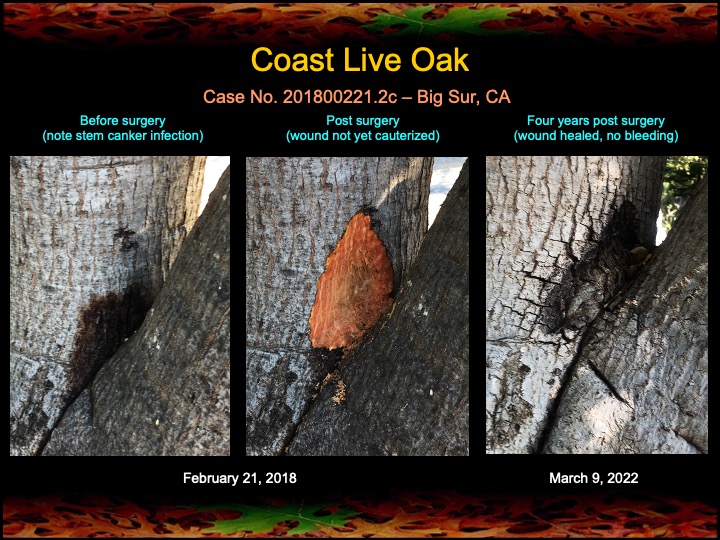
Here are a set of photos showing a surgical procedure on a coast live oak in Santa Cruz, CA infected with a stem canker disease (probably Sudden Oak Death). This is a good example of a major infection that appears minor at the surface. The surgery ended up being fairly large for a tree this size, but I do believe the oak will recover.
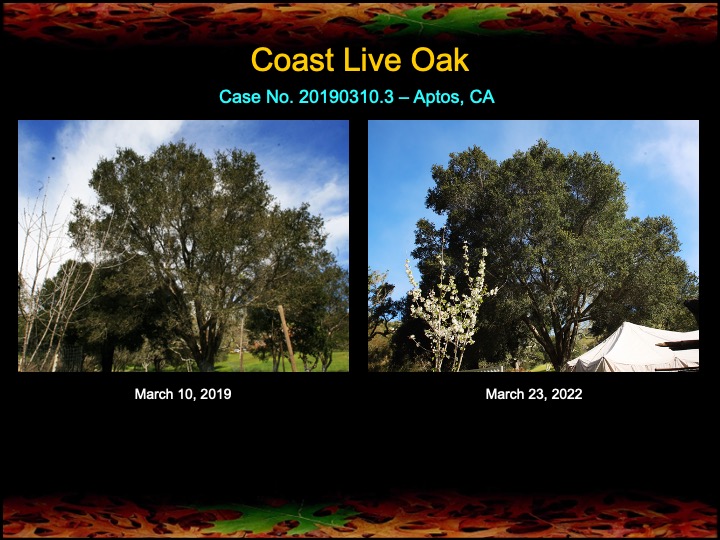
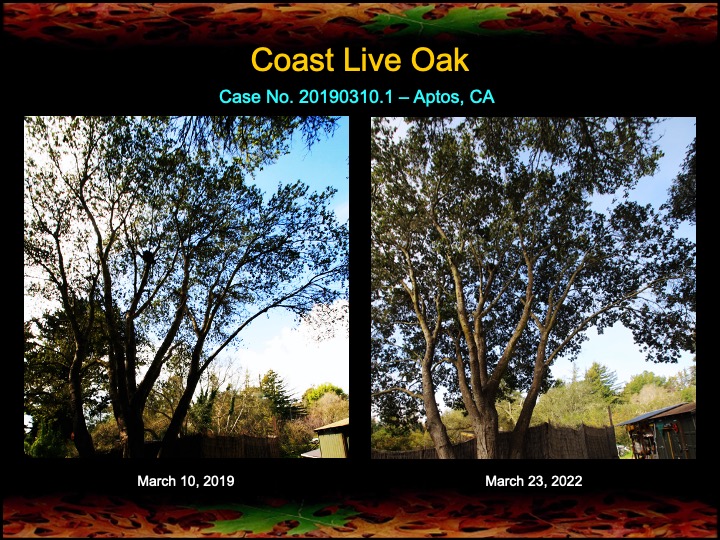
Here are various coast live oaks that have continued to respond to fire mimicry treatments over the course of 5, 8, and 10 years. Several have been affected by stem canker disease, probably Sudden Oak Death, but all have survived and most have improved in canopy density and lushness.
In 2019 I began fire mimicry treatments on a grove of 20 coast live oaks in Soquel, CA, including several “Ancestor” oaks (ancient oaks that were pollarded and otherwise tended by the Ohlone people). Today, I inspected and re-photographed the oaks, with the results shown here. While most of the oaks show noticeable increase in canopy density (leaf area), a few of the oaks have shown little improvement, and one oak died in 2021. Still, I continue to be encouraged by these and other results. Enjoy!
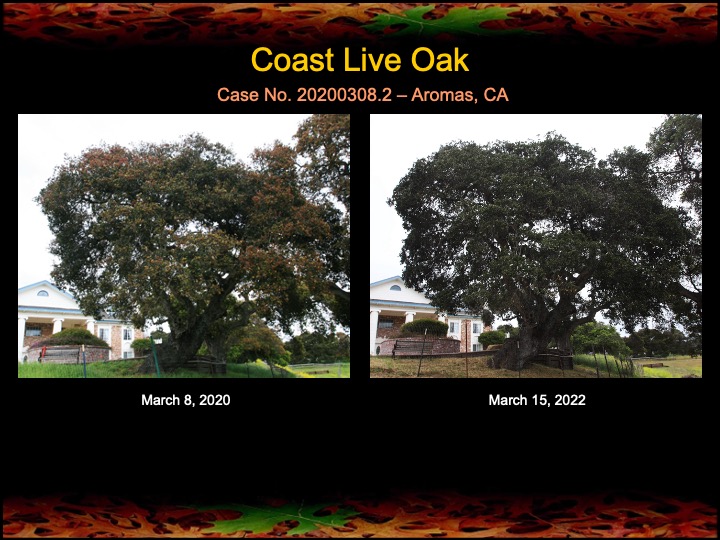
Two years ago the crew and I performed fire mimicry treatments, including a few surgeries for stem canker infections (probably Sudden Oak Death), on a grove of ancient coast live oaks in Aromas, CA. Several of these were pollarded “Ancestor” oaks, remnants of a vast Ohlone acorn orchard. Today I inspected the oaks and found that most of them have responded favorably to the treatments with denser and greener canopies. Here are the before-and-after photos so you can judge for yourself.
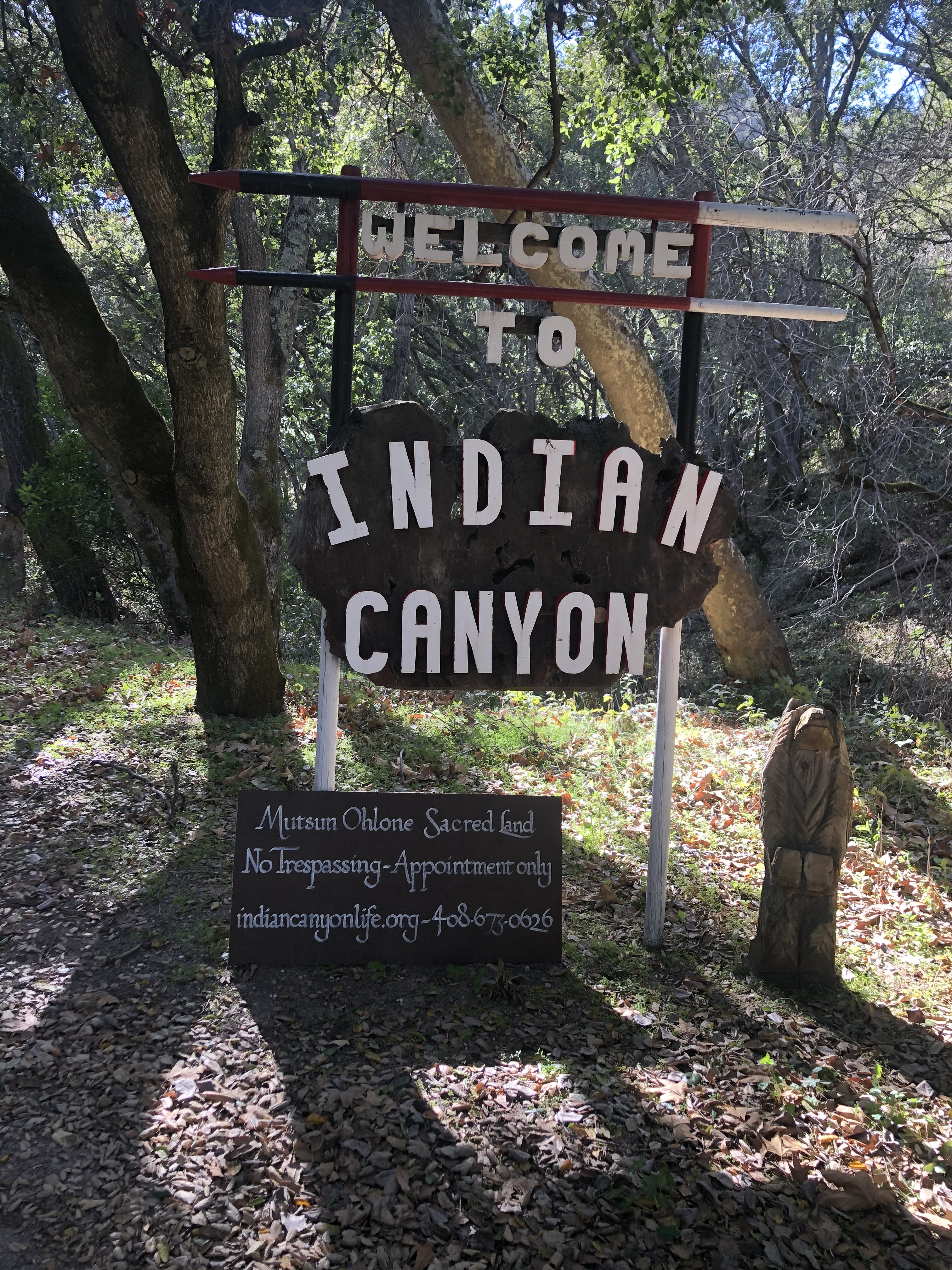
Indian Canyon Nation, EcoCamp Coyote, and Sudden Oak Life are collaborating again on an upcoming 3-day intensive workshop titled “Fire Mimicry and Traditional Ecological Knowledge” being held at Indian Canyon May 13-15, 2022. This event will feature Kanyon Sayers-Roods (Indian Canyon Nation, Mutsun Ohlone), Tom “Little Bear” Nason (Tribal Chairman of the Esselen Tribe of Monterey County), Leo Lauchere (EcoCamp Coyote), and Lee Klinger (Sudden Oak Life). Here are some of the topics we will cover:
• How this restoration work supports and is informed by indigenous cultures and traditions
• Explore right-relationship with the land and its people
• History and shared lineages of the Esselen and Mutsun Ohlone People
• Modern cultural tending and management of Central Coast forests
• Identifying culturally modified trees and landscapes
• The science and practice of fire mimicry
• Demonstration of stem canker surgical procedure
This is a rare event and should not be missed by anyone passionate about tending oaks and other native trees. More information and registration for the event are here.
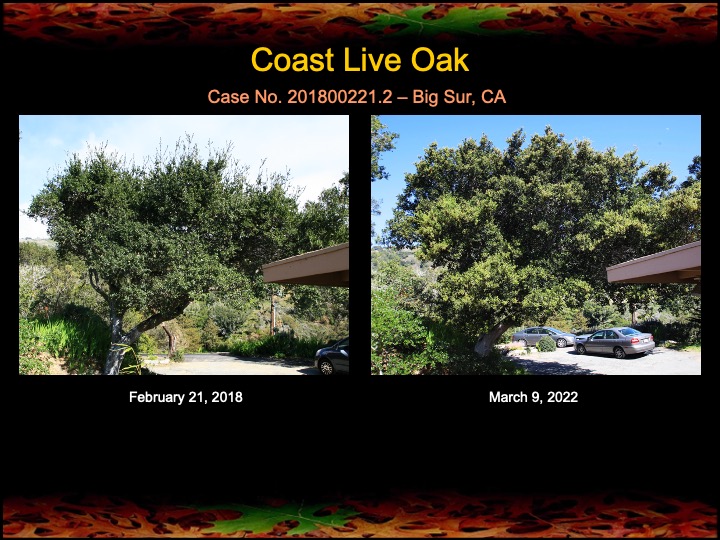
Four years ago I performed fire mimicry treatments and two canker surgeries on the above coast live oak in Big Sur. This oak was treated again two years ago. I checked on the oak yesterday and found it has completely transformed into a lush, vibrant tree. The bit of yellowing seen at the tips of the branches are thick clusters of male flowers. The two surgical wounds (below) have mostly healed shut will no remaining infection in one and a minor residual infection in the other.
Another nearby coast live oak was also treated twice with fire mimicry in the past 4 years, although did not require any surgery. Here are the results of that oak.
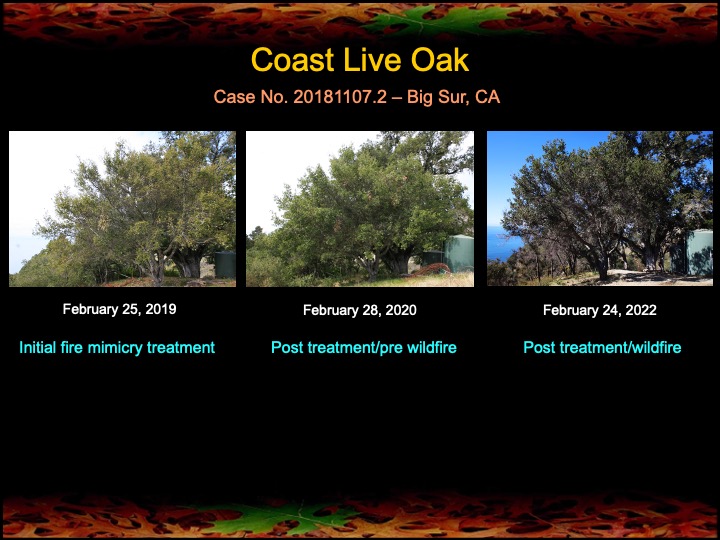
In February of 2019 I began photo documentation of 21 coast live oaks in Big Sur, CA. At least six of these appear to be “Ancestor” oaks, culturally-modified by the Esselen Indians via pollarding of their canopies. All oaks were initially treated with a fire mimicry protocol (clearing, pruning, moss/lichen removal, soil fertilization, & limewash), with the intention that this work would improve the survival rates of the oaks, whether or not a wildfire occurred. The first year results were About photo documented in February 2020. In August 2020 a severe wildfire was ignited in the area and burned through all the groves of the treated oaks.
Yesterday I was finally able to access the site to observe and photo document the findings. Both wooden structures on the property were lost, as were two treated oaks that grew adjacent to them. However, of the 21 oaks initially surveyed, 17 survived the fire, a survival rate of just over 80%. Four of the six “Ancestor” oaks also survived. More than 75% of the oaks showed noticeable signs of improvement in canopy lushness following fire mimicry. A year and a half after the wildfire, 6 of the surviving oaks continue to show signs of heavy fire damage in their canopies. However, 11 (or just over 50%) of the surviving oaks are showing significant improvement of their canopy health following the wildfire.
These are exciting results (see photos below) and show to me that fire mimicry treatments can provide considerable benefit to survivability and health of oaks and other trees in the event of a wildfire.
Today Sudden Oak Life, EcoCamp Coyote, and the Central Coast Prescribed Burn Association (CCPBA) held a workshop “Tending the Forest with Fire” at Indian Canyon hosted by Kanyon Sayers-Roods (Mutsun Ohlone). This was a followup event to the Fire Mimicry and TEK workshop at Indian Canyon in November ’21 where we learned the details of fire mimicry and traditional tending of the land.
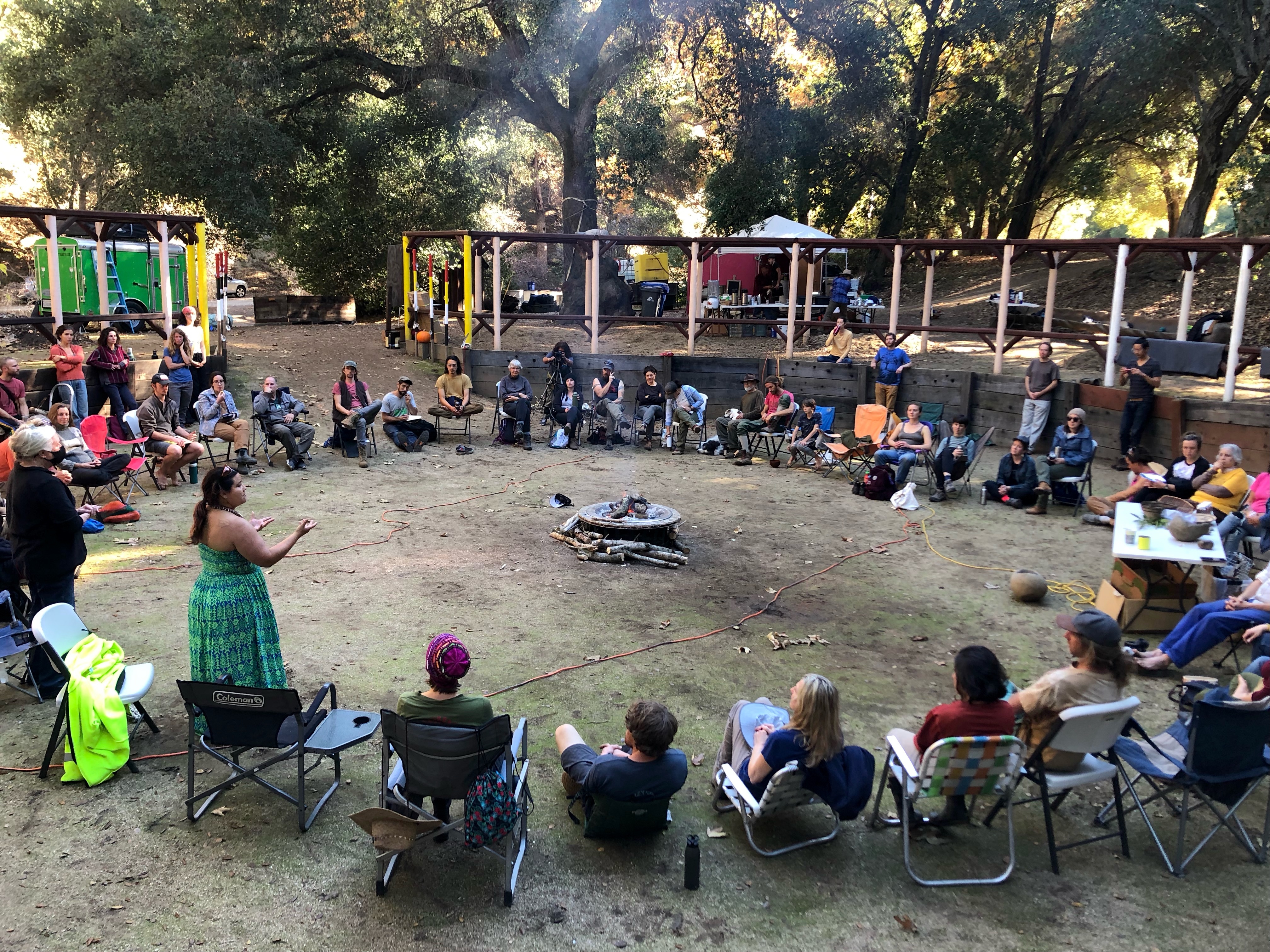
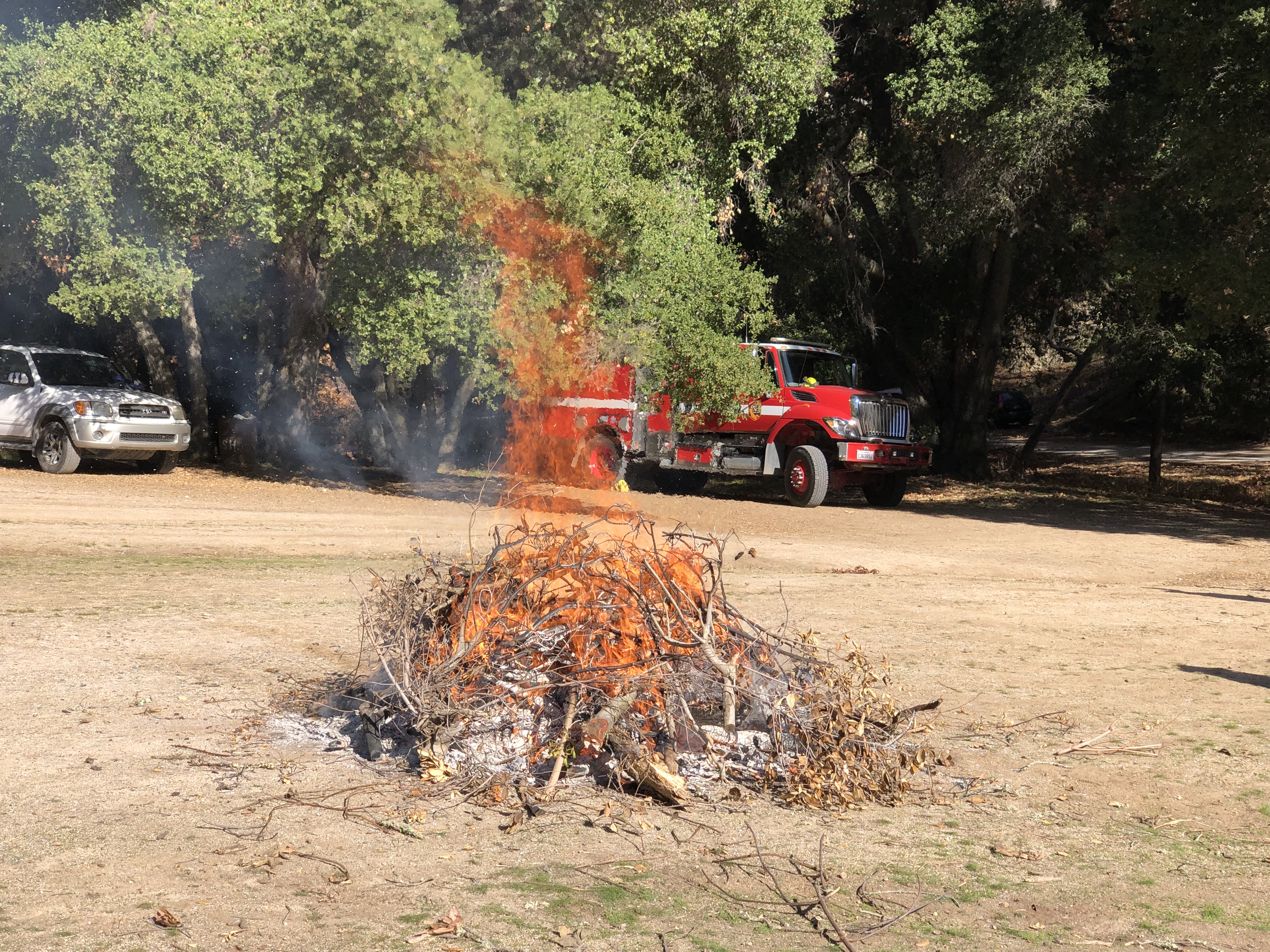
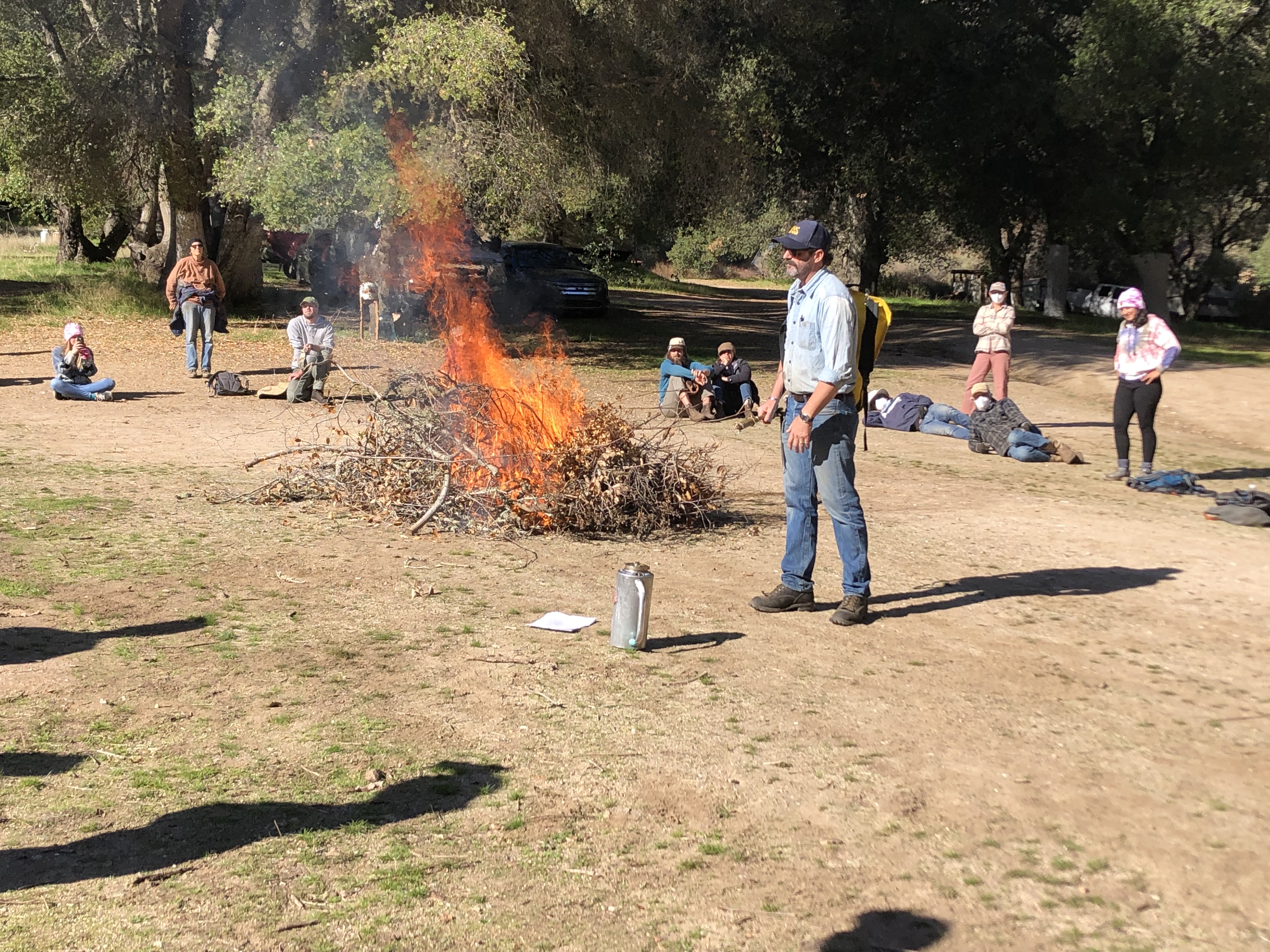
After singing her beautiful Grandmother song to the group of over 60 participants today, Kanyon shared a thoughtful land acknowledgement and a summary of the Native history of Indian Canyon. I then described briefly the ecology and practice of fire mimicry covered in the previous workshop, and the strategies for staging the cleared materials for burning. Jared Childress (CCPBA) then provided detailed instructions on burn preparation protocols, methods and tools for safe pile burning, and the various resources for conducting these activities on private properties. A crew from Cal Fire showed up with their fire engine and made clear their intent of supporting and educating folks on safe fire management.
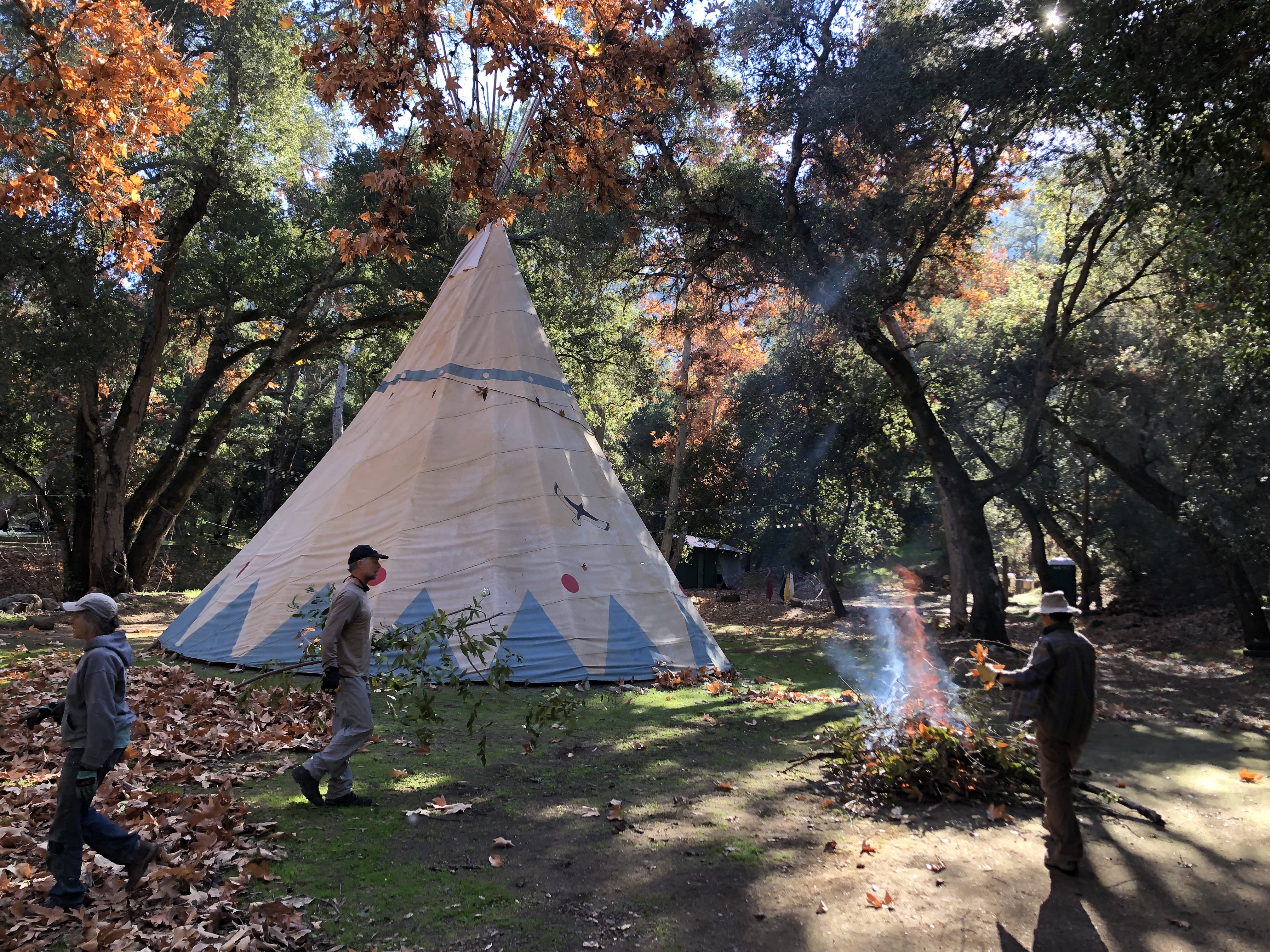
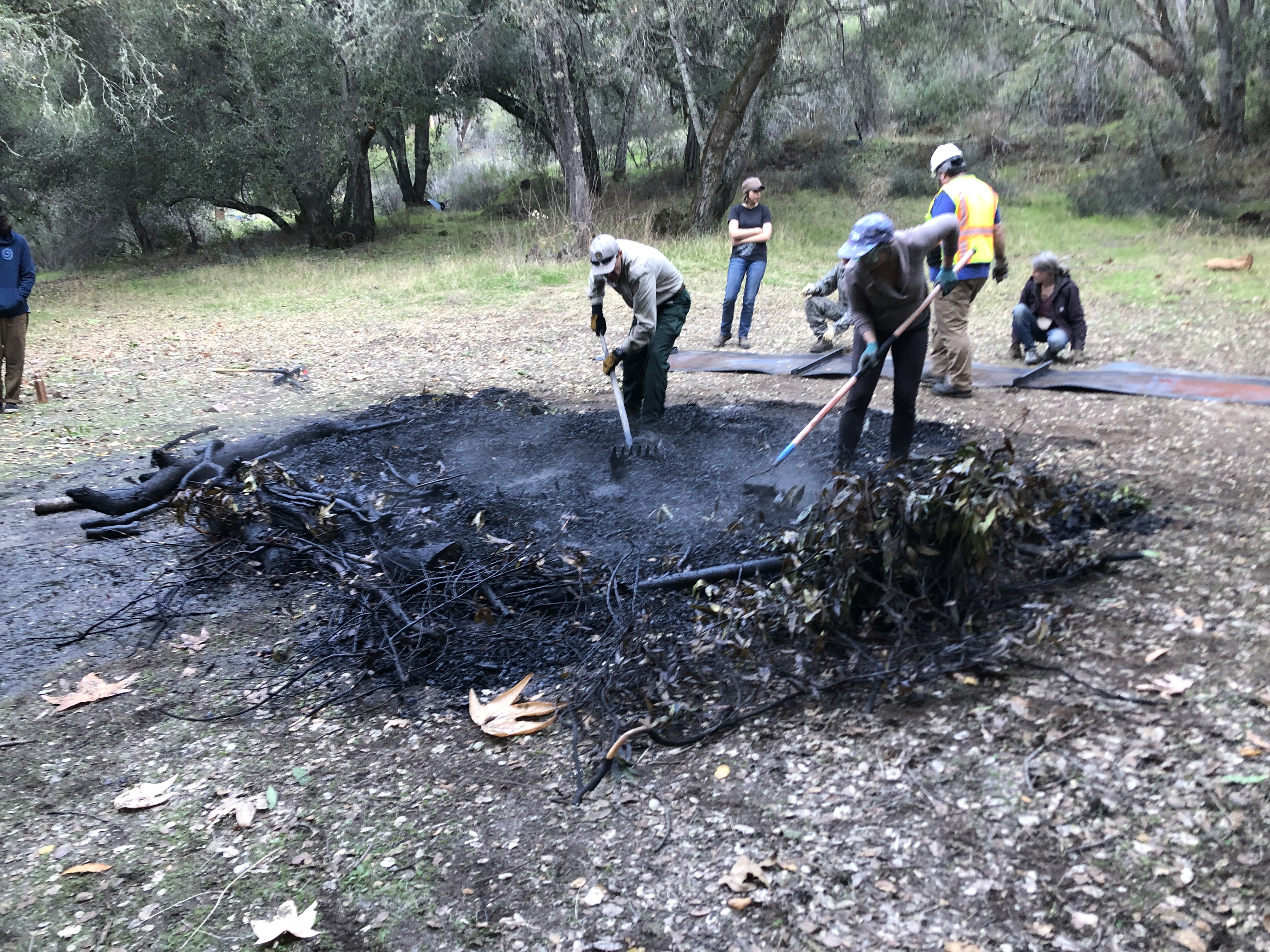
Once the fires were started we switched from workshop to work party mode, and ended up burning all the piles of cleared material from the previous workshop. Jonathan Kabat showed up with a simple setup for making biochar, and we made several hundred pounds of biochar today, which we will spread around the nearby oaks to improve their health.
Below are some photos of today’s activities. Many thanks to all who participated!
Opening circleJared Childress (Central Coast Prescribed Burn Association)Feeding the firesFeeding the fireMaking biocharPutting out the fires at the end of the dayBiochar spoils
Here’s an upcoming one-day workshop on “Tending the forest with fire” sponsored by Sudden Oak Life, the Central Coast Prescribed Fire Association, and EcoCamp Coyote at Indian Canyon, near Hollister, CA. Proceeds will go to the “Save Indian Canyon” fundraiser. Spaces are limited so please sign up soon!















 Sudden Oak Life by Lee Klinger
Recent Comments