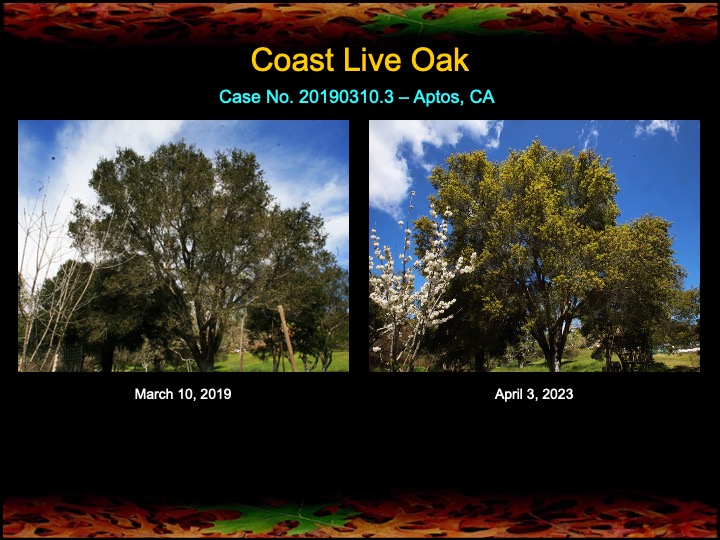
Five years ago I began fire mimicry treatments on several coast live oaks in Aptos, CA. Last week I checked on them and here are the results. Most of the oaks have responded well, although a few are not showing improvement. I’m planning to add more biochar in the next round of treatments.
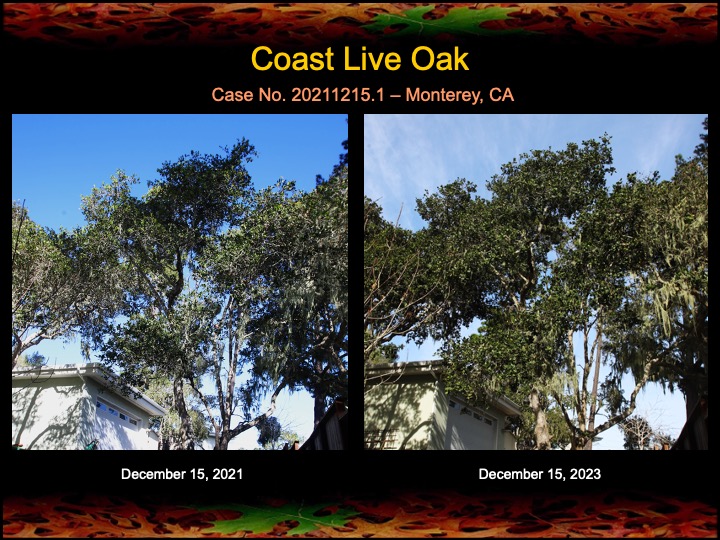
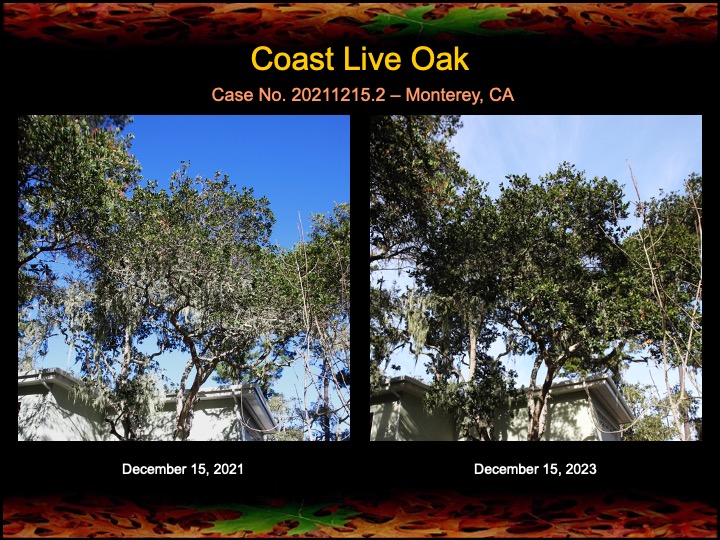
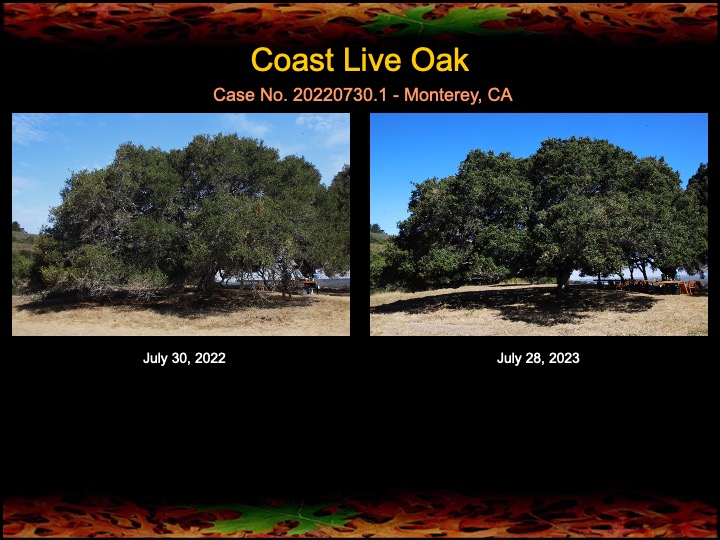
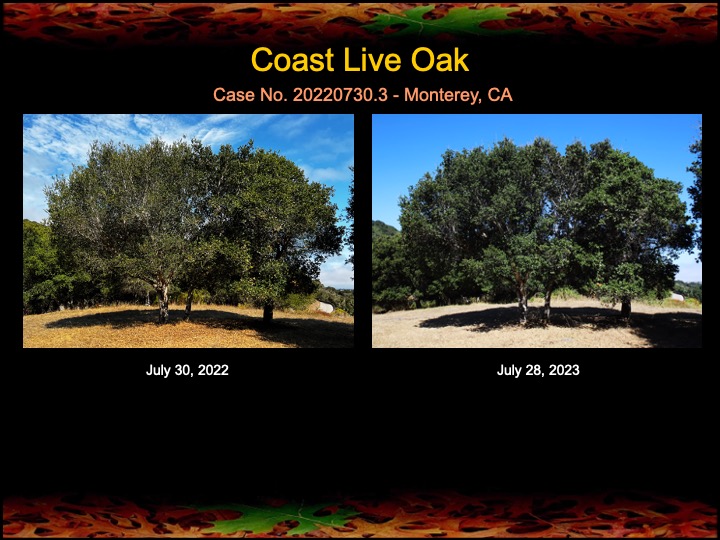
Two years ago I began fire mimicry treatments on several sick and declining coast live oaks and Monterey pines in Monterey, CA. Yesterday I checked on their progress and am generally pleased by the results, as is the homeowner!
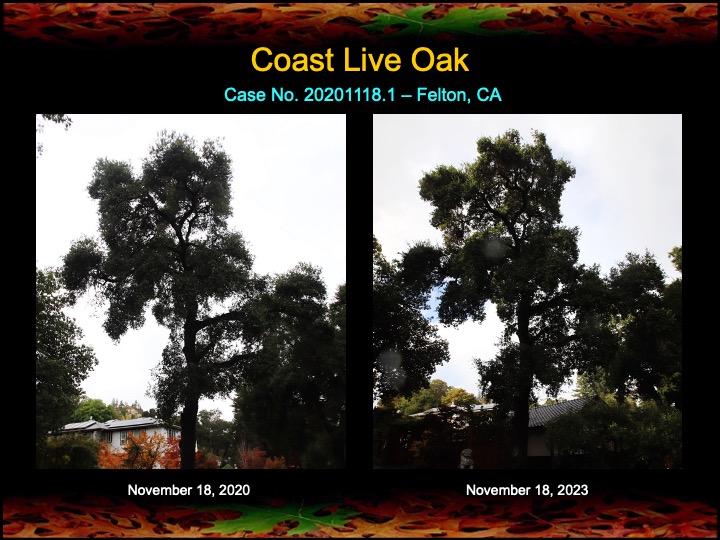
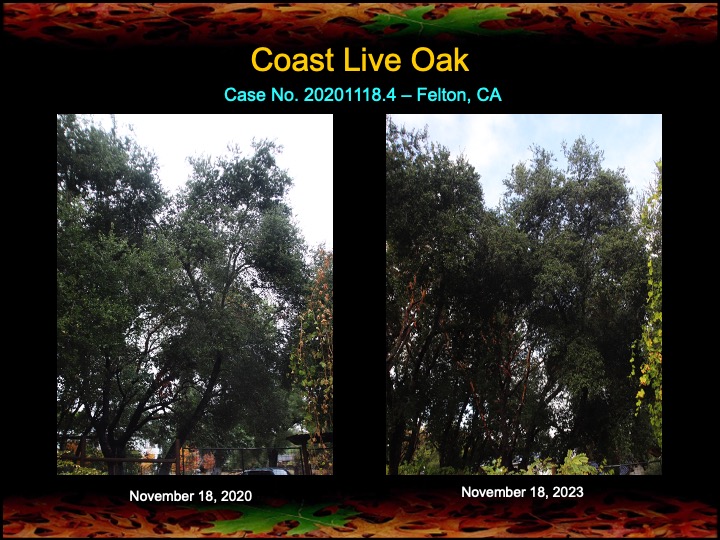
In November of 2000 I began fire mimicry treatments on several ancient coast live oaks and madrones in Felton, CA. Many of these oaks are likely over 400 years old and date from the time when the Ohlone were the sole occupants of the land. Earlier this week I checked on their progress. I’m please to report that, after three years, all the oaks are showing noticeable improvement, and all but one of the madrones also appear to be thriving. Here are the full set of results.
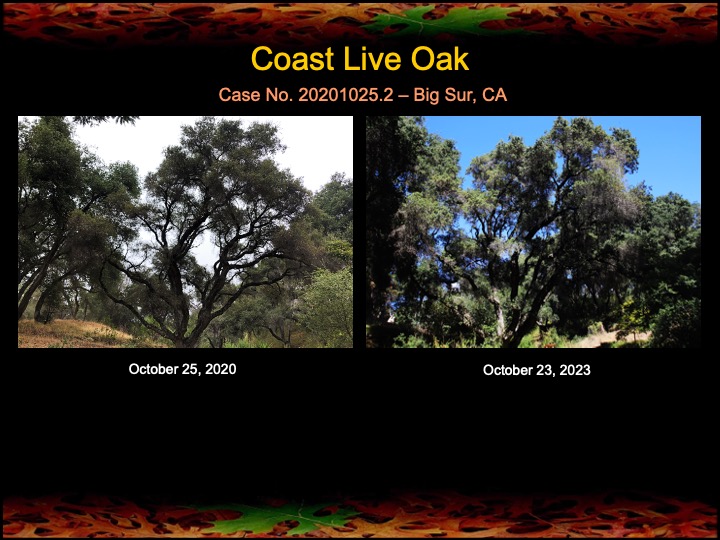
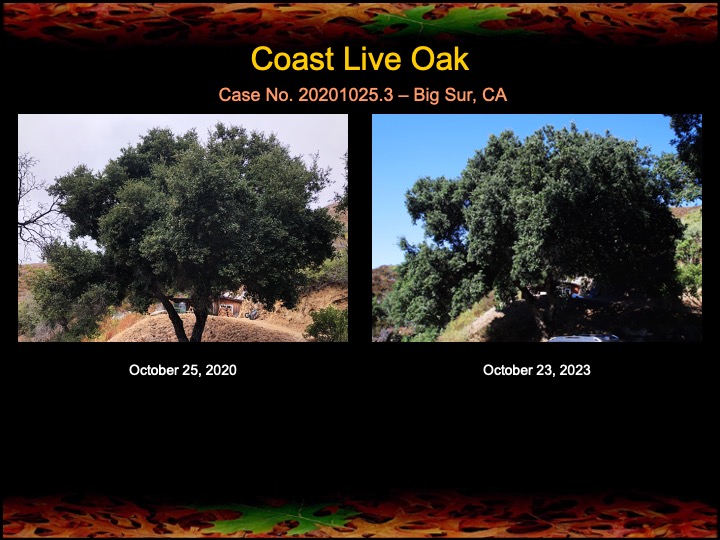
Three years ago I began fire mimicry treatments on five oak trees here in Big Sur. I also performed a large canker surgery on one of the trees, an Ancestor oak that is about 350 years old. Here are the results captured with repeat photography. Enjoy!
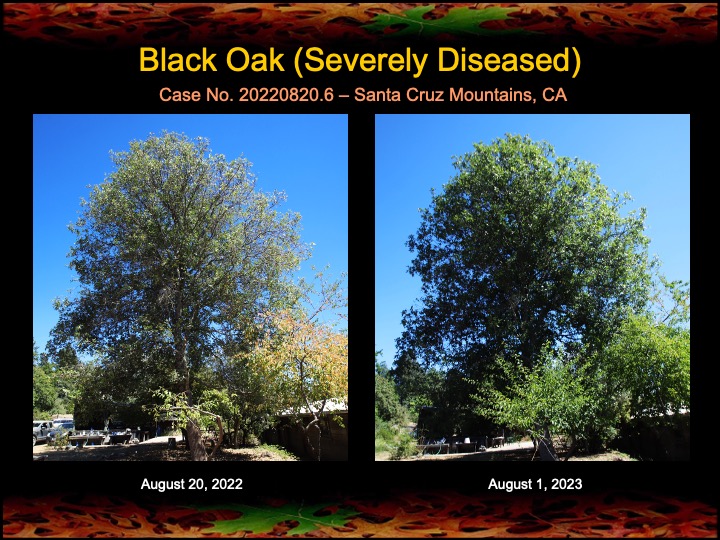
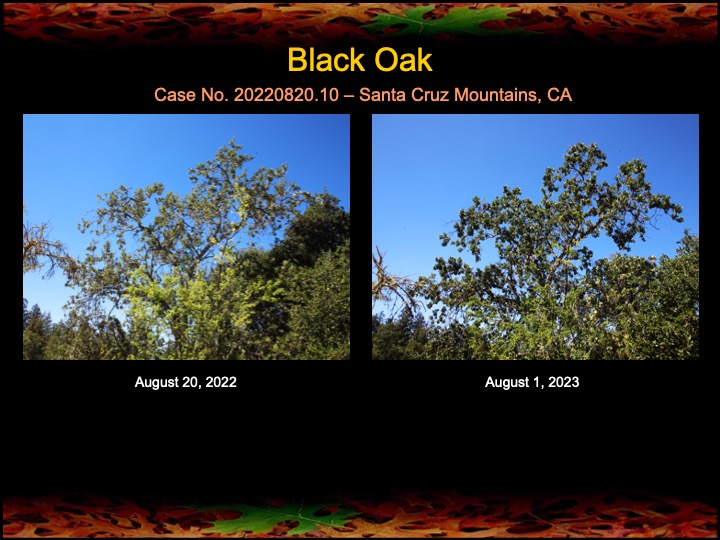
While most of my results are with coast live oaks, I also work with other kinds of oaks. Here are a set of results among black oaks I’ve obtained this past year using fire mimicry methods. Several of these black oaks were severely diseased with Sudden Oak Death infections. The oaks were given compost tea, soil mineral, and limewash treatments, as well as the surgical removal and cauterization of a Sudden Oak Death infection. The surgeries appear to have worked well, as the canopies have improved in lushness and density and there are no lingering infections in the remaining trunk tissues.
Last year I began fire mimicry treatments on several Ancestor oaks in Monterey, CA. Several of these oaks date from a time when the Ohlone Indians were the sole occupants of the land. As you can see the oaks are responding quite favorably to being tended. Note the change in greenness and lushness of the canopy leaves. It only took a few hours of work.
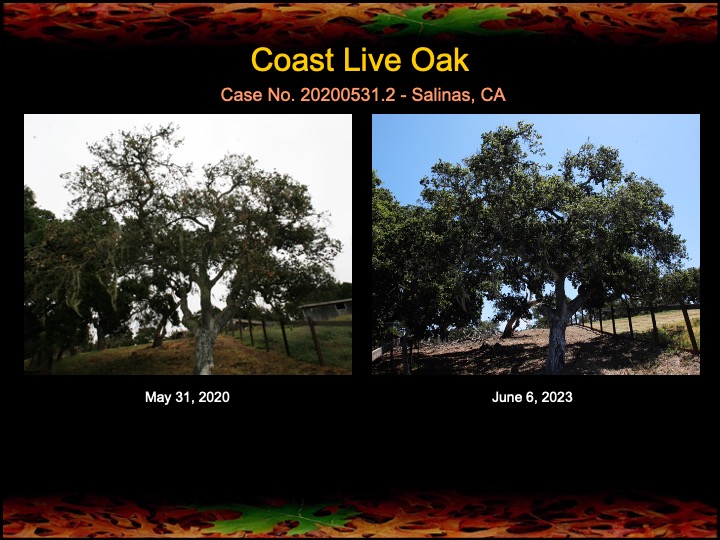
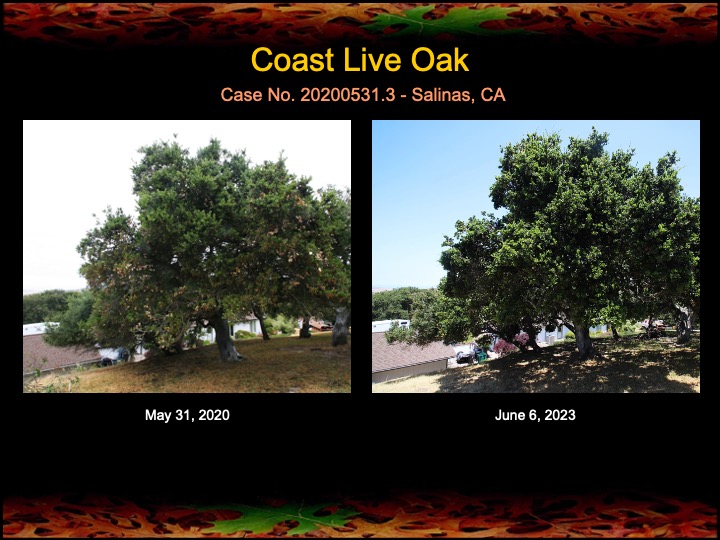
In 2020, at the height of the COVID pandemic, I kept my focus on tending trees and began fire mimicry treatments on a grove of sick and diseased coast live oaks in Salinas, CA. Well here they are, three years later, flourishing! One diseased oak, however, did not survive despite a valiant recovery effort in the first year. Note also, in the final photo set, that the untreated (control) oak has died.
Fours years ago I initiated fire mimicry treatments on a grove of sick and diseased coast live oaks in Aptos, CA. Many of these are “Ancestor” oaks, centuries-old trees that thrived under the care of the Ohlone People – living Native artifacts if you will. Sadly, one of these ancient oaks was too sick to be saved, and died in 2021.
The images here indicate that most of the oaks have responded favorably to the treatments as seen in the increase in foliage density and lushness. It still truly amazes me that a few hours of work once a year can make such a difference for an oak grove.
I’ve haven’t been posting many results lately due to my focus on a major writing project that you will hear more about soon. Thanks for your patience! Meanwhile, let me take some time and share some recent results in the next few posts.
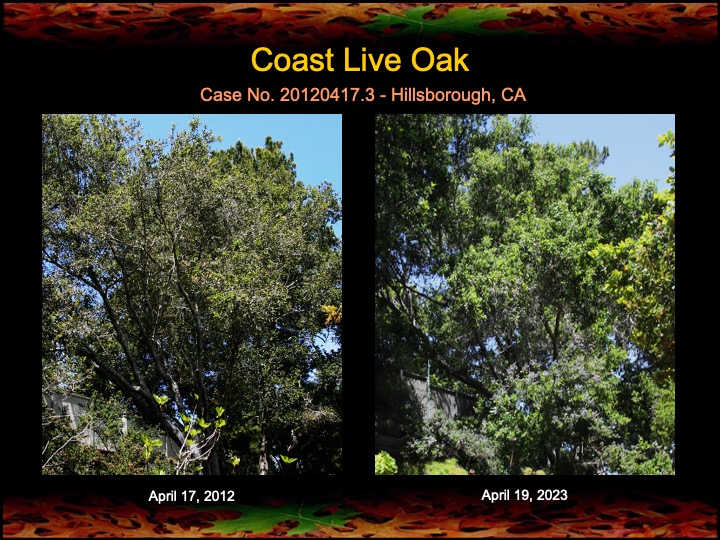
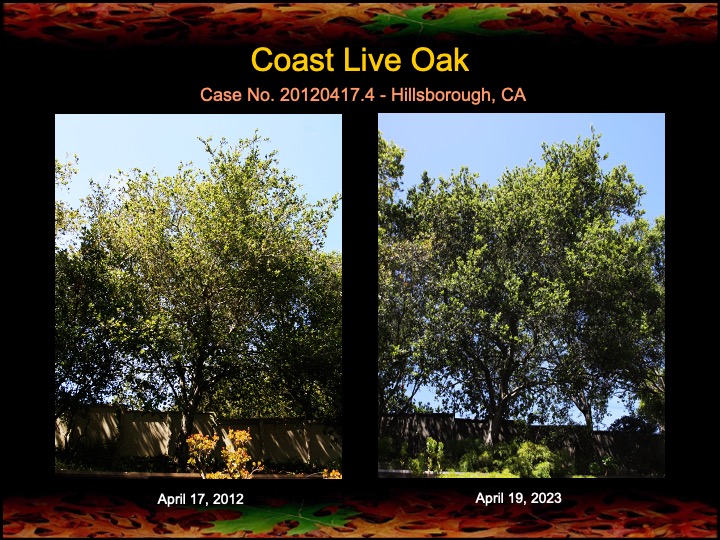
Today I want to show you a grove of oaks in Hillsborough, CA that I’ve been treating with fire mimicry every few years since 2012. Notice how the trees have developed denser, lusher canopies. This is mainly due improved soil fertility from compost tea and mineral amendments.
Coast live oak with roots compromised by adjacent construction still faring well
In November 2020 I began fire mimicry treatments on several coast live oaks and Pacific madrones in Felton, CA. Last year, when I checked on these trees, they were already showing a nice improvement (see here). Now after two years nearly all of the trees are showing noticeable positive responses to the treatments, even at the height of drought conditions. Several of the oaks have undergone major stem canker surgeries, but still seem to be on the mend. Hope you enjoy these results as much as these trees.













 Sudden Oak Life by Lee Klinger
Recent Comments