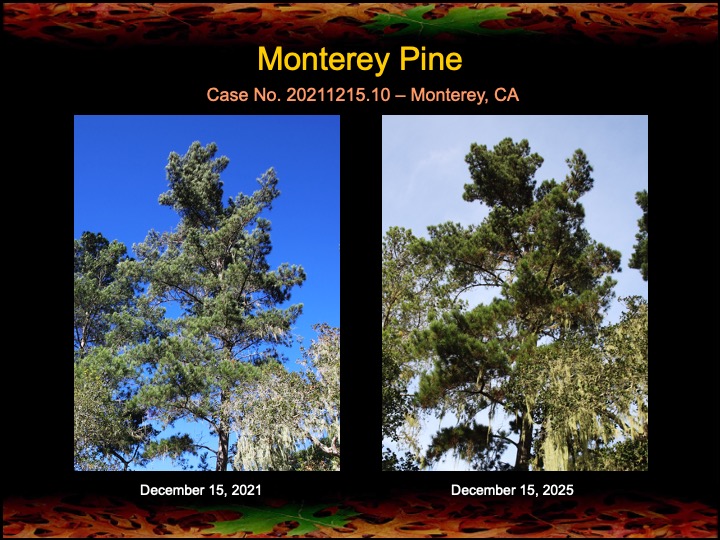
Yesterday I checked up on a grove of Monterey pines that have had a couple of fire mimicry treatments …
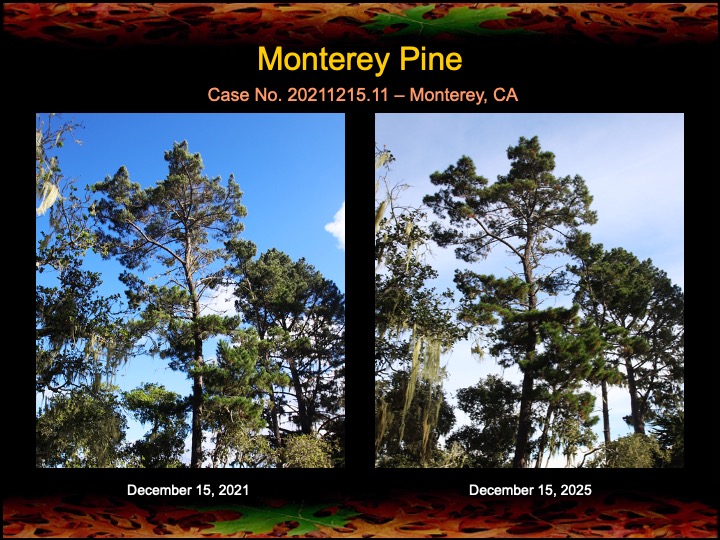

Yesterday I checked up on a grove of Monterey pines that have had a couple of fire mimicry treatments …
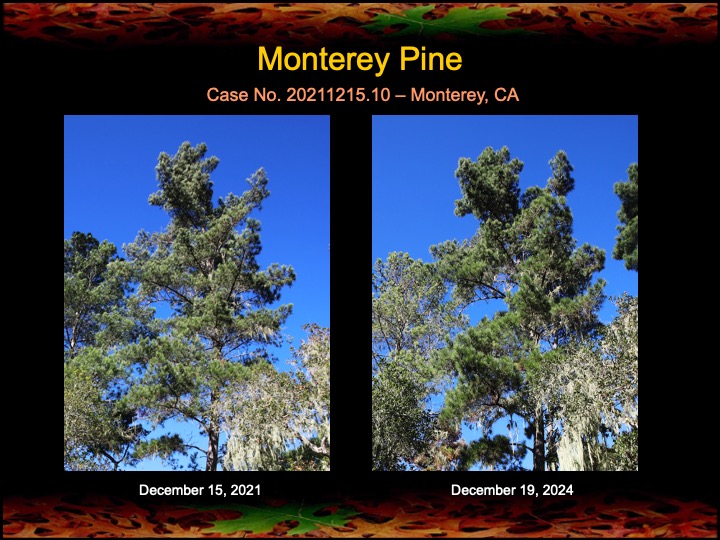
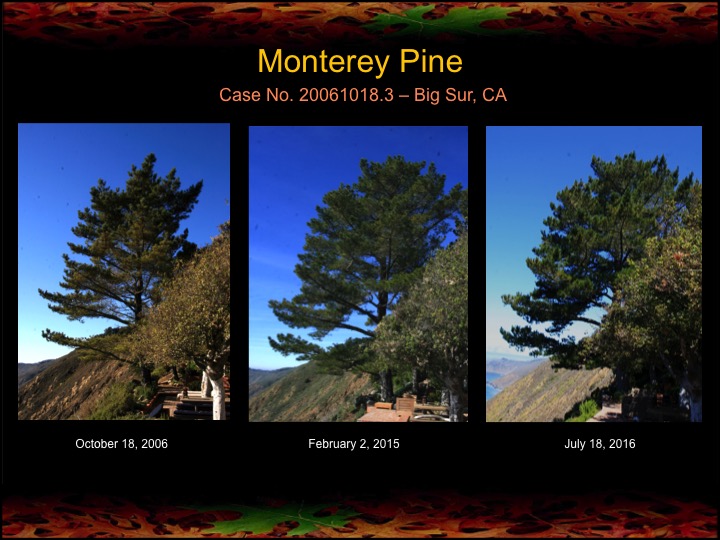
Monterey pines (Pinus radiata) are fast-growing trees that produce abundant large cones and seeds. They are, as might be expected, quite common in Monterey, CA and are endemic to our region, having been here since the Tertiary. Lately, however, Monterey pines, like the coast live oaks, are in decline, essentially victims of colonization which has led to a lack of healing fires. Both pitch pine canker disease and bark beetles are taking a heavy toll on the pines, as well as overcrowding of the forests.
While my focus is on tending oaks, I’ve found that many other fire-adapted native trees respond well to fire mimicry. Thus, I began tending this grove of Monterey pines three years ago using the same fire mimicry protocol I use on the oaks. Yesterday I checked on these trees and am happy to report that most are showing noticeable improvement in the density and lushness of their foliage. Also, they bear no signs of disease or insect pests.
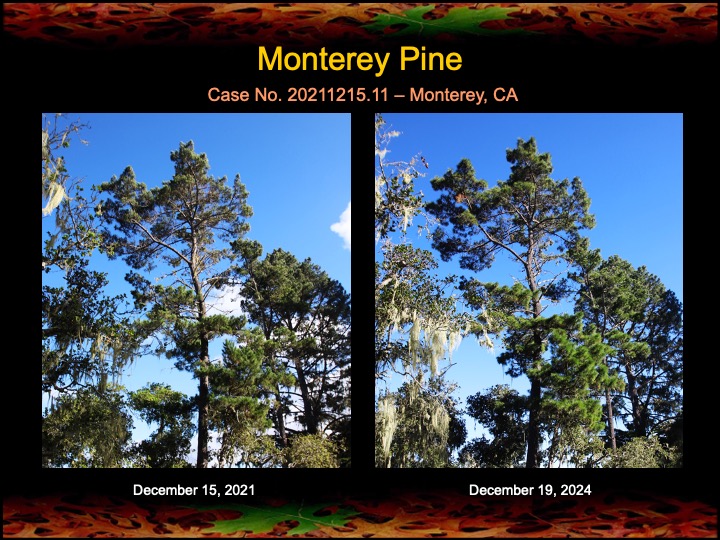
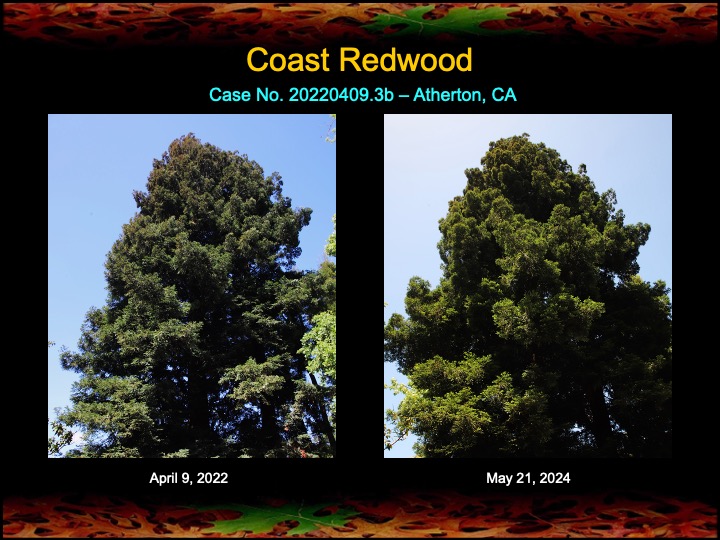
While the focus of my work is on oak trees, I have several recent examples of fire mimicry treatments improving the health of redwoods and pines. The first five photo sets are of coast redwoods after two years and seven years of treatments. Below the redwoods are photo sets of a Monterey pine after 12 years of treatments (every other year), and a bishop pine after three years of treatments. I’m pretty pleased with these results!

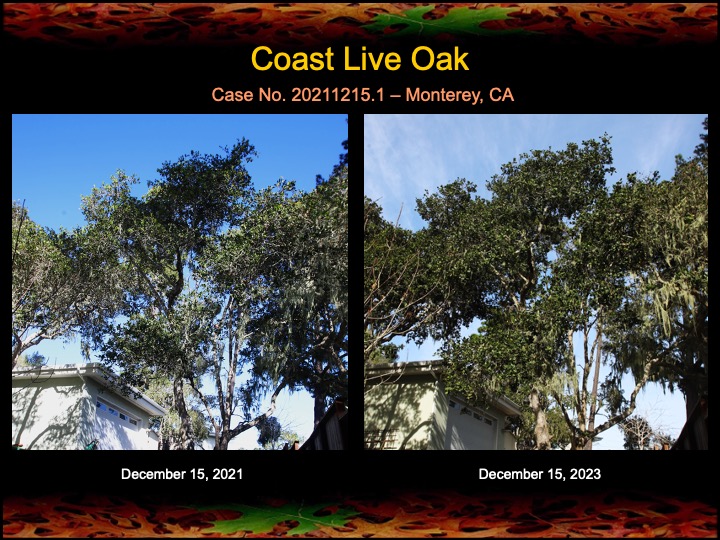
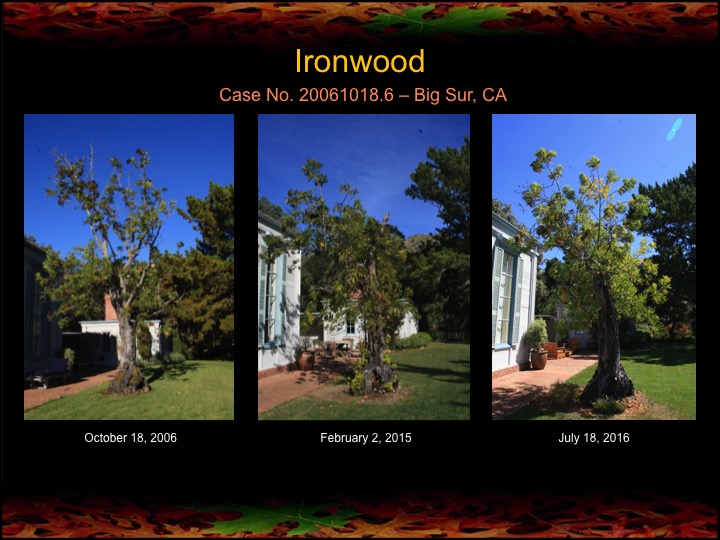
Two years ago I began fire mimicry treatments on several sick and declining coast live oaks and Monterey pines in Monterey, CA. Yesterday I checked on their progress and am generally pleased by the results, as is the homeowner!
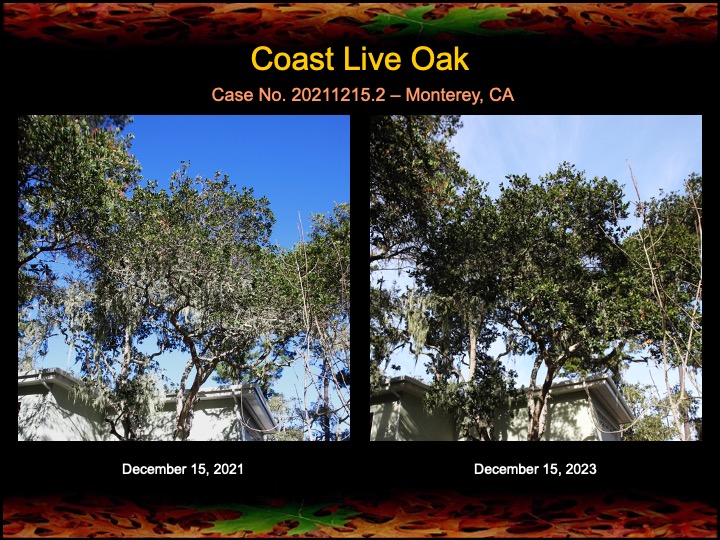

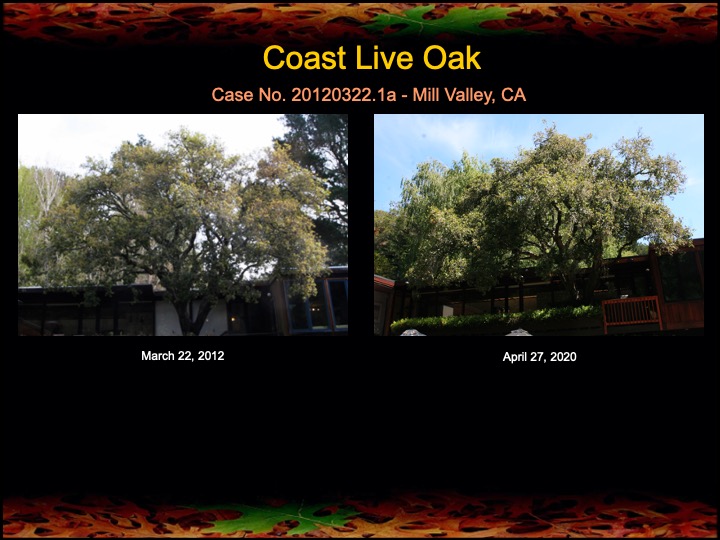
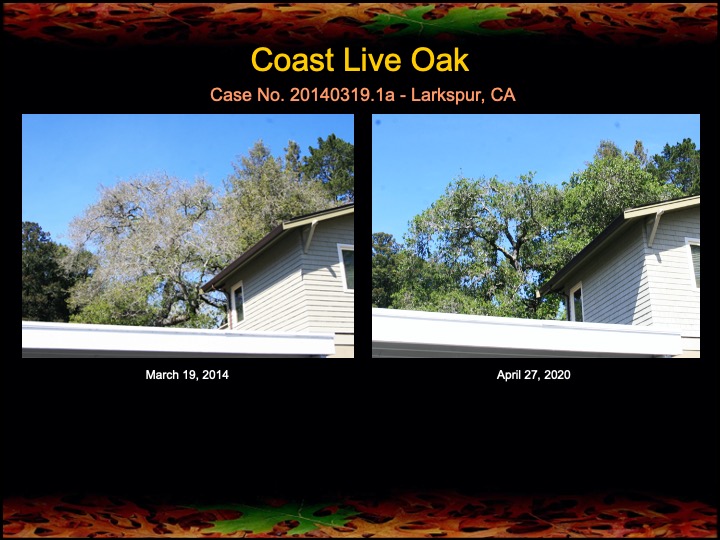
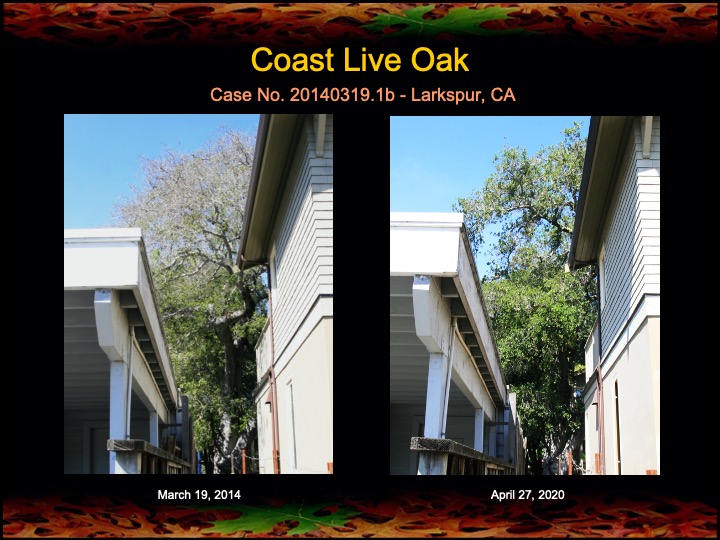
Today I inspected several oaks, pines, and redwood trees that have received fire mimicry treatments in recent years. The coast live oak above has been treated periodically for 8 years. The results shown above and below provide encouraging news about our ability to bring sick and diseased trees back to health using an ecological approach to tree care.
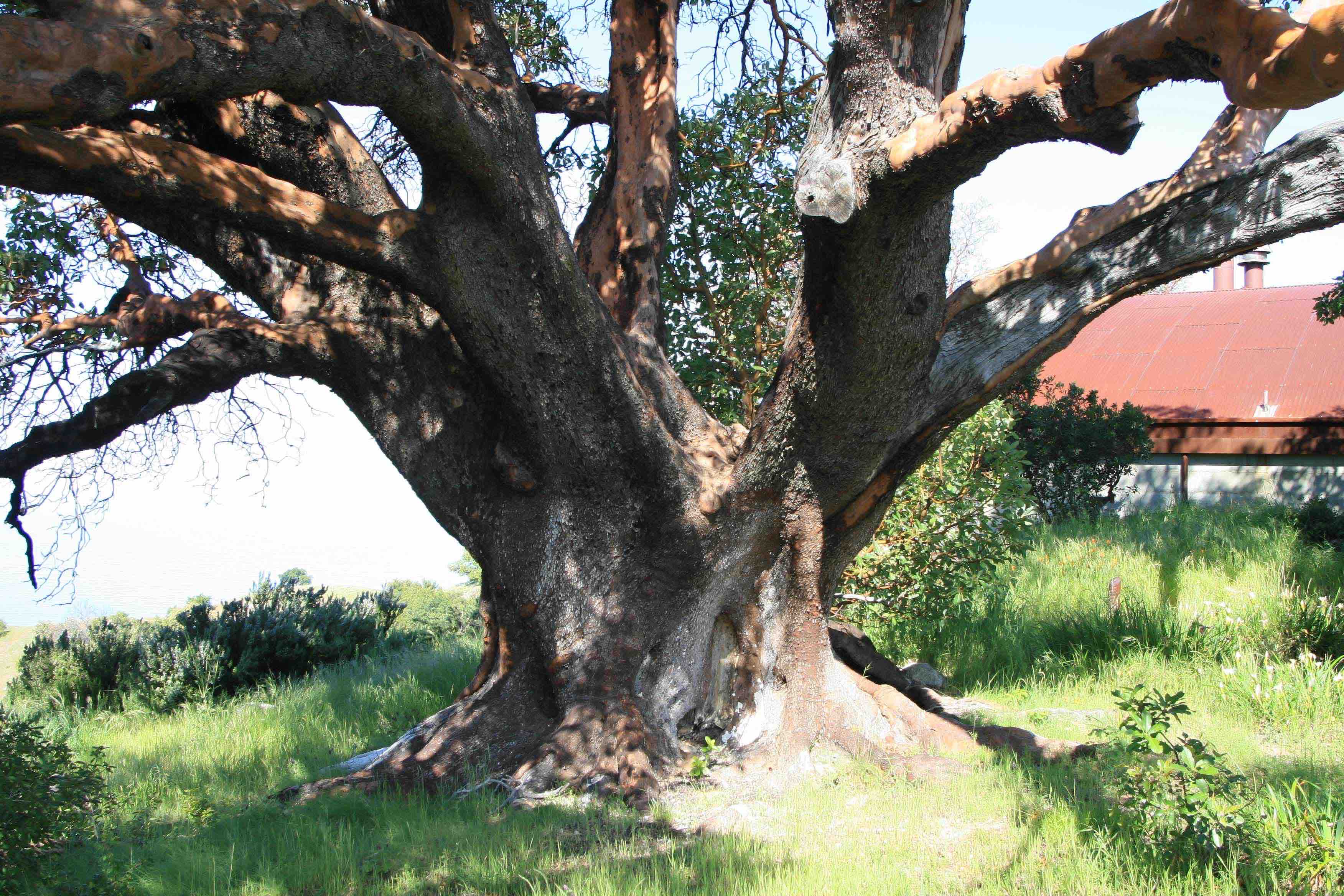
Culturally modified madrone tree in Big Sur, CA
In January 2018 I will be giving a talk “The cultural modification of trees and forests by California’s Native Peoples“, co-sponsored by the Sempervirens Fund and REI. Details of the talk are here. The talk is free but you will need to sign up through Eventbrite. Hope to see you there!
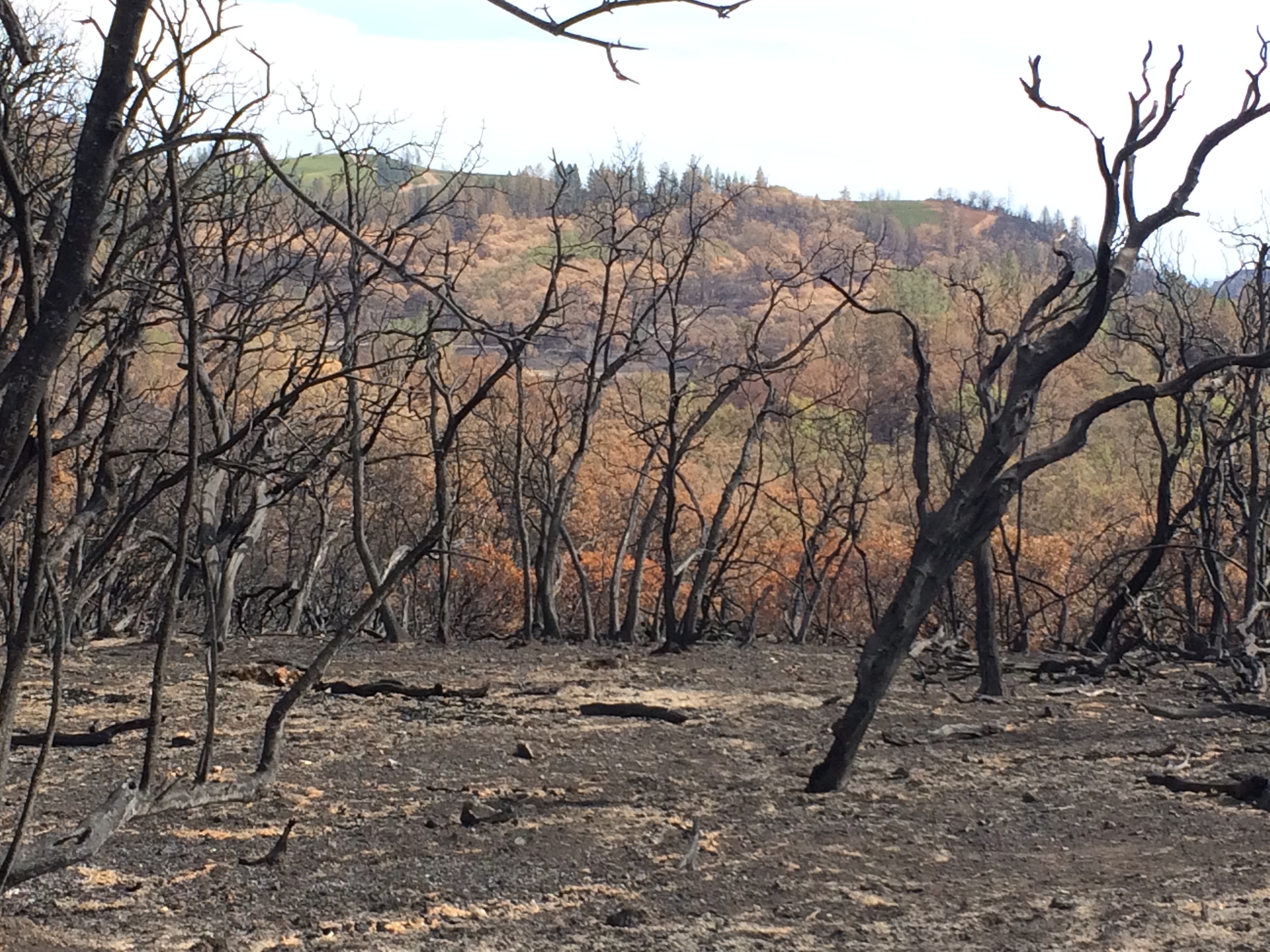
Forest devastation following the Valley Fire in Lake County. Photo taken in October 2015.
In 2015 a devastating wildfire consumed large areas of Lake County, California. Prior to the fires I had been working with some properties affected by the fires and soon afterwards I visited these areas, volunteering my time, to help guide the land managers on how best to manage their lands after the fires. Yesterday I heard back from one of my friends asking about specifics in restoring their forests. My response seems appropriate for a wider audience, so I am posting it here as general informati0n for those who have been affected by wildfires, as well as those who have not . . . Read the rest of this entry »
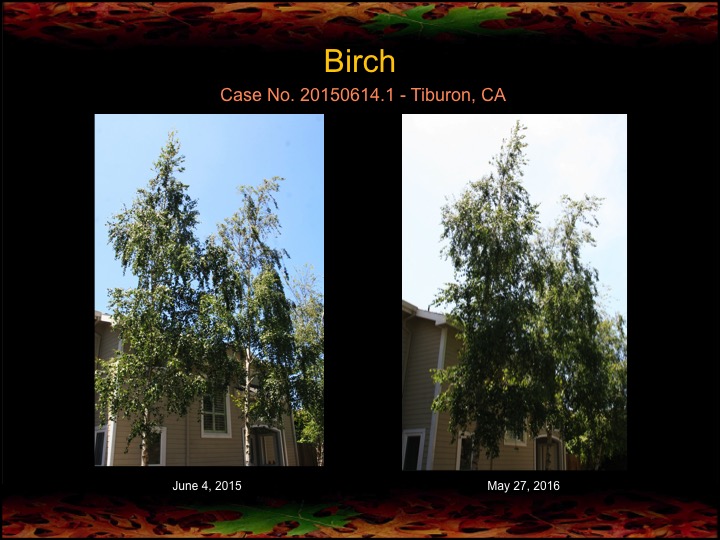
Shown here are several birch, apple, and pine trees that were treated last year with fire mimicry. Telling from the photos it appears that the birch trees have response moderately, and the apple trees have responded significantly! The pine trees have yet to show much response. This seems to be typical of pines, which can take several years before showing visible responses (see here and here).

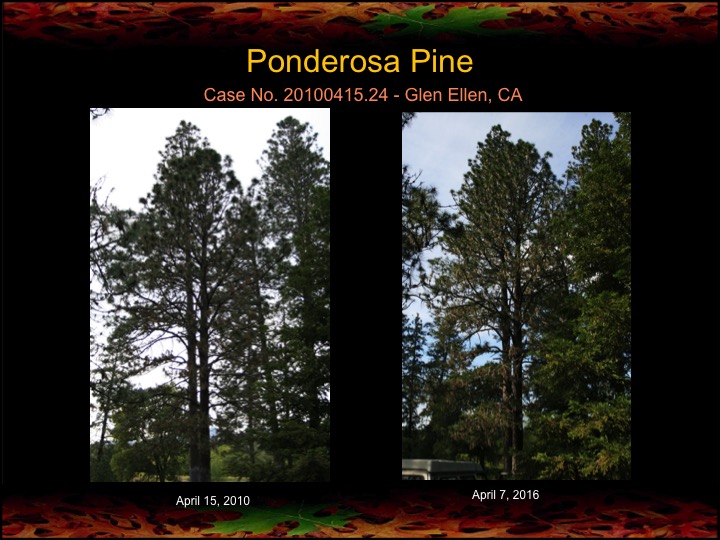
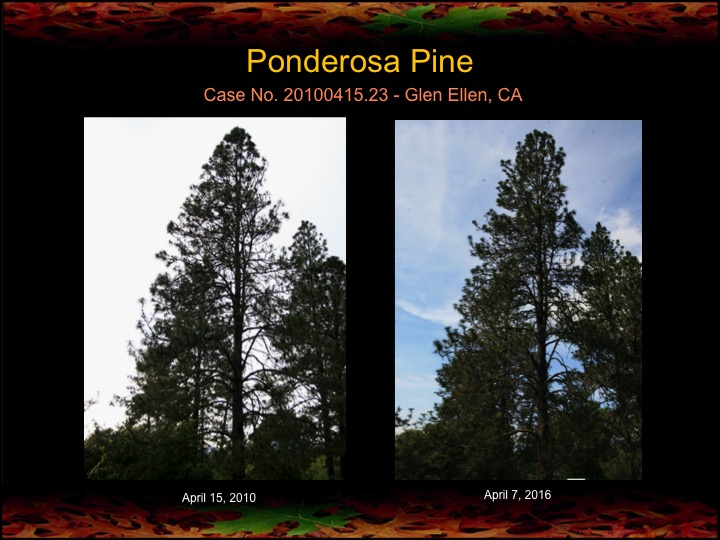
There is a small grove of ponderosa pines up in Sonoma county being tended with fire mimicry techniques. I’ve been tracking their progress for 6 years and, while slow to respond initially, they are now showing noticeable improvement in canopy density. All the pines below have been treated EXCEPT for the last pine.


 Sudden Oak Life by Lee Klinger
Recent Comments