Six years ago I began fire mimicry treatments on these trees in Carmel . . .
Carmel trees respond to fire mimicry
13 11 2011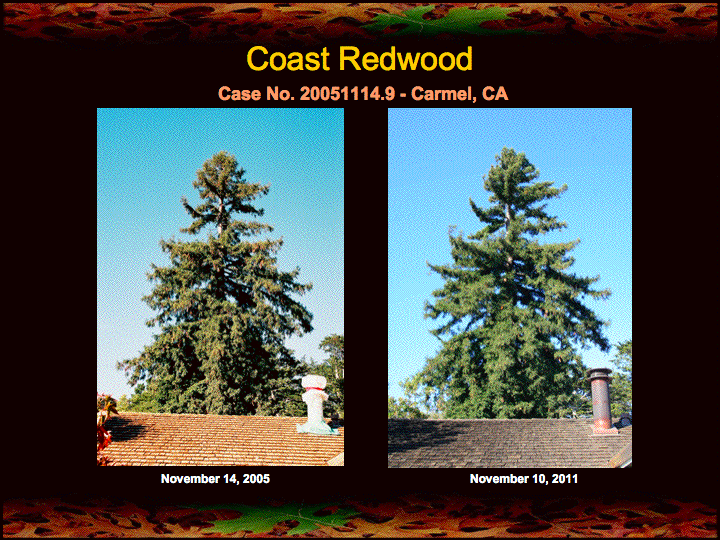
Comments : Leave a Comment »
Categories : Case studies, Fire mimicry, Oak health, Redwoods, Repeat photography, Sudden Oak Death
Monterey oaks improving despite oak worm/moth infestation
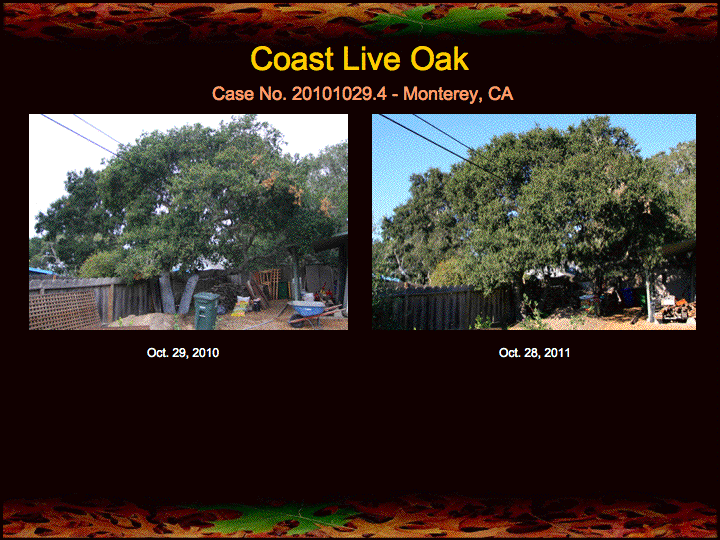
4 11 2011Last week I visited some oaks in Monterey that were first treated with fire mimicry last year at this time. This year there has been a heavy oak worm/moth infestation in the area with many oaks being nearly defoliated. However, most of the treated oaks shown here have not only survived the infestation, they are actually showing signs of improved health since last year. See the photo comparisons below:
Comments : Leave a Comment »
Categories : Case studies, Fire mimicry, Oak health, Repeat photography, Sudden Oak Death
Six years on . . . oaks and pines respond to fire mimicry
27 10 2011Not long ago I visited some oaks and pines in the Bay area that started receiving fire mimicry treatments six years ago. This particular client has done a remarkable job following my recommendations precisely. She’s quite happy for the results. Here are her coast live oaks and Monterey pines after six years.

Comments : Leave a Comment »
Categories : Case studies, Fire mimicry, Oak health, Pine health, Repeat photography, Sudden Oak Death
Restoration of oaks in Sonoma using fire mimicry
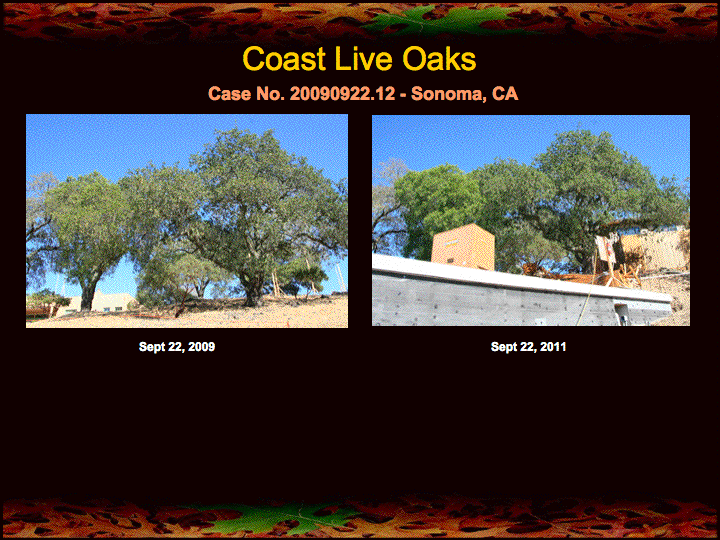
26 09 2011Last week I visited an oak grove in Sonoma where restoration efforts using fire mimicry began in 2009. Several of the coast live oaks had symptoms of Sudden Oak Death, and many other oaks were in rather poor health. Underbrush was cleared, dead branches were pruned, mosses and lichens were removed from the trunks, minerals were applied to the soil along with compost and mulch, and the trunks sprayed with a mineral-rich lime spray.
After this work began several of the oaks have since been heavily impacted by some new home construction. Despite this, most of the impacted oaks have shown a noticeable improvement in their health over the two year period. The photos below show the results.
Comments : Leave a Comment »
Categories : Case studies, Fire mimicry, Oak health, Repeat photography, Sudden Oak Death
Stewarding oaks with fire mimicry
19 09 2011Last week I visited several groves of coast live oaks in the Bay area (Los Altos Hills, Woodside, and Oakland) that were treated one year ago for the first time using fire mimicry protocols. This post shows the results so far.
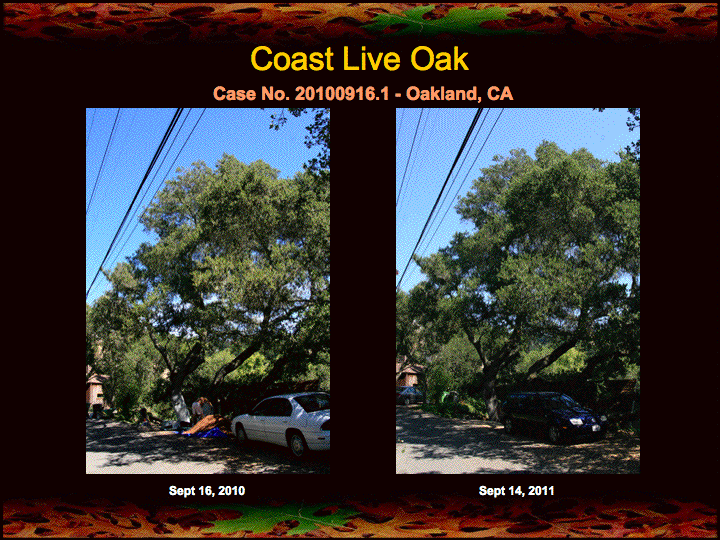
While Sudden Oak Death was (and still is) present in the nearby oaks, all of the oaks in the photos were uninfected with Sudden Oak Death at the time of treatment and remain uninfected after one year. As you can see most of the oaks are showing improvement in canopy density, some more than others, although a few are showing no noticeable change. The no change condition is not a poor result as it indicates that the canopy health of the oaks has not deteriorated. Also, it is not unusual for oaks to take three to five years to respond fully to the fire mimicry treatments. Still, it is encouraging to see that most of the treated oaks are experienced a noticeable flush of new growth in just the first year.

Comments : Leave a Comment »
Categories : Case studies, Fire mimicry, Oak health, Repeat photography, Sudden Oak Death
How many photos do I need to show?
14 08 2011
Here are a couple of oaks near Buellton, CA that I treated last July with fire mimicry methods (including soil minerals, compost, lime spray). Note that both are showing a noticeable improvement in just one year. While it is not always the case that results are seen in one year, it is not unusual.
This ecologically-based, fire mimicry approach to tree care and forest restoration is repeatedly showing very good results in most cases. As evidence, there are hundreds of before-and-after photos of oaks and other trees posted on this website. How many of these photos do I need to show before more people take action in restoring their trees and soils back to health? Read the rest of this entry »
Comments : Leave a Comment »
Categories : Case studies, Fire mimicry, Oak health, Repeat photography
Six-year results of fire mimicry treatments on California buckeyes
15 07 2011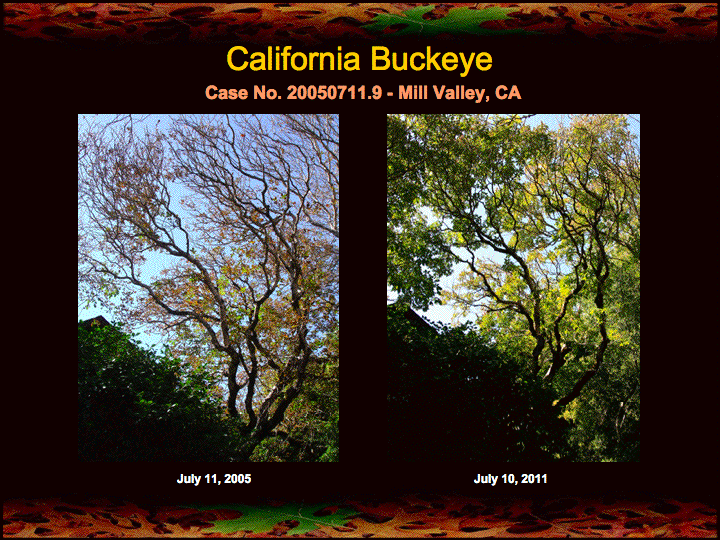
Six years ago these California buckeyes in Mill Valley were suffering from early leaf senescence. The owner wisely followed my fire mimicry protocol in treating the buckeyes, and six years later we see that the buckeyes are no longer experiencing early leaf senescence. As can be seen in results from these same trees posted from year 4 and year 5, these buckeyes have not been experiencing early leaf senescence for the past 3 years.
More results are shown below: Read the rest of this entry »
Comments : Leave a Comment »
Categories : Buckeye health, Case studies, Fire mimicry, Repeat photography
Oak restoration results with fire mimicry
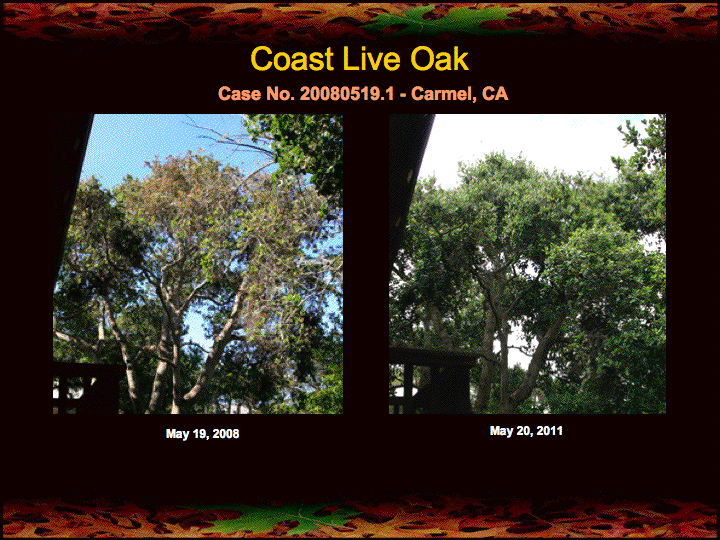
7 06 2011Fire mimicry practices, which involve clearing (shrubs and young trees, especially bays), pruning, trunk care, and amending soils with mineral and organic rich fertilizers, are continuing to have a positive effect on sick oaks here in California. Below are some repeat photography results for several coast live oaks in Carmel, Pebble Beach, Santa Barbara that have been treated with fire mimicry for three years. The main caveat is that the oaks in these pictures, while ill, are not severely diseased. The oaks that are severely diseased are not faring as well. Scroll down to see the results.
Comments : 2 Comments »
Categories : Case studies, Fire mimicry, Oak health, Repeat photography, Sudden Oak Death
Grandfather oak – April 2011 update
15 05 2011Last April I reported on the progress being made in helping ‘grandfather oak‘, a very old and diseased coast live oak on King Mountain in Marin Open Space. I returned this past April along with a small contingent of volunteers to continue the efforts we started 3.5 years ago. We cleared the genista, poison oak, and small bays, fertilized with Azomite, oyster shell flour, and soft rock phosphate, and applied a lime spray to the trunk. Below is a photo of all the volunteers. They are (from left to right) Kathleen Cannon, John Furnas, Roger Diehnel, Greg Reza (Parks & Open Space Volunteer Coordinater), Dick Gale, Donna Shoemaker (project leader), and Carl Thoelicke.

Volunteers caring for Grandfather Oak
Our efforts for Grandfather Oak are not about treating any disease or pests. Indeed, the oak is probably well past being cured of sudden oak death. This is an attempt to give this oak a fighting chance to extend its life and live out the remainder of its years in a healthier, more nourishing state.
The photos below show that, indeed, our efforts seem to be helping. Read the rest of this entry »
Comments : Leave a Comment »
Categories : Case studies, Fire mimicry, Oak health, Repeat photography, Sudden Oak Death
Toro Canyon oaks after two years of fire mimicry
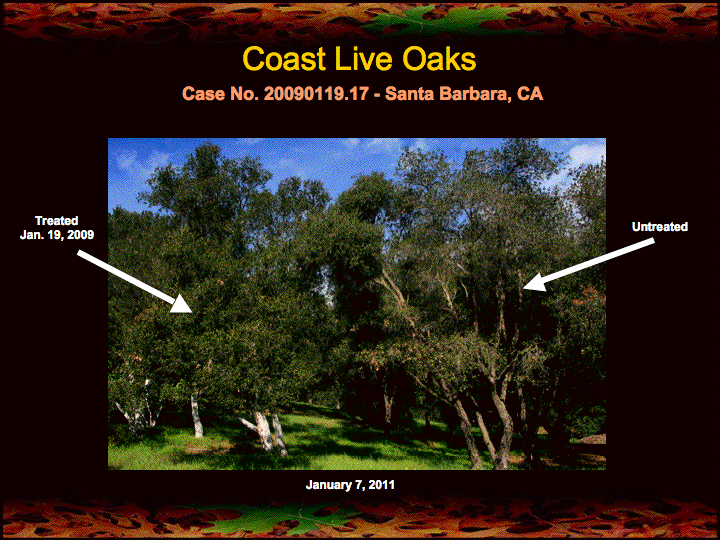
13 01 2011Coast live oaks in Toro Canyon new Santa Barbara were treated two years ago with fire mimicry. The photo comparisons are presented below. While these oaks have shown a very good response to the treatments, they are not significantly different from what was seen last year (see Toro Canyon oaks). This I believe is because the owner, upon seeing the good results after one year, opted to pass on the second-year treatments. The owner has now decided to schedule another round of treatments.
Comments : Leave a Comment »
Categories : Case studies, Fire mimicry, Oak health, Repeat photography, Sudden Oak Death
 Sudden Oak Life by Lee Klinger

Recent Comments