Hearst Castle oaks after five years of fire mimicry

13 01 2011

Last week I visited Hearst Castle and re-photographed the oaks that have been undergoing treatments with fire mimicry for the past five years. Below are the results. Note that the last two oaks of this series are included as untreated controls. Last year’s results can be seen here.

Read the rest of this entry »


After five years of fire mimicry treatments . . .

17 11 2010

Five years ago fire mimicry treatments were implemented to help the trees on this property in Hillsborough, CA. I’ll let the photos tell the rest of the story . . .

Read the rest of this entry »


Six-year response of coast live oaks to fire mimicry

13 11 2010

Last week I visited and re-photographed several coast live oaks that were initially treated with fire mimicry in 2004. You can follow the progress of these treatments in previous posts here and here. Leith Carstarphen of EcoLogic Landscaping has been doing the fire mimicry work under my direction, and as you can see from the photographs he is doing an excellent job on these trees.

Read the rest of this entry »


El Capitan oaks responding to fire mimicry

21 07 2010

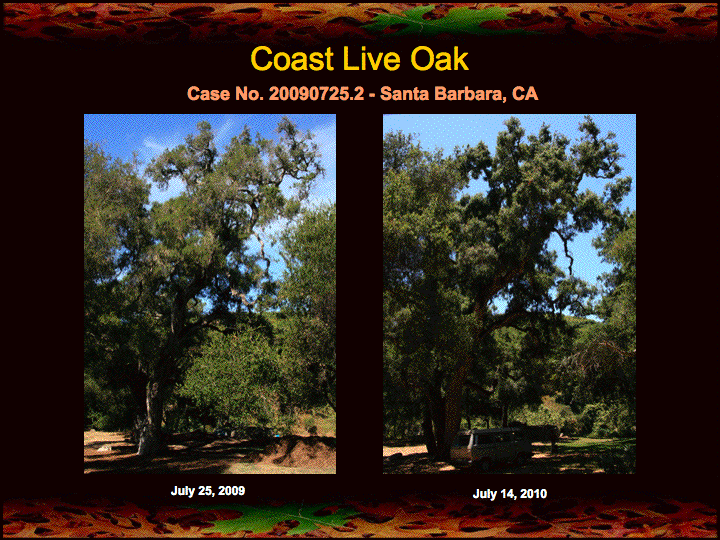
Last week I visited and re-photographed several coast live oaks near El Capitan Ranch outside of Santa Barbara that were treated last year with fire mimicry. Most of the oaks have shown significant improvement in canopy health in just one year. Here is a sample of the results:

Read the rest of this entry »


Encino heritage oak – 2010 update

15 07 2010

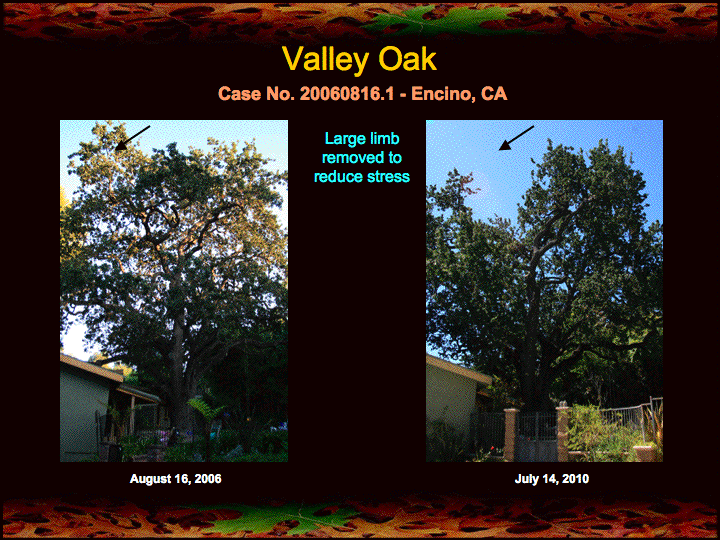
Yesterday I visited and tended a huge valley oak which, at about 500 years old, is possibly the oldest valley oak in Encino, CA. This oak appears to have been pollarded (pruned in a way that encourages broad, spreading branches) by the native people hundreds of years ago. Last year I posted a story about this Encino heritage oak, and presented photos that showed a significant improvement in the health of the tree in response to fire mimicry treatments.

We are now in the 4th year of fire mimicry treatments and the oak continues to show a very good response, as the photos below indicate:

Encino heritage oak


Five-year response of California buckeyes to fire mimicry

12 07 2010

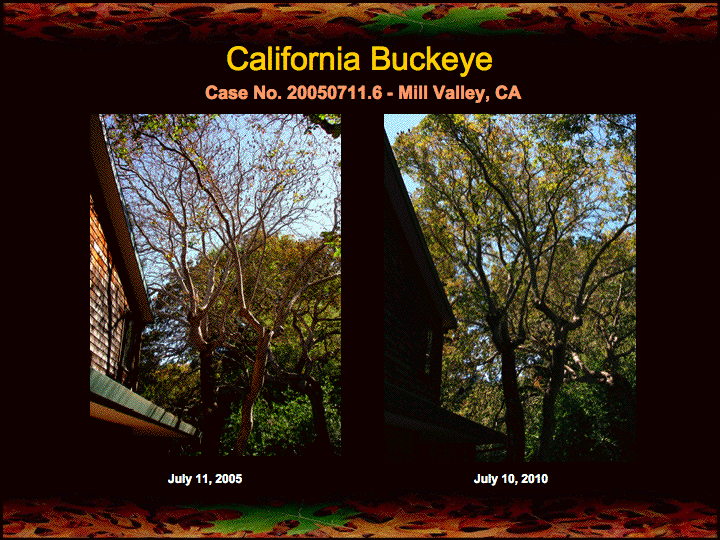
Last year I posted a piece on using fire mimicry to treat early leaf senescence in California buckeyes. A few days ago I checked up on these buckeyes and re-photographed them. As you can see in the photos posted here the buckeyes are continuing to show improvement after tending with fire mimicry practices.

When I first saw these trees in 2005 they appeared to be severely stressed due to soil acidification. The lawn areas around their base had a dense cover of mosses growing among the grasses. The mosses were removed by thatching the lawn areas and the soils were treated with several hundred pounds of soil minerals (Azomite and calcitic limestone).

These and other results (see here and here) are showing that the fire mimicry practices which are working so well in restoring the health of the oaks (see here, here, here, here, here, etc.) are also useful in restoring the health of other kinds of trees. This certainly makes sense if the problem is ecological (e.g. fire suppression, soil acidification, overcrowding, etc.) rather than pathological (e.g. disease, insect pests).

I encourage anyone who is interested in getting more information on the methods and services of tree care and forest restoration shown here to please contact me. Read the rest of this entry »


Using repeat photography to assess the response of oaks to fire mimicry

12 06 2010

Last week I checked up on some oaks in Santa Barbara that have been undergoing fire mimicry treatments for the past two years. One way I assess the change in health of a tree is through repeat photography analysis of the tree’s canopy. Repeat photography is not as simple as it seems. Photographs are taken at the time the oaks are first treated. Subsequent photos are taken at annual intervals, meaning I get to visit the trees I treat every year, year-after-year. It’s quite a commitment to schedule yearly visits to all the oaks I’ve treated. In re-photographing the trees it is important to match the time of year, time of day, sky condition, camera angle, and exposures as closely as possible to the original photos. I don’t get it precise every time, but I do my best. Changes in tree health can be detected in the photographs as increases or decreases in canopy density (the amount of background sky seen through the canopy), and in changes in the amount of gray or brown foliage vs. green foliage.

Below are the results of the repeat photography analysis of the canopy health in the Santa Barbara oaks I visited last week . . .

Read the rest of this entry »


Using fire mimicry to treat early leaf senescence in California buckeyes

15 07 2009

The buckeye (Aesculus californica) is a deciduous tree, low and broad in stature, that is endemic to California. Every year these trees extend their gratitude by offering up a harvest of enormous size nuts. The species is a vital part of the California ecosystem and ever so worthy of our attention. Some even believe that tending the buckeyes is a responsibility passed on to us by the native people, who for the past few thousand years have been tending California’s buckeye groves.

Buckeyes do very well in open forests and savannas, especially in places where fires have been allowed to burn. However, on unburned lands buckeyes are often seen to be in poor health. Where forests are overgrown and acidified the buckeyes are experiencing serious health problems, including stem failure, canopy dieback, and any numbers of leaf blights including anthracnose and sudden oak death.

One of the first symptoms of ill health in buckeyes is the early seasonal onset of leaf senescence. Several years ago an astute friend of mine began noticing that for several years the buckeyes near her home had been losing their leaves earlier than usual. She contacted me about the problem and I suggested we try fire mimicry, the same treatments that I’ve been using on the oaks.

After four years of ongoing treatment here are the results . . .

20050711.8

Read the rest of this entry »