Sick oaks require more than a single treatment

10 02 2012

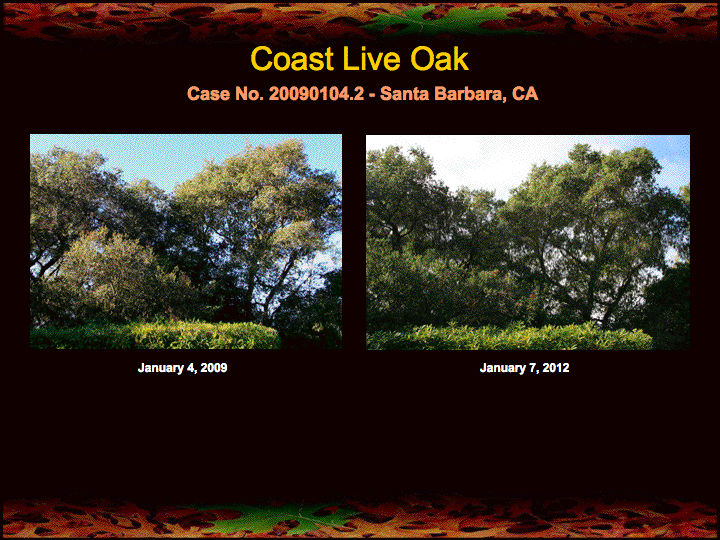
Last week I examined and re-photographed a hillside of sick oaks in Toro Canyon, near Santa Barbara, that received fire mimicry treatment in January of 2009. By January of 2010 the oaks were responding very well (see Toro Canyon oaks). Due to the good results the property owner decided to hold off on additional treatments, despite my recommendations to treat the oaks again.

The results below indicate that the oaks showed very good improvement up to two years following the treatment, but by the third year, many of the oaks began showing a marked decline in health, due, I believe, to the lack of any follow up treatments. As can be seen in the photos, the oaks after three years are still notably healthier than they were initially, but many have shown a decline in canopy health compared to one year ago. Other property owners have similarly been fooled into thinking that, given the good initial response of their trees, further treatments were no longer necessary.

The lesson here is that a single fire mimicry treatment is not sufficient to reverse the many years of poor soil fertility and oak health.

Read the rest of this entry »


Santa Barbara oak restoration with fire mimicry

7 02 2012

Last week I visited Santa Barbara to check on a large stand of oaks undergoing restoration using fire mimicry. The oaks first received the treatments three years ago. Below are the results.

Please feel free to share these and the many other results posted on this blog with friends and neighbors who care about their oaks, and who do not wish to use toxic fungicides and pesticides.

Read the rest of this entry »


Santa Barbara oaks after two and three years of fire mimicry

15 01 2012

Last week I visited some oaks in Santa Barbara which have been undergoing fire mimicry treatments, some for two years, others for three years. Below are the results, unedited at usual.

Three year results:

Read the rest of this entry »


Hearst Castle oaks survive wind storm

15 01 2012

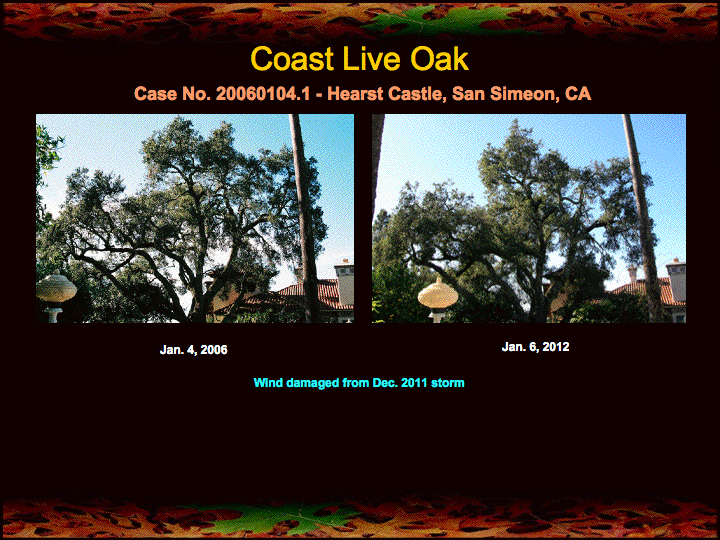
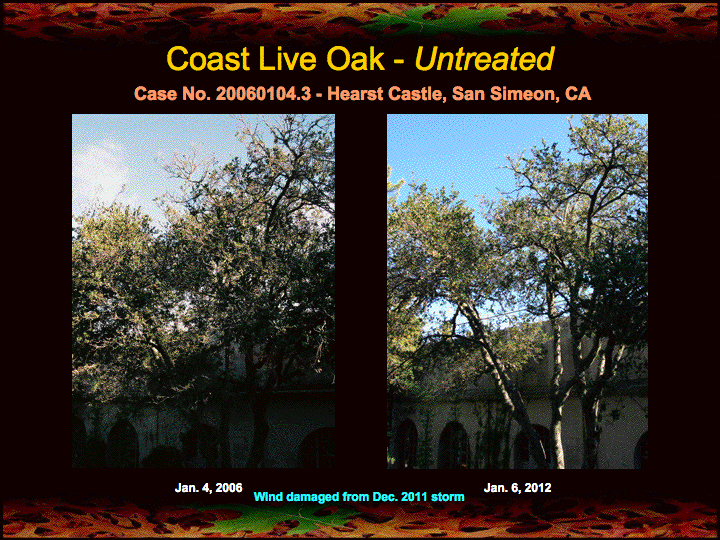
Last month (on December 1, 2011) severe Santa Ana winds blew through the central coast of California downing and damaging thousands of trees. At Hearst Castle, winds were recorded in excess of 70 miles an hour. Fortunately, none of the oaks involved in the case studies being conducted at Hearst Castle were lost, though several lost some limbs and many leaves were blown off the canopies. Despite the high winds, a number of the oaks are still showing marked improvement over the six years of records following initial treatment with fire mimicry methods. The photos below fairly show the improvement in some oaks, as well as the oaks damaged by the high winds.

For previous years results from Hearst Castle see Sudden Oak Life posts here and here.

I have prescribed an enhanced level of treatments for these oaks in the coming year, and we will see next year whether or not the oaks have recovered from this wind event.

Note, the first four sets of photos show, alternately, treated vs. untreated oaks.

Treated:

Untreated:

Read the rest of this entry »


Long-term results of fire mimicry treatments

1 12 2011

On Monday I visited some oaks in Marin County that have been receiving fire mimicry treatments for seven years. I have been working with my good friends and colleagues Leith Carstarphen of EcoLogic Landscaping and Alan Mart for several years to improve the health of trees and soils on this property in Fairfax. The results have been outstanding. It is interesting to note that at least three of the oaks shown below have had signs of sudden oak death infection since before treatments began, yet they appear to be in remarkable health for being diseased.

Also note, in case number 20041129.4 there are several fruit trees in the foreground (peach, left; citrus, center; pear, right) that have also been treated with fire mimicry. Check out how well those fruit trees have responded.

While these results are only a small portion of the hundreds of case studies that document the efficacy of fire mimicry, they are important in showing that the improvement in tree health with these treatments is more than just a short-term, transitory effect.

Read the rest of this entry »


Sudden Oak Death: Interview with Dr Lee Klinger

15 11 2011

Back in 2008 Kevin Feinstein over at FeralKevin blog interviewed me about Sudden Oak Death. I don’t know if he posted the interview, but reading over it I see that the information is still relevant. With permission from Kevin Feinstein, here is the transcript of that interview: Read the rest of this entry »


Carmel trees respond to fire mimicry

13 11 2011

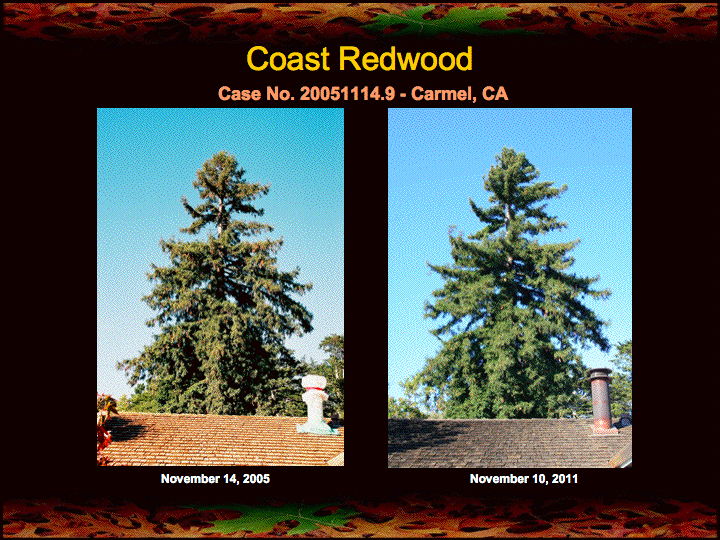
Six years ago I began fire mimicry treatments on these trees in Carmel . . .

Read the rest of this entry »


Monterey oaks improving despite oak worm/moth infestation

4 11 2011

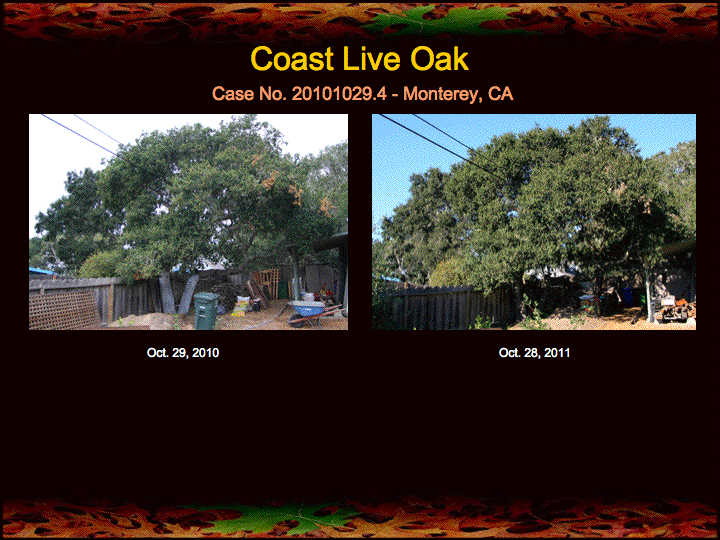
Last week I visited some oaks in Monterey that were first treated with fire mimicry last year at this time. This year there has been a heavy oak worm/moth infestation in the area with many oaks being nearly defoliated. However, most of the treated oaks shown here have not only survived the infestation, they are actually showing signs of improved health since last year. See the photo comparisons below:


Read the rest of this entry »


Six years on . . . oaks and pines respond to fire mimicry

27 10 2011

Not long ago I visited some oaks and pines in the Bay area that started receiving fire mimicry treatments six years ago. This particular client has done a remarkable job following my recommendations precisely. She’s quite happy for the results. Here are her coast live oaks and Monterey pines after six years.

Read the rest of this entry »


Sudden Oak Life workshop at Sienna Ranch on Oct. 23

28 09 2011

Sienna Ranch, Lafayette, CA

Sudden Oak Life Workshop

Date: Sunday, October 23, 2011

Times: 11:30 am to 12:30 pm (free), 1 to 4 pm ($40)

Location: Sienna Ranch, 3232 Deer Hill Rd., Lafayette, CA

Contact: Lindsay Daley (707-889-3744)

Learn how to improve and restore the health of the oak ecosystem in this enlivening workshop with “Sudden Oak Life” oak tree expert and scientist, Dr. Lee Klinger.

For thousands of years the native California people tended oak forests and other food-producing ecosystems using prescribed fire and other methods of traditional land management. Now-a-days, with the suppression of fires, oaks and other trees are experiencing accelerated rates of decline in many parts of California, as witnessed by spread of epidemics such as sudden oak death.

Join Dr. Klinger as he demonstrates various “fire mimicry” methods to help the oak ecosystem flourish. Demonstrations will include a variety of practical, hands-on techniques, and we will treat several grandmother valley and live oaks on the ranch. All treatment methods are organic, and no synthetic chemicals are used. Details will be presented on how fires and fire mimicry methods act to improve the fertility of soils and the health of trees, and results will be shown of case studies involving a suite of techniques and natural products to restore oak trees.

Lee Klinger, MA PhD is an independent scientist and ecological consultant from Big Sur, CA with over 25 years of professional experience and over 50 peer-reviewed publications in the fields of biogeochemistry, forest ecology, and soil science. Dr. Klinger has worked as a staff scientist at the National Center for Atmospheric Research in Boulder, and has held scholarly appointments at the University of Colorado, the University of Oxford, and the Chinese Academy of Sciences.