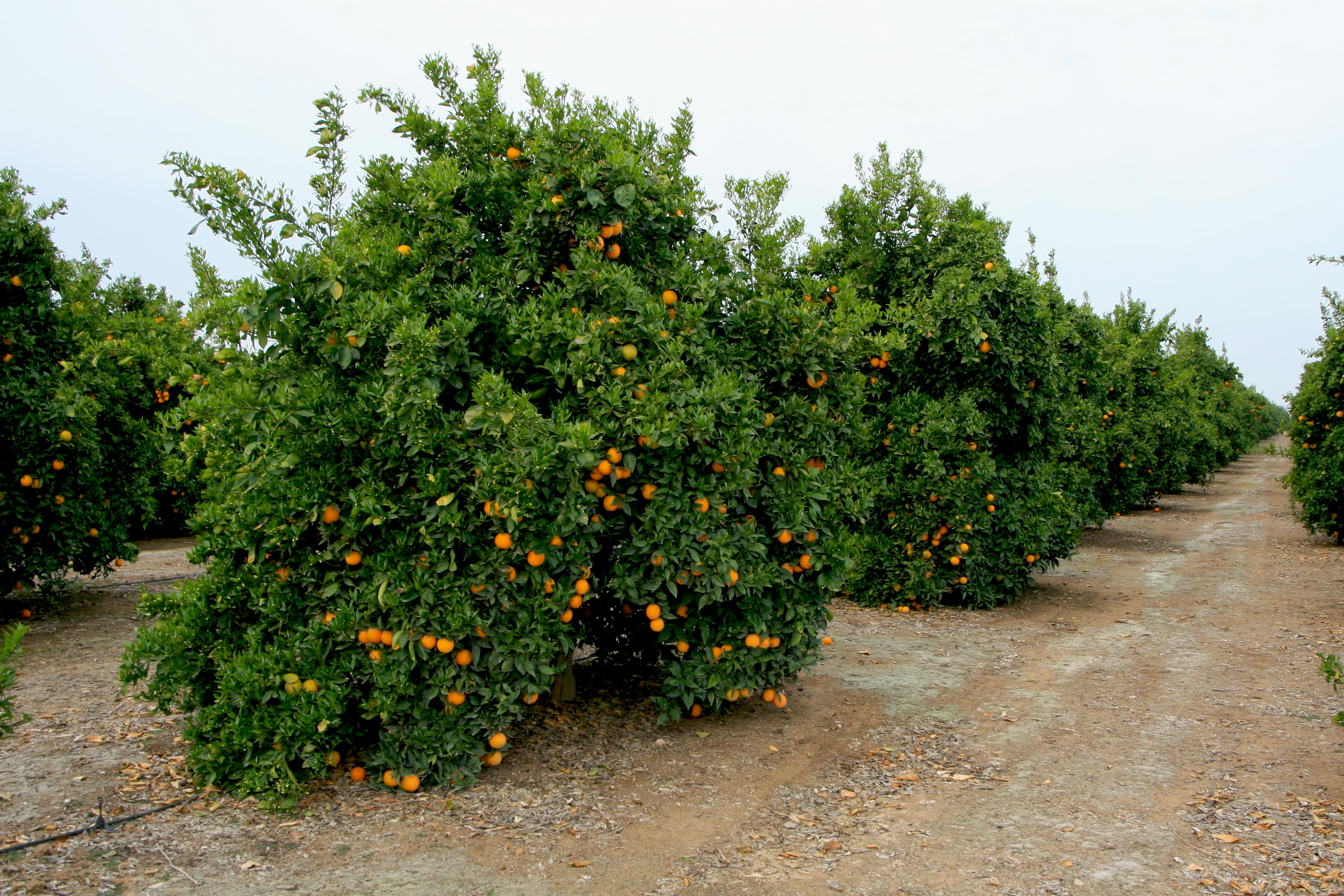
Fire mimicry is clearly showing itself as a useful tool for restoring our native California trees. But what of all the non-native agricultural trees growing in vast orchards across the state? Is there any aspect of fire mimicry that may benefit them?
With these questions in mind I attended the World Ag Expo in Visalia, CA in February of 2007 and met a farmer whose family had been growing oranges in the Central Valley for generations. The farmer was concerned about a decline in the productivity and quality of their oranges in recent years. So in April of that year I returned to Visalia and inspected her orchards.
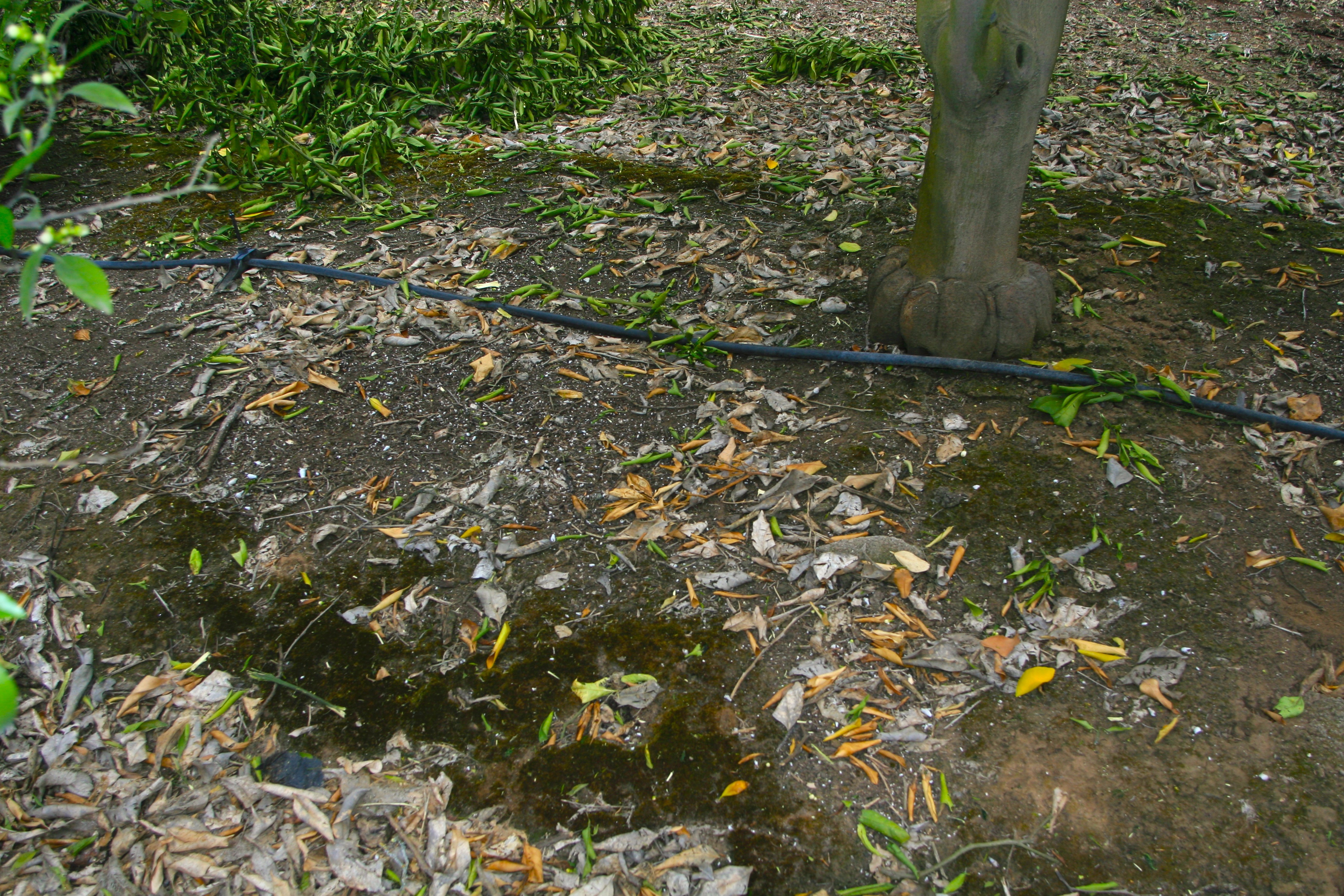
She first showed me an orchard block that had been consistently under-producing compared to adjacent blocks. I immediately noticed that a dense cover of mosses had formed around many of the trees, indicating to me that the soils were acidified and likely lacking in alkaline-rich nutrients. Most of the moss cover appeared confined to the soil zone of surface saturation along irrigation lines. [Any of you who have read Chapter 6 “The cryptic ecology of mosses and lichens” in my book Forged by Fire knows why this buildup of mosses may be problematic.]

 Sudden Oak Life by Lee Klinger
Recent Comments