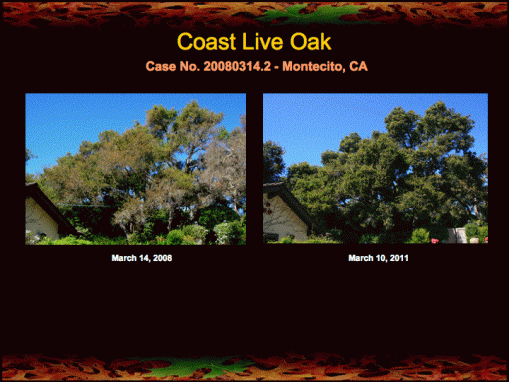
I’ve just returned from a visit to Santa Barbara where I am working on a number of properties with sick oaks. I’m not sure very many people are aware, but many of the coast live oaks in Santa Barbara are suffering. I’ve inspected dozens of properties in Santa Barbara and Montecito and in almost every case I’ve found one or more coast live oaks that are infected with bleeding stem cankers. Often associated with this stem canker disease (which exhibits symptoms similar to Phytophthora infections) are a variety of fungal pathogens (e.g. Hypoxylon) and insect pests (e.g. oak bark beetles). The sad thing is that the trees which are most affected by this decline are the large, centuries-old heritage oaks.
Of course, while these diseases and pests are clearly involved in the final demise of the oaks, they are not the real problem. Decades of fire suppression in these fire-adapted oak ecosystems has led to nutrient deficiency in the soils, declining canopy cover, a buildup of acidifying mosses and lichens, and bark deterioration.
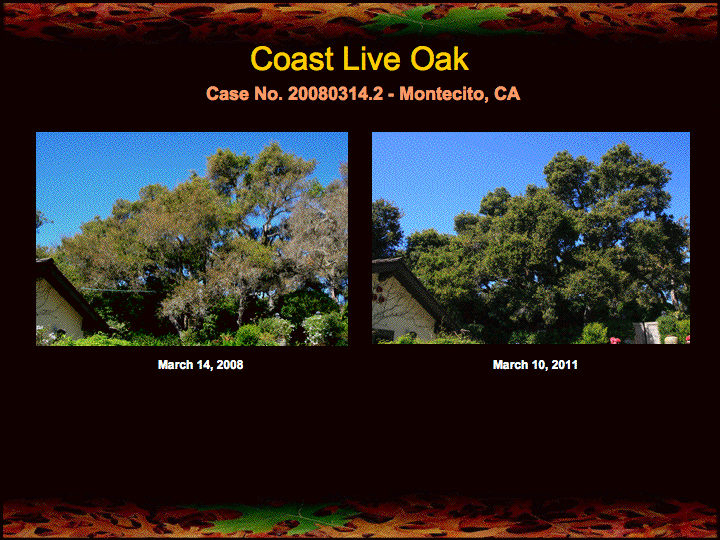
For the past several years I have been using fire mimicry techniques to help the oaks in the Santa Barbara area. Today I would like to show the results on three large oaks I’ve been treating on a property in Montecito. As you can see in the photos above and below that two of the three oaks have responded quite nicely to the fire mimicry work. However, one severely diseased oak did not make it. I estimated that this oak was at least 200 years old when it died. Read the rest of this entry »





 Sudden Oak Life by Lee Klinger
Recent Comments