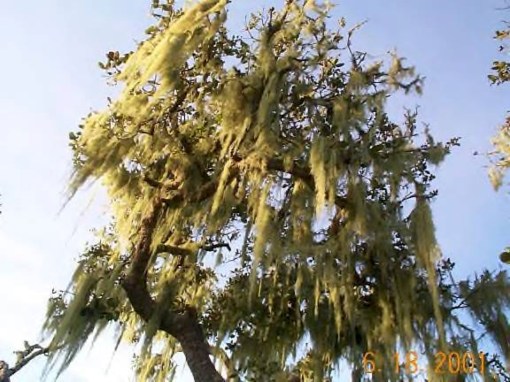
Image downloaded from web June 2013
(UPDATE: See my December 2024 post “Is the assumption that lichens are harmless to trees correct?” based on excerpts from Chapter 6 – “The cryptic ecology of mosses and lichens” in my book Forged by Fire: The Cultural Tending of Trees and Forests in Big Sur and Beyond)
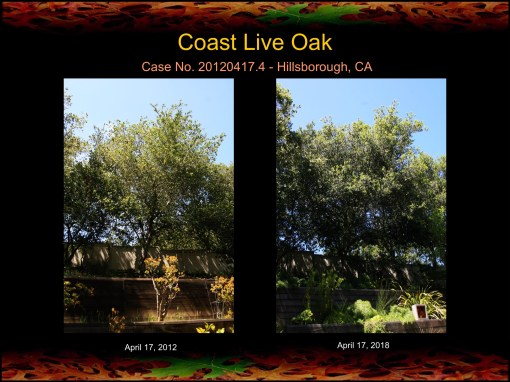
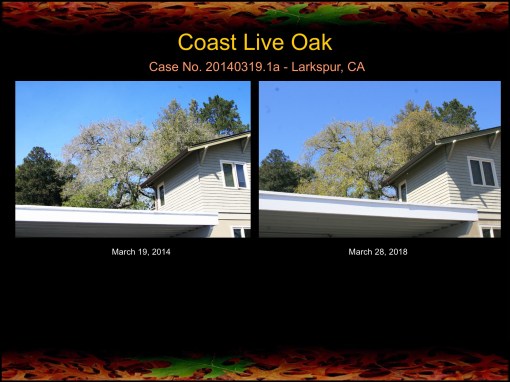
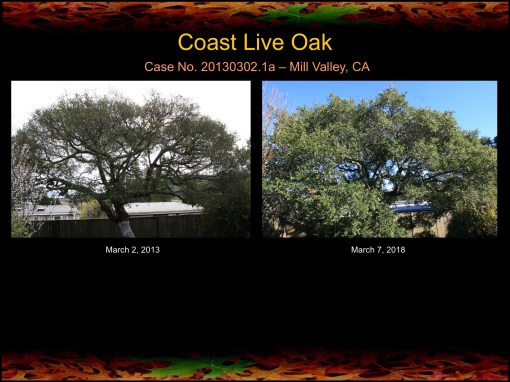
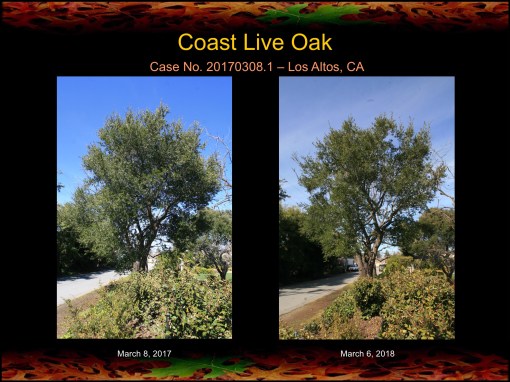
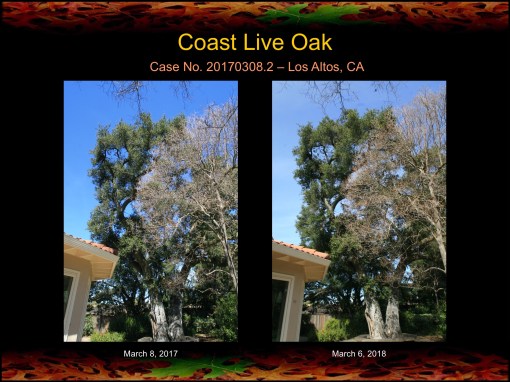
Any careful observer of oaks in California cannot help but notice a dense covering of lichens growing on the trunks and branches of many of the trees. In some cases, the biomass of lichens in the canopy rivals and even exceeds the biomass of the oak foliage. Under extreme conditions of lichen cover, the oaks appear sickly and in decline.

Coast live oaks covered in epiphytic Usnea and Ramalina lichens. (February 2018, Aptos, CA)
There is a popular meme in naturalist and conservation circles that lichens do not harm trees and merely use them for support. Adherents to this ‘harmless lichen’ meme point out that lichens are photosynthetic and, thus, do not draw any resources from the trees. Some note that lichens support nitrogen-fixing bacteria, which can add to the nutrient pool and benefit the trees. Furthermore, lichens are known to be highly sensitive to air pollution, so the presence of abundant lichens in a tree is a sign of good local air quality.
I have long been doubtful about the science behind this meme. As an experienced researcher of forest decline I have frequently noted that sick and dying trees often have a dense growth of lichens in their canopies. Defenders of the ‘harmless lichen’ meme describe this as the opportunistic growth of lichens on sick trees, as the reduced foliage allows for additional light for the lichens to grow. It is certainly true that lichens benefit from sick trees in this way, but I believe that lichens are not merely innocent bystanders or benefactors in the demise of a tree. Read the rest of this entry »








 Sudden Oak Life by Lee Klinger
Recent Comments