Marin and Sonoma oaks respond to fire mimicry

10 04 2016

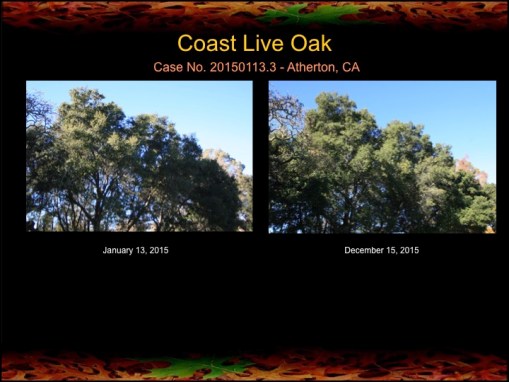
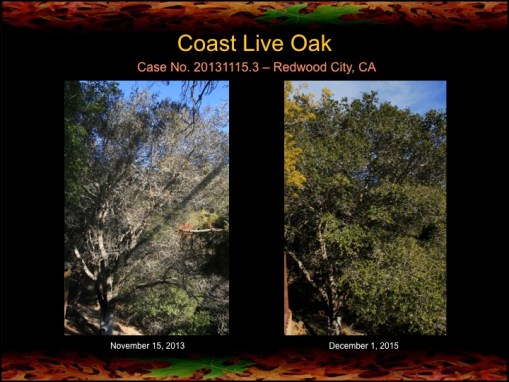
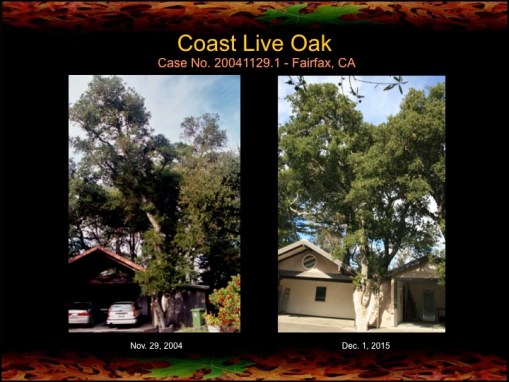
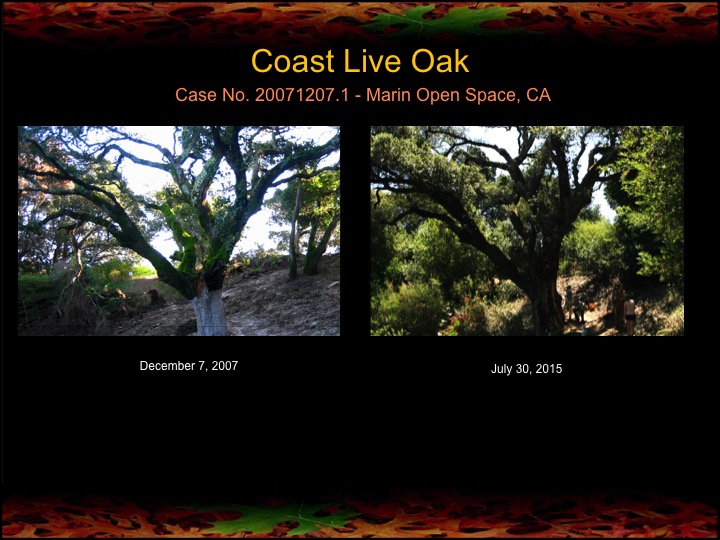
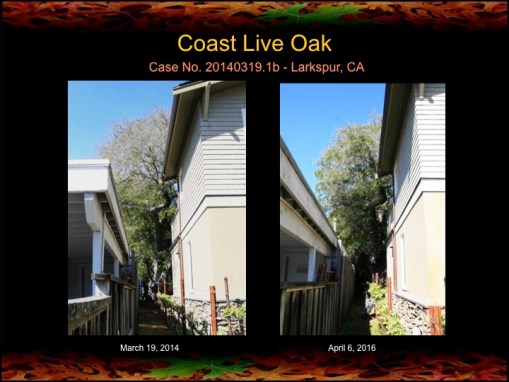
Below are photo comparisons of several coast live oaks that have been treated with fire mimicry techniques over the past few years. Some of the oaks have bleeding stem cankers, possibly Sudden Oak Death disease, though most appear uninfected. Positive responses in canopy density are visible in most of the oaks.

Slide2

Slide1

Slide2 Read the rest of this entry »


World Wood Day 2016 – Nepal

10 04 2016

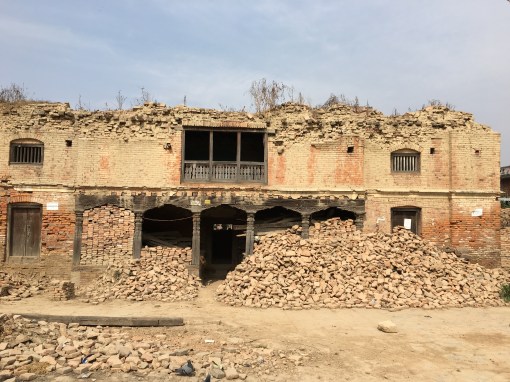
I recently participated on a project in Nepal in support of World Wood Day 2016, sponsored by the International Wood Culture Society. There were over 100 countries represented by the participants! Our project involved building a temple out of reworked rubble from the 2015 earthquake. Below are some images of the experience.

IMG_3718

IMG_3873 Read the rest of this entry »


Rapid response by oaks to fire mimicry treatment

16 12 2015

Slide02

The coast live oaks and one bay laurel in these photos were treated nearly one year ago with fire mimicry. Several of these oaks had stem canker infections (probably Sudden Oak Death), so I used a surgical procedure to remove the cankers on these oaks. The near-term results are impressive and show that oaks can respond rapidly (less than one year) to mindful tending of the plants and soils.

Someday many others will awake to this revolution happening in the oaks forests of California. For my part, that day will arrive one tree at a time . . .

Slide03 Read the rest of this entry »


Oaks responding to fire mimicry after just two years

4 12 2015

Slide3

I started fire mimicry treatments on these oaks just two years ago. I’ll let these photos tell you the rest of the story . . .

Slide2 Read the rest of this entry »


Eleven years of fire mimicry . . .

2 12 2015

Slide1

Eleven years ago I began fire mimicry treatments on several coast live oak trees in Fairfax, CA. These oaks represent the longest record of fire mimicry results to date. The oak shown above has had a bleeding canker (probably Sudden Oak Death) for the entire time, and clearly demonstrates that infected trees can survive with proper care for many years. For most of the time, Leith Carstarphen has been implementing the treatments, and as you can see from the photos here he has done and excellent job! Please check out Leith’s website at ecologiclandscaping.com.

Slide2 Read the rest of this entry »


Global warming in Oxford?

21 11 2015

I just returned from a trip to England where I gave a talk at the Geological Society of London on “Biological modification of pH in the earth system”. More on that later . . . After my talk I visited Green Templeton College at Oxford University where I worked as a Visiting Fellow in 1997. Located at the college is Radcliffe Observatory, home of the Radcliffe meteorological station, which has provided weather data since 1767 and constitutes the “longest series of temperature and rainfall records for one site in Britain“. This station is (was) part of the Central England Temperature record that purports to be “the longest instrumental record of temperature in the world“. Thus, with regards to surface observations on climate, this station is one of, if not, is the most important weather station in the world. (Update – Some commenters have pointed out that this station is no longer being used in the daily CET record. Based on this it does not seem to qualify as a most important record in the world. H/T Nick Stokes) I’ve been intrigued by this station ever since I saw it in the mid 90s, and have wondered what the area was like more than 200 years ago, and how the subsequent urbanization has affected those weather records.

When I arrived at the college I was a bit horrified to see this . . .

Radcliffe weather station A

How do you suppose this affects the temperature readings? The warm exhaust air from the heater is located about 20 feet from the temperature sensor. The porter said it was a temporary structure that was set up every so often. I was unable to consult with the weather observer about how this situation came about or whether any corrections are being made to the data.

Radcliffe weather station B


Scientific meeting on Gaia at the Geological Society of London – November 11, 2015

5 10 2015
Carlsbad caverns. Photo by Lee Klinger.

Carlsbad caverns. Photo by Lee Klinger.

On November 11, 2015 there will be a meeting entitled “Puzzle of Earth’s Uninterrupted Habitability” to be held at the Geological Society of London (GSL). This meeting will have a strong emphasis on Gaia theory and several prominent Gaian scholars will be speaking, including Tim Lenton, David Wilkinson, Toby Tyrrell, and David Schwartzman. As a Fellow of the GSL I have been invited to speak at this meeting. Here are the title and abstract of my talk:

Biological mediation of acidity and alkalinity: Does habitability require regulation of environmental pH?

Lee Klinger, Independent Scientist, Big Sur, CA USA

Abstract – Climatic cycles such as ice ages represent large excursions in global temperatures and are associated with significant changes in atmospheric CO2, non-sea salt sulfate, and dust, as recorded in ice cores. Ice age excursions in the pH of marine waters are predicted to result from the altered concentrations of CO2 in those waters. In addition, there are a number of biologically mediated processes affecting the pH of terrestrial and marine environments.

During interglacials terrestrial ecosystems are dominated by forests and grasslands that experience frequent disturbances, especially fire, which tends to alkalinize the soils. At the onset of glaciation higher latitude fire regimes subside and the forests become podzolized, with a corresponding decrease in soil pH. Many of these areas are eventually paludified, owing primarily to the acidifying and swamping effects of mosses and lichens, which eventually dominate the expanding peatlands. Mosses and lichens are known to stimulate silicate weathering rates to levels that could significantly reduce atmospheric CO2, and the cooling effects of peatlands are thought to play a role in ice age initiation. There is evidence that the production of iron-rich organic acids by peatlands greatly enhances phytoplankton blooms in adjacent coastal areas. Rainfall chemistry from the Pacific northwest points to the occurrence of biogenic acid rain likely originating from DMS and other biogenic sulfur compounds emitted by the phytoplankton. A feedback results through the nss-sulfate deposition enhancing the growth of mosses.

As ice ages progress and glaciers grow, dust levels in the atmosphere are also seen to rise. Much of this dust is due to an increase in glacial loess. The iron content of the dust stimulates marine productivity in open ocean areas. Oceanic inputs of iron from volcanic ash and glacial outwash are also seen to increase during glacial periods.

The culmination of the glacial period is defined by feedbacks involving the expansion of glaciers into areas formerly occupied by peatlands. The high mineral content of the glacial loess, along with episodes of volcanic ash would tend to alkalinize the terrestrial ecosystems and discourage the proliferation of mosses and other acidifying organisms.

Thus, the pH excursions in the ice age cycle may be related to the biogeochemical coupling of the iron and sulfur cycles. This coupling could have its roots in the Precambrian banded iron formations (BIFs), cyclic depositions of iron-rich minerals that are likely biogenic in origin. BIFs are seen to be closely associated with snowball earth conditions.



Grandfather oak revisited

4 08 2015
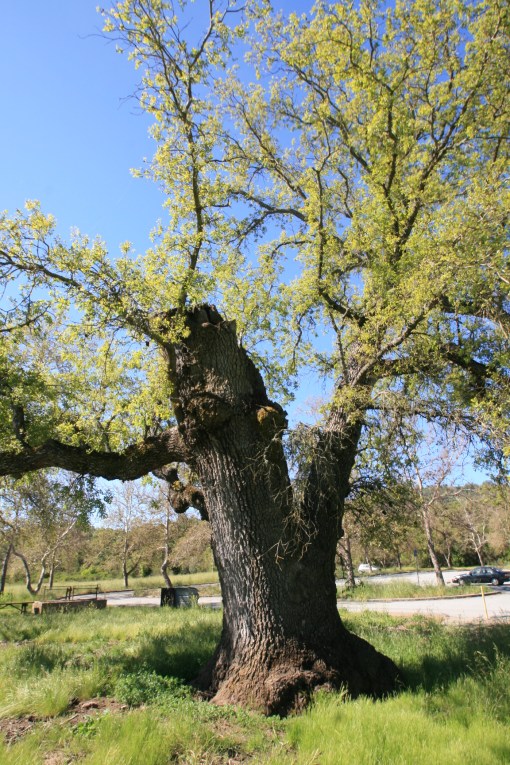
Grandfather oak before and after 7.5 years of healing.

Grandfather oak before and after 7.5 years of healing.

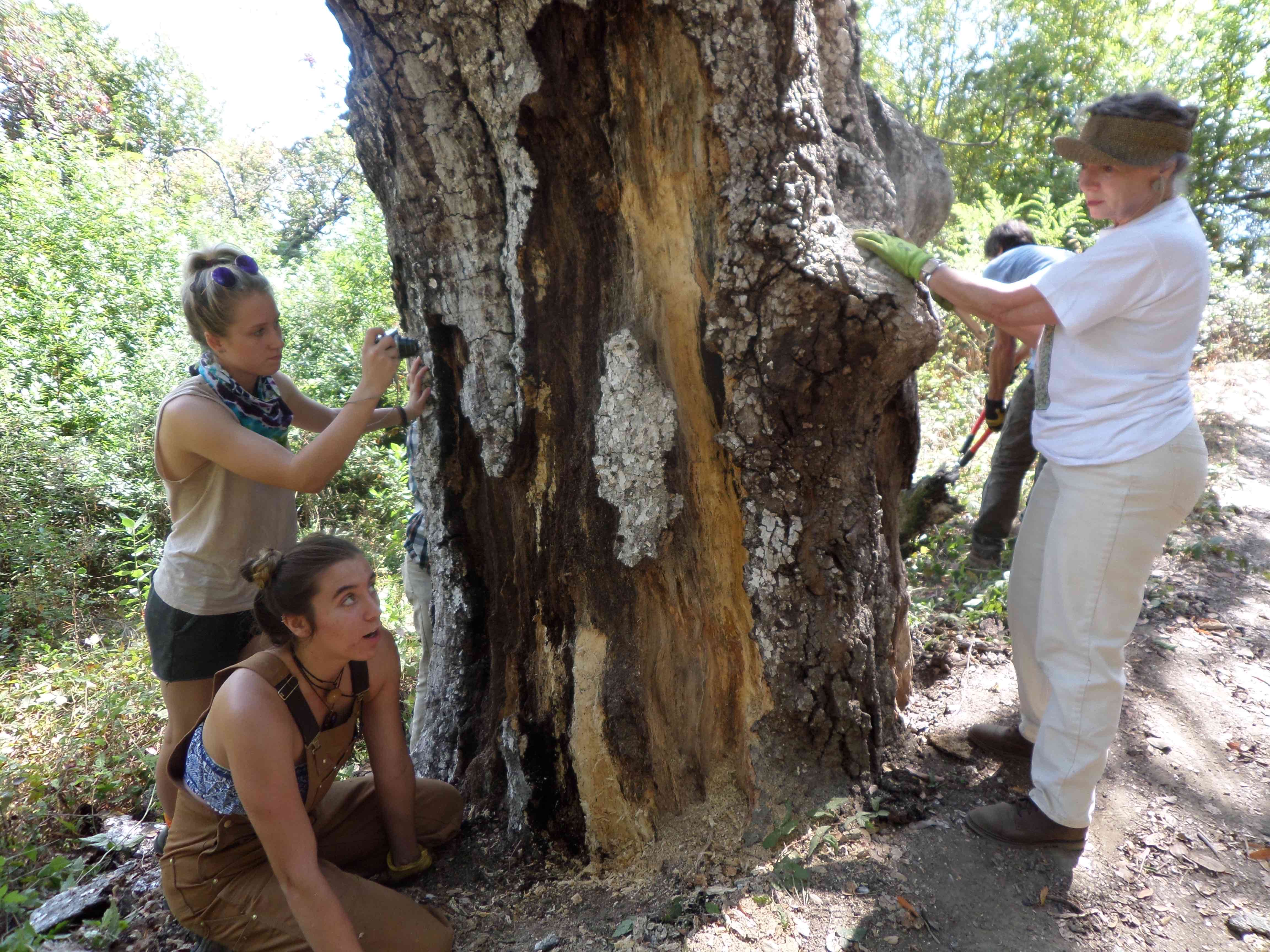
Last week a group of volunteers, assisted by Greg Laden of Marin County Open Space, visited a 400+ year-old coast live oak growing on King Mtn. I have reported on the progress of this oak in two previous posts: Grandfather oak and Grandfather oak – April 2011 update. This oak lies along the main trail up King Mountain and has captured the attention of many a hiker. Donna Shoemaker is one of those hikers. In the Fall of 2007 Donna contacted me about her concerns for the health of this oak. When I inspected it I found it was indeed in poor shape with signs of disease and insect infestation. I proposed a plan to her that could help the oak, but I was not optimistic that it would ever be cured. Donna organized a volunteer party to treat the oak and in December of 2007 we gave the oak its first of several fire mimicry treatments. There was an article by Richard Halstead in the Marin IJ (Sudden Oak Death Roars Back) that described the event, adding that “scientists studying the disease expect the (fire mimicry) treatments will prove futileā€.

SAMSUNG CAMERA PICTURES

Volunteers assisting in the fire mimicry treatment of Grandfather oak, July 2015

Grandfather oak volunteers - July 2015

Grandfather oak volunteers – July 2015

Well, I’m happy to report that 7.5 years later have NOT proved futile (UC scientists take note!). Grandfather oak is still alive and is noticeably healthier than before treatments began (see photos). The scientists studying sudden oak death have yet to come to terms with the success of fire mimicry. This is not surprising as their research is based on the disease model of forest health, whereas the fire mimicry approach is based on the ecological model of forest health. More than $100 million dollars has been spent studying one disease organism, Phytophthora ramorum, the pathogen that scientists claim “causes” sudden oak death. They are not about to disrupt that gravy train by expanding their scope of study to include ecological factors such as fire regime and soil pH. Their closed mindedness is our loss of so many oaks. Some day one oak too many will die and the mindshift will be inevitable . . . Read the rest of this entry »


Oakland oaks under attack by EBMUD

21 07 2015

IMG_2943 (1)

This is a follow up regarding a post here in February 2013 where I reported on my attempts to save 25+ coast live oak trees from being cut down by East Bay Municipal Utility District (EBMUD) for construction of a pedestrian path on land owned by EBMUD. I and others in the neighborhood could not fathom any good reason to remove a healthy grove of oaks given their rare occurrence in Oakland. As a result of that post I was able to have EBMUD review their plan to remove so many oaks and I participated in a meeting with the landscape consultants, sharing with them my findings that the oaks were showing good health with no sign of sudden oak death or other diseases or pests. At that time I had hope that many of the oaks would be spared.

The project was completed earlier this year and last week I had an opportunity to visit the site. I first noticed that most of the original oaks slated for removal were gone. My earlier efforts had saved only a handful of trees. The largest oak in the grove, one that I and many of the neighbors had hoped could be spared, was also gone. In its place was a large open sunny area with a gravel path going through it.

Walking through what remained of the oak grove I quickly noticed wounds on the trunks caused by the workers undertaking the removal of the oaks. That prompted me to inspect more carefully the remaining oaks.

At this point I cannot put into words my feelings around what I witnessed. Instead, let me share with you photos taken of the damage done to the trees by EBMUD, the ‘stewards’ of this land. These photos show a careless disregard of the trees. I counted at least 18 oaks that had sustained significant damage during the project.

And in one case, the damage done to the tree was clearly intentional! Take a look at the last two photos of this series. They depict an oak that had been girdled with an axe or some other sharp edged tool. Why? Really, WHY?

EBMUD has won the first battle with the oaks. But these damaged oaks still have life, and they have a voice. EDMUD, please listen and fix this problem! Read the rest of this entry »


A California oak stonehenge

3 07 2015

IMG_3317

I met Ryan Masters at Tassajara a few months back while I was teaching a workshop on fire mimicry. He is a delightful person and impressed me as knowledgeable and sincere, so I shared some important Native American wisdom with him. He followed up diligently and the result is this fine article about an Ohlone oak stonehenge here in California.

http://hilltromper.com/article/summer-solstice-california-stonehenge

Ryan also wrote this wonderful article about his adventures in the Ventana Wilderness and the Native American “Hands” rock shelter.

http://hilltromper.com/article/tassajara-zen-center-ventana-wilderness

Enjoy!