In 2017 there was a severe oakworm infestation of coast live oaks in the Monterey region and elsewhere. I’m often contacted at these times by property owners concerned about their oaks. Many wish to spray the trees with insecticides to reduce the infestation. Upon my advice, I tell property owners that spraying chemical insecticides is not necessary for the oaks to recover from these infestations, provided they are given proper care. Since the oakworm infestations are related to a lack of cultural fires, which controlled their populations in the past, a way forward is to emulate fire effects on the forest ecosystem.
Thus, rather than using chemical sprays as is typically recommended by arborists, I prefer using fire mimicry treatments to oak trees infested with oakworm. In the present case study I recommended to the property owner to do fire mimicry treatments instead of spraying the oaks. Never knowing for sure, I explained to them that the oaks would likely recover from the infestation, and that they would show continued improvement in the following years. A second set of fire mimicry treatments were preformed the following year (2018).
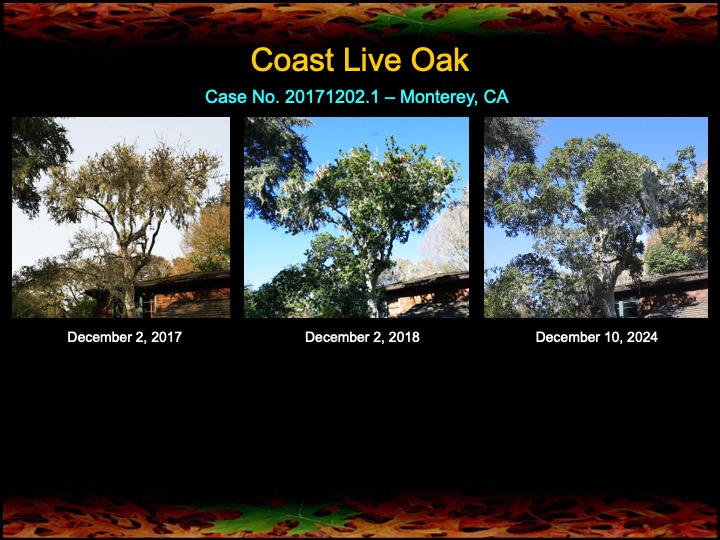
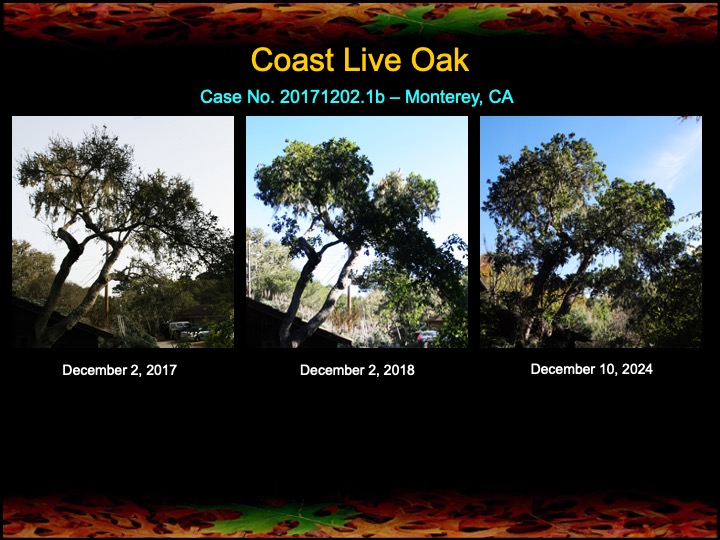
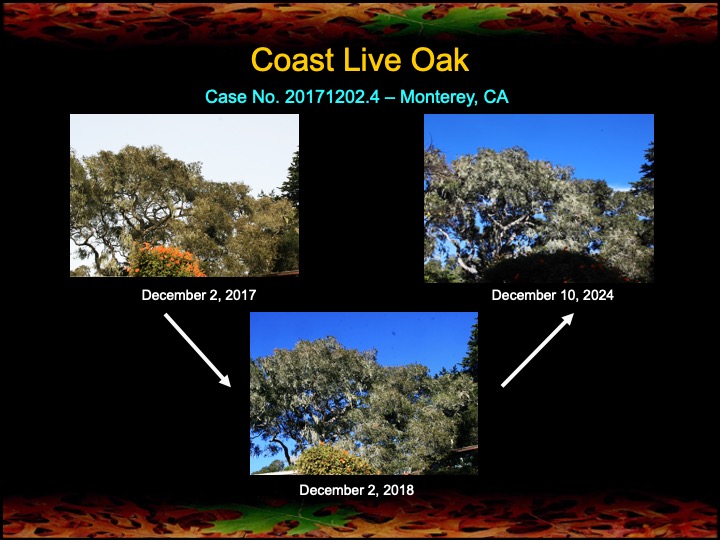
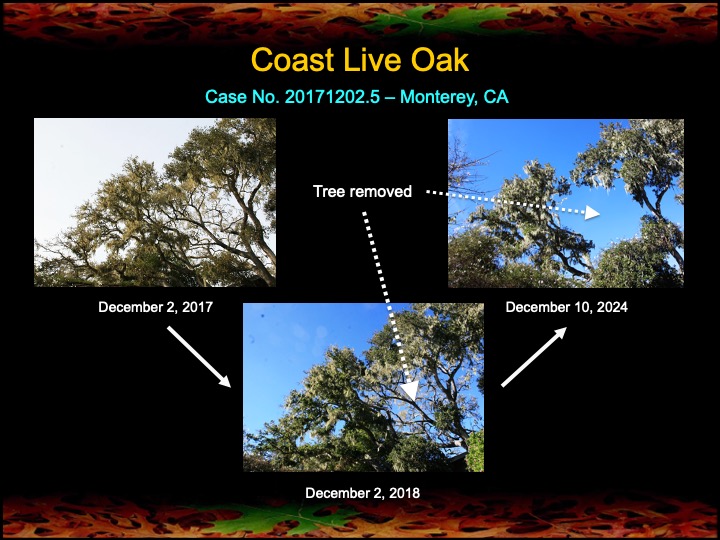
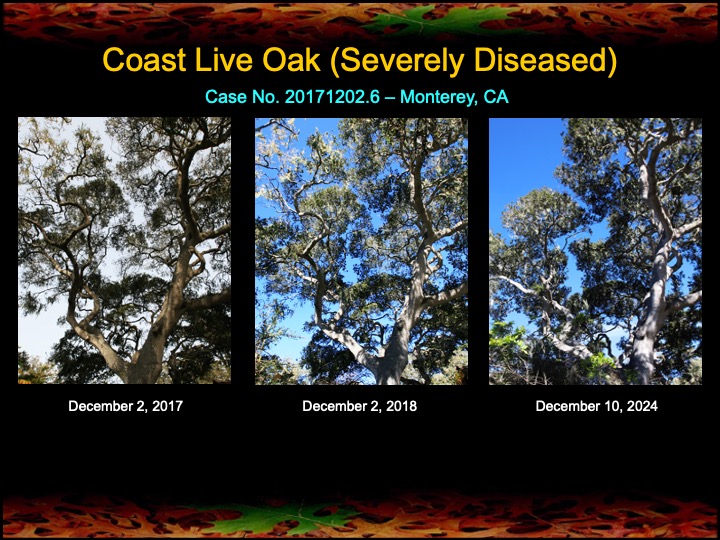
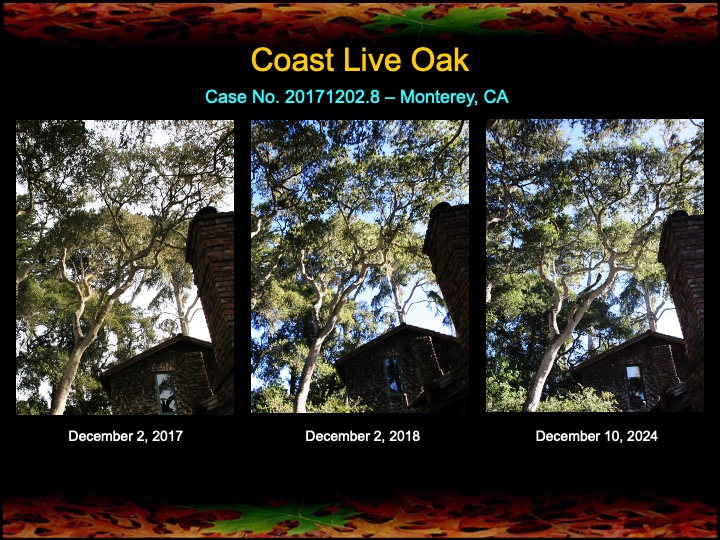
Shown here are repeat photographs of numerous coast live oaks taken upon initial treatments at the height of a severe oak worm infestation (2017), one year afterwards (2018), and seven years afterwards (2024).
Assessing the repeat photography results, the changes in canopy density of all the oaks on this property in Monterey, CA show that, in nearly all case studies, the canopy density increased as expected the year following the oakworm infection. However, the canopy density has continued to increase in nearly all of the oaks after only two years of fire mimicry treatments.





 Sudden Oak Life by Lee Klinger
Leave a comment