Using repeat photography to assess the response of oaks to fire mimicry

12 06 2010

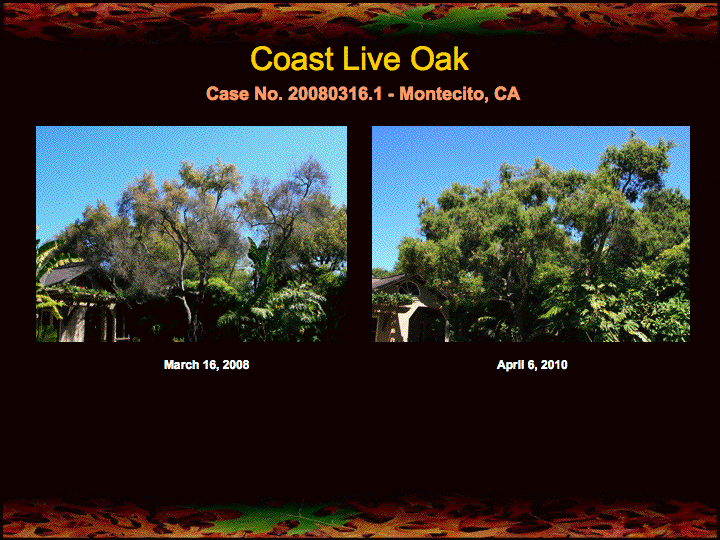
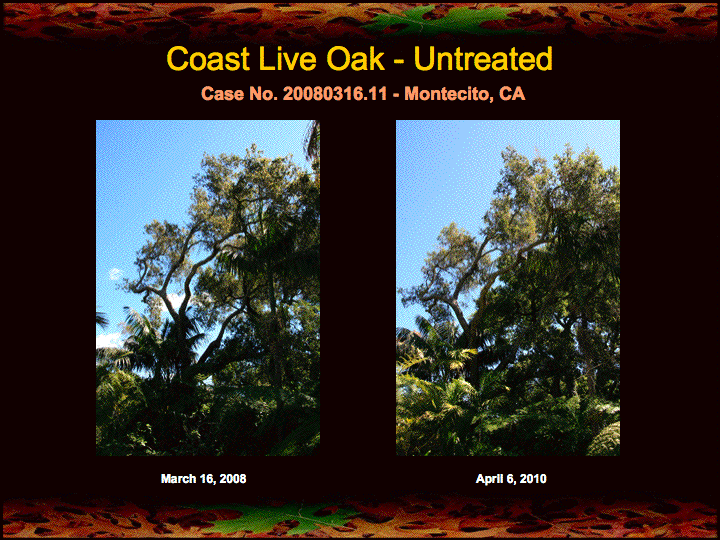
Last week I checked up on some oaks in Santa Barbara that have been undergoing fire mimicry treatments for the past two years. One way I assess the change in health of a tree is through repeat photography analysis of the tree’s canopy. Repeat photography is not as simple as it seems. Photographs are taken at the time the oaks are first treated. Subsequent photos are taken at annual intervals, meaning I get to visit the trees I treat every year, year-after-year. It’s quite a commitment to schedule yearly visits to all the oaks I’ve treated. In re-photographing the trees it is important to match the time of year, time of day, sky condition, camera angle, and exposures as closely as possible to the original photos. I don’t get it precise every time, but I do my best. Changes in tree health can be detected in the photographs as increases or decreases in canopy density (the amount of background sky seen through the canopy), and in changes in the amount of gray or brown foliage vs. green foliage.

Below are the results of the repeat photography analysis of the canopy health in the Santa Barbara oaks I visited last week . . .

Read the rest of this entry »


Monterey Bay area oaks responding to fire mimicry

14 05 2010

Yesterday I went to check on some sick coast live oaks in the Monterey Bay area that have been undergoing fire mimicry treatments for the past two years. The results I believe are encouraging . . .

Read the rest of this entry »


Eucalyptus decline linked to fire suppression

7 05 2010

Earlier this year I was contacted by Vic Jurskis, a scientist with Forests NSW (Australia), alerting me to the work he has been doing on fire suppression and eucalyptus decline. He shared with me several of his scientific papers that document the pre-settlement burning of eucalyptus forests by the aboriginal people, and the critical effects that fire suppression is now having on those forests. (Reprints of these papers are available. Contact me about obtaining a reprint.)

In his most recent paper Jurskis writes –

“Exclusion of fire and/or grazing has contributed to shrub or sapling encroachment, weed invasion, loss of herbal diversity and tree decline compounded by pests, parasites and diseases. The ancient trees that were established before European settlement are especially vulnerable because they have become weaker competitors for water and nutrients, whilst they are more vulnerable to fires because they typically have exposed dry wood that is easily ignited and burns readily.”

(from Jurskis, V. 2009. River red gum and white cypress forests in south-western New South Wales, Australia: Ecological history and implications for conservation of grassy woodlands. Forest Ecology and Management 258: 2593–2601.)

In another paper Jurskis states – Read the rest of this entry »


Sudden Oak Death researchers acknowledge fire suppression link to disease

24 04 2010

There is an exciting new video out titled – “The Teakettle Experiment: Fire and Forest Health” released by The Video Project.  A summary of the film states:

“The film documents the Teakettle Experiment, a ten-year collaboration of forest managers and scientists from diverse disciplines that investigated the effects of prescribed fire and forest thinning on restoring forest health.

A century of fire suppression has significantly changed many western forests, leaving them overcrowded and susceptible to disease, pests, and catastrophic crown fires that endanger lives and property.”

Here is the trailer (YouTube):

Besides describing the science behind the use of fire and fire mimicry practices in restoring forests, there is something else remarkable about this film. Read the rest of this entry »


Mimicking fire in western US forests

24 04 2010

There is an important book on fire mimicry that was written several years ago that I just came across.  The authors are Stephen Arno and Carl Fiedler, both well-known experts in forest management, and book is titled “Mimicking Nature’s Fire: Restoring Fire-prone Forests in the West” (2005) Island Press.

From the Introduction –

“After decades of studying western forests, the authors recognized that the magnificent old-growth trees that survived and depended on periodic fires disappear when deprived of this essential disturbance process. When forests of these venerable trees are managed using traditional timber harvesting methods, the features that made them famous ultimately disappear. When these forests are protected in ‘natural areas’ that fail to restore the historical role of fire – as in the majority of parks, wilderness, and primitive areas – the big old fire-resistant trees gradually die and are replaced by thickets of small trees. Our experience revealed that long-lived trees and other important features of fire-prone forests can be restored through management that mimics the effects of historical fires. Although research studies and practical examples indicate how to restore forests and reduce potential damage from wildfires, insects, and disease, they get little play in the media. However, it is these topics – scientific findings and real-world management examples – that we bring together in this book.” (my bold – lk)

Also from the Introduction –

“When people learn that more than one hundred million acres of fire-prone western (US) forests harbor deteriorating conditions outside of the historical range of variability, they are struck by the staggering extent of this problem. Given the difficulties of applying restoration, some may judge the situation hopeless. However, our experience suggests that any strategically located restoration treatments can produce noticeable benefits in reducing wildfire hazard to homes and communities and return important features of historical forests.”

Leave it to the experts to explain in abundant detail the critical reasons for implementation of fire mimicry practices to restore our oaks in California.


Grandfather oak

9 04 2010

Today my dear friend Donna Shoemaker, her friends Dick and Bob (real characters), Greg from Marin County Open Space (our helpful guide), and I ventured up King Mountain to do another fire mimicry treatment on an ancient coast live oak affectionately known as “grandfather oak”.

Donna, Dick, Bob, and grandfather oak (photo by Lee Klinger)

Read the rest of this entry »


Fire mimicry 2-year results with coast live oaks

7 04 2010

Yesterday I re-photographed several coast live oaks in Santa Barbara that have been undergoing fire mimicry treatments for two years. Here are the results. Note that the latest photos were taken a few weeks later in the season than the original photos. This will have some affect on the results due to the few weeks of additional growth. However, the examination of a control (untreated) oak here indicates that this additional growth cannot explain the significant increase in canopy health seen in the results with the many treated oaks. Read the rest of this entry »


Interview with SustainableWorld’s Channel

17 02 2010

SustainableWorld’s Channel did a recent interview with me at La Casa de Maria (Santa Barbara, CA) about oak health, native people, and fire mimicry and has posted a portion of the interview on YouTube. Here is the video:


What is fire mimicry?

8 02 2010

People often ask me why the oaks and other trees in California need to be tended. Oaks have been growing in California for many thousands of years, so why would they need our help now?

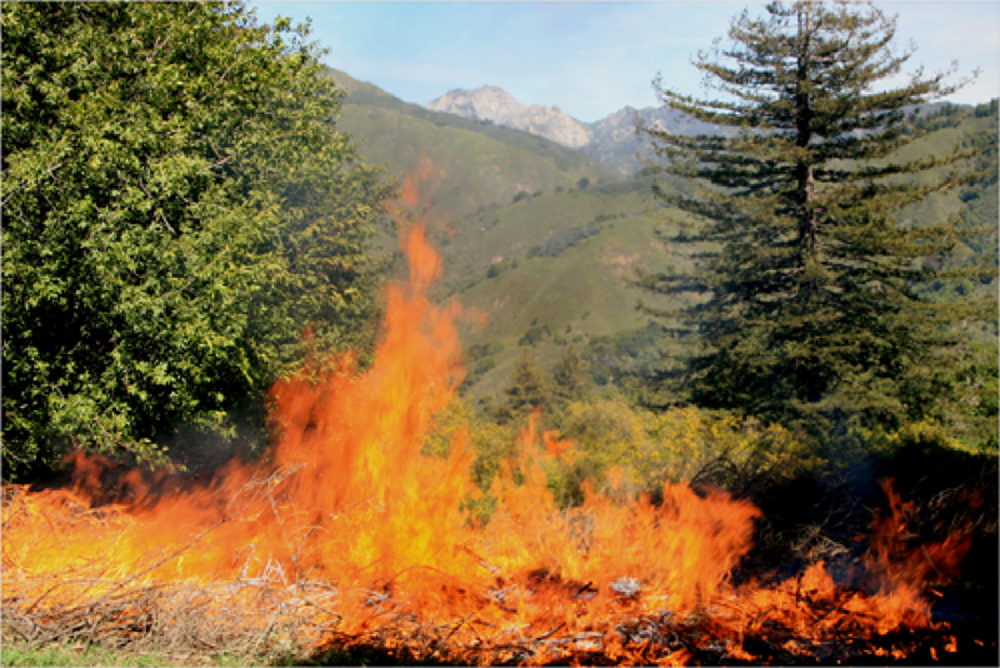
The answer is clear. The great oak woodlands and savannas of California are not the result of mother nature doing what she does best. The iconic oaks are largely the product of thousands of years of tending by Native Americans. It is well documented that the native people here managed the oaks with fire, keeping the ecosystem in an early successional state that is optimal for oaks. Acorns from the oaks were a primary food source for the native people of California.

Tending the land with fire in Big Sur (photo by Lee Klinger)

Read the rest of this entry »


Palo Alto oaks responding to fire mimicry

2 02 2010

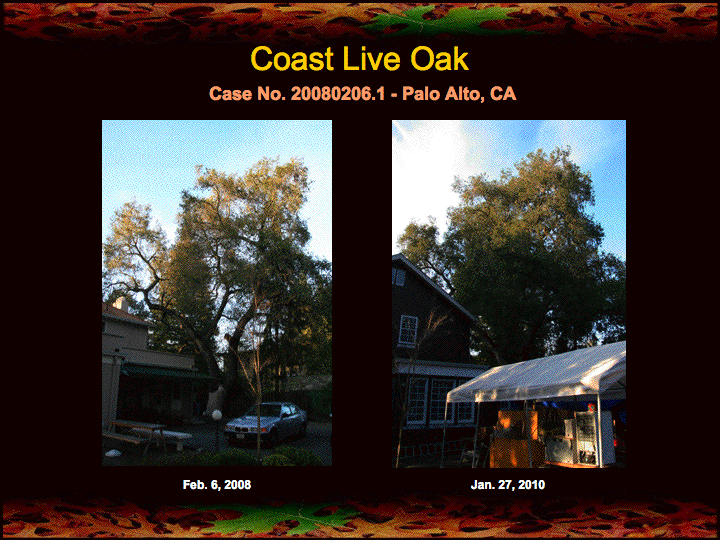
Last week I checked up on several coast live oaks in Palo Alto that were treated with fire mimicry two years ago. Check out the results below.

Read the rest of this entry »