California’s big trees tell a story of overcrowding …

17 08 2020

I recently went on a several week journey to further investigate the big trees of California. Within the past month I have visited Sequoia/Kings Canyon National Park, Sequoia National Forest, Sierra National Forest, Redwood National Park, and various northern California state parks. Simply put, there is an overcrowding problem, but not of tourists.

IMG_0933

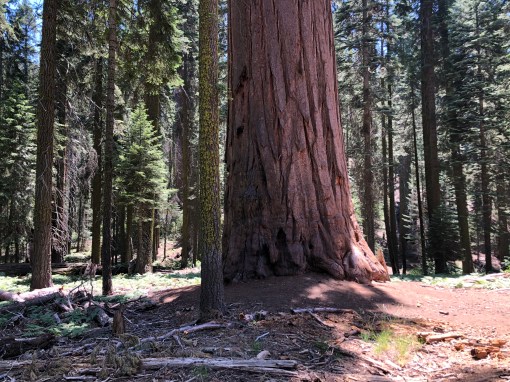
Above is a giant sequoia surrounded by dozens of younger trees, all of which are competing for the same resources as this ancient tree, In previous centuries, these younger trees would have been removed by fires set by the local California natives.

IMG_0881

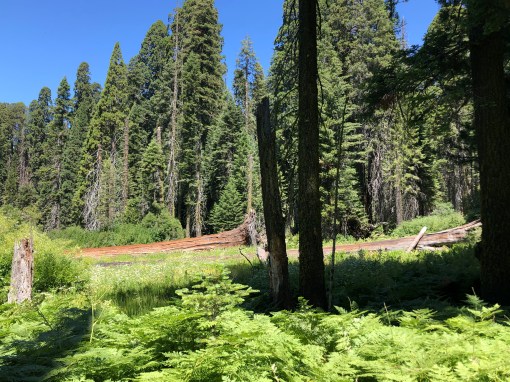
Fallen giant sequoias from paludification, along with over competition.

IMG_0987 Read the rest of this entry »


Fire Mimicry Step 1 – Clearing, thinning, and pruning

27 05 2020

Slide12

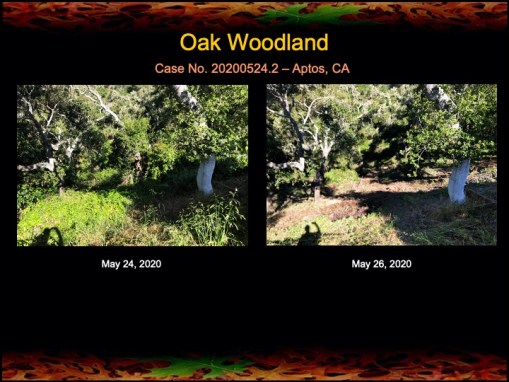
The iconic oak woodlands of California are the result of thousands of years of tending by the various native tribes. They put fire to the land regularly, in places every year or two, to create open, park-like conditions under which the oaks and other keystone species could thrive. As the native people were forced from their lands by western settlers the healthy ground fires that sustained the oaks ended. Now our oak woodlands have become overgrown by shrubs and small trees, and dead wood has piled up on the forest floor. The soils have become acidified and mosses and lichens have built up to unhealthy levels.

While cultural burning is still happening in a few places, most of the oak woodlands can no longer be burned due to the heavy buildup of fuel. The only hope to save these ecosystems is to introduce fire mimicry.

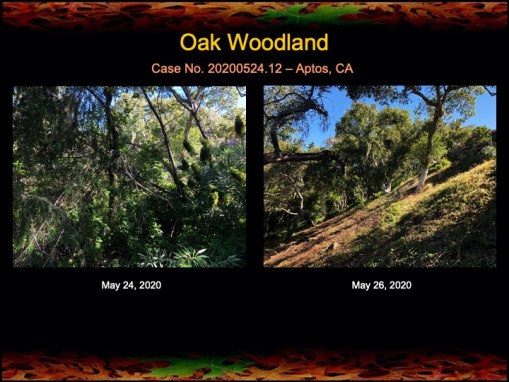
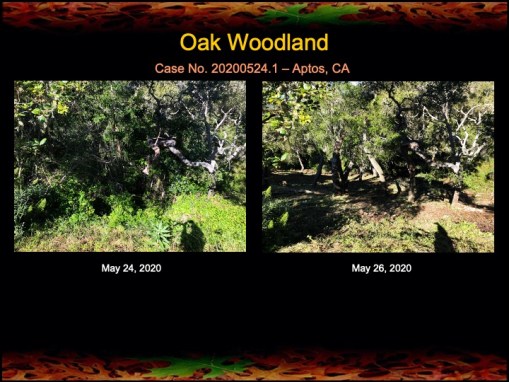
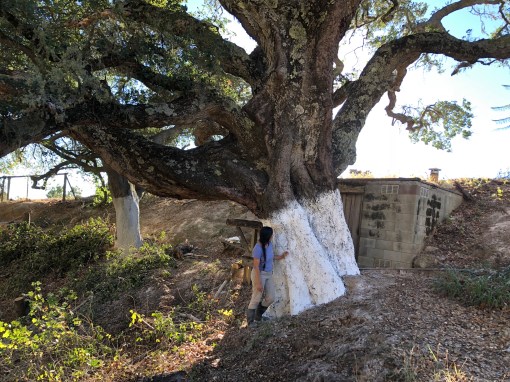
These past few days I have been implementing the first steps of fire mimicry on an ancient Ohlone Costanoan oak woodland in Aptos, California. This involves clearing most of the woody understory (including literally tons of poison oak), thinning young trees, removing dead and dying trees, and pruning the lower branches of the mature oaks. These photos show the progress after only two days of work with a hardy crew of four. We also started to amend the soils with compost tea and alkaline-rich fertilizers, and apply a limewash to trunks to control the mosses and lichens. Stay tuned …

Slide1

Slide2 Read the rest of this entry »


Grandmother oak, year 3

9 03 2020

Slide1

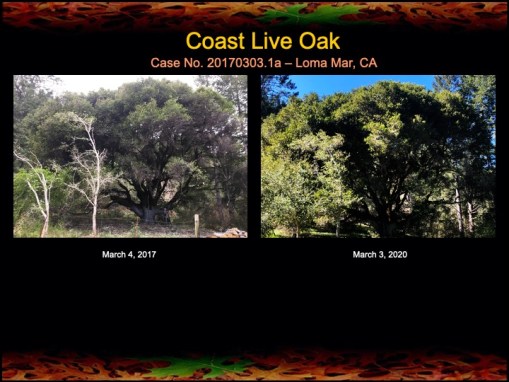
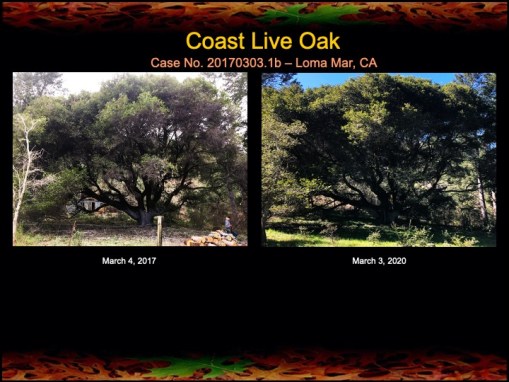
Three years ago I began fire mimicry treatments on an ancient coast live oak (estimated at over 500 years old) in Loma Mar, CA that shows clear signs of being pollarded and otherwise tended by the Costanoan Ohlone native people. As reported in a previous post on Grandmother oak, the massive tree was heavily overgrown with young bay laurel and Douglas fir trees under and around the canopy. Several of the limbs were dying and the canopy was thin and sickly. We cleared away the young trees, pruned some of the lower branches, removed the mosses and lichens from the trunk, fertilized the soils with compost tea and alkaline-rich minerals, and applied a limewash to the main trunk. The photo sets above and below show how well this oak has responded to the renewed care. Enjoy!

Slide2

Slide3


Diseased oaks in Los Altos, CA respond to fire mimicry

7 03 2020

Slide1

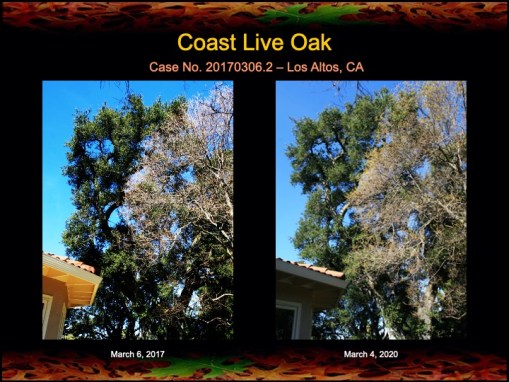
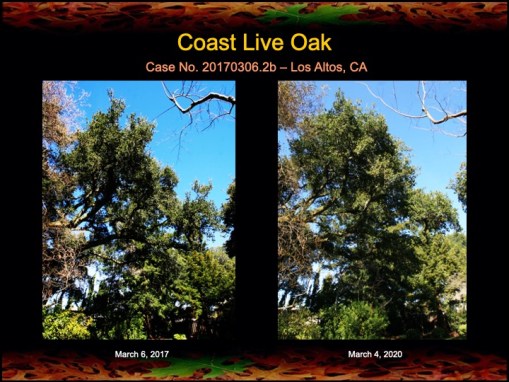
Three years ago I began fire mimicry treatments on several coast live oaks and redwood trees in Los Altos, CA. Three of the largest oaks, one of which appears to be an Indian-era tree, had bleeding stem cankers, probably Sudden Oak Death disease. In addition to fertilizing the soils with compost tea and alkaline-rich minerals, I performed several surgical procedures on the stem cankers. While I can’t say at this point that the oaks are free of disease, the photos do suggest that the oaks are on the mend. The two coast redwood trees in the last photo set also show a positive response to the treatments, although the larger redwood is starting to show signs of drought stress (e.g. thinning top). Otherwise, I’m pretty pleased with the results, as are the clients.

Slide2

Slide3 Read the rest of this entry »


Culturally-modified Indian-era oaks respond to fire mimicry

15 11 2019

Slide1

Five years ago I began fire mimicry treatments on a grove of ancient, Indian-era coast live oaks that have clear signs of being culturally modified (ie. pollarded). This past week I checked on the status of these oaks and the entire grove continues to show strong improvement in canopy density and greenness. And in an area of rapidly spreading Sudden Oak Death, none of these trees have contracted this disease.

Slide2 Read the rest of this entry »


Ancient oaks in Big Sur respond to fire mimicry

12 11 2019

Slide1

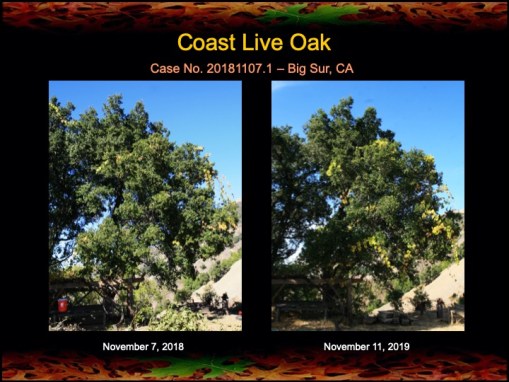
Last year I began fire mimicry treatments on a large grove of ancient coast live oaks in Big Sur. Many of these oaks were culturally modified several hundred years ago by the Esselen Indians. Several of the largest oaks have clear signs of being pollarded, as shown in the photo below.

IMG_8210

Culturally modified coast live oak in Big Sur, CA.

Read the rest of this entry »


Lovelock Centenary talk by Lee Klinger recorded on July 31, 2019

7 09 2019

Here is my presentation “Indigenous-based forest management: Looking to the past for a way forward” at the recent Lovelock Centenary conference at the University of Exeter, UK

My talk begins at 59:38 and ends at 117:00. Enjoy!


Invited talk – “Indigenous-based forest management: Looking to the past for a way forward”

23 07 2019

UPDATE: Here is the video of my talk – https://suddenoaklifeorg.wordpress.com/2019/09/07/lovelock-centenary-talk-by-lee-klinger-recorded-on-july-31-2019/

I am heading to England soon to attend and speak at the Lovelock Centenary (July 29-31), a meeting of Gaian scientists sponsored by the Geological Society of London and the University of Exeter, and inspired by the 100th birthday of James Lovelock, who developed the theory that the earth is a living system (Gaia). James Lovelock will happily be attending and speaking at the conference.

I first met James Lovelock in 1988 at an American Geophysical Union meeting in San Diego, CA hosted by my postdoctoral advisor Stephen Schneider. I presented results that supported Lovelock’s contention that “Gaia likes it cold”, as discussed in Lovelock’s book The Ages of Gaia.

safe_image

James Lovelock

After attending the “Gaia in Oxford” meetings in the 1990s I worked with James Lovelock and Susan Canney (University of Oxford) to help found the Gaia Society, which later became the Gaia: Earth System Science specialty group of the Geological Society of London.

My talk at the upcoming meeting will focus on the topic of Applied Gaia, which, as the name implies, is the application of Gaia theory to solving real world problems. I will be speaking on the ways in which indigenous cultures can inform us on how to improve our forest management in California. Dr Susan Canney will follow up with a talk on her successful work applying Gaia theory to elephant conservation in western Africa. The conference program is listed here.

The entire conference will be lived streamed and I encourage you to watch, as there are few chances to see this many Gaian scientists speaking in one setting.

Lovelock Centenary talk final


Esalen oaks respond to fire mimicry

26 04 2019

Slide4

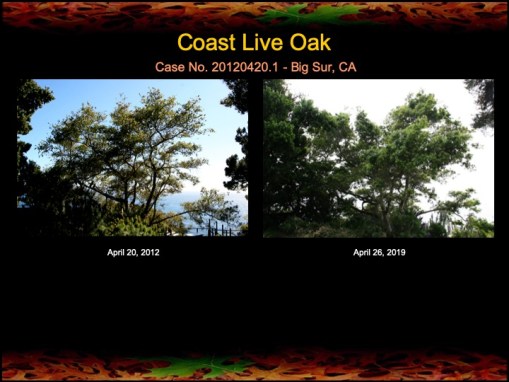
On April 20, 2012 I gave an Earth Day workshop on at Esalen Institute in Big Sur, CA, where I initiated fire mimicry treatments on several coast live oaks. Since then I have been tending these oaks on a regular basis. Today I inspected the oaks and treated them again. The photos (above and below) show the response after 7 years . . .

Slide1 Read the rest of this entry »


Grandmother oak

5 03 2019

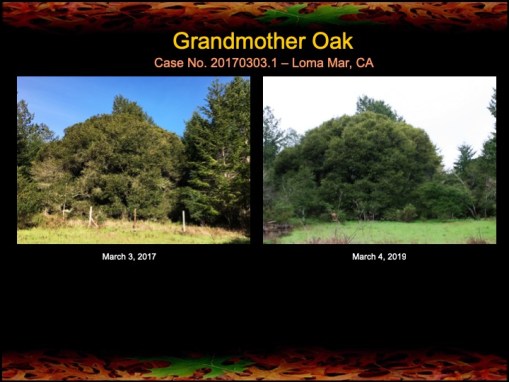
A few years ago I encountered an ancient coast live oak that was so magnificent, it took my breath away. At first sight the oak was barely noticeable, hidden behind a wall of young Douglas fir and bay laurel trees. But after slipping past the young trees Grandmother oak appeared. Her trunk was massive, at least 20 feet in girth, and was clearly pollarded by the native people. I estimated her age to be about 500 years, possibly older.
Slide6

Slide5


Grandmother oak has spent most of her life under the care of native people, who employed fire to manage the oak woodlands and other ecosystems. They would burn frequently enough to keep fuel loads down, so that the fires stayed on the ground and did not damage the canopies. These fires kept young trees, potential competitors for light and other resources, from encroaching on the oaks. They pollarded the oaks, a common practice of repeatedly cutting the lead stem so as to encourage multiple large spreading branches. This, as any orchard farmer knows, is the most efficient shape for maximizing fruit or nut production. In this case, the native people were managing for efficiency in the production and gathering of acorns.

After the California native people were forced from the land, ranchers followed in many places, such as here where Grandmother oak resides. For nearly a century this land was heavily grazed by cattle and horses, which, like fire, kept the young trees from encroaching.

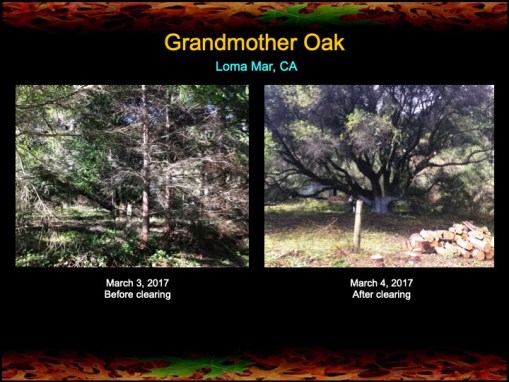
The land was eventually sold about 30 years ago and stopped being a working ranch. Without any fire or grazing disturbance, dozens of young fir and bay trees quickly started growing around and under the oak. By the time I arrived in 2017 many of the fir were taller than Grandmother oak and were shading out the edges of her canopy. With the added competition for light, water, and nutrients, Grandmother oak was clearly beginning to suffer. Thus, the owner’s called on me for help.

I proposed trying fire mimicry, and they agreed. In early March of 2017 I, and my dedicated crew, began treating Grandmother oak, first clearing away the encroaching fir and bay trees, pruning the dead branches, and removing the mosses and lichens from the trunk. We then fertilized the soils beneath the canopy with compost tea, followed by alkaline-rich minerals, and applied a limewash (a kind of poultice) to the trunk.

The results after just two years of treatments are exciting. as the photos below show Grandmother oak is clearly recovering. If all goes well, she may live another 500 years!
Slide1 Read the rest of this entry »