Here’s an upcoming one-day workshop on “Tending the forest with fire” sponsored by Sudden Oak Life, the Central Coast Prescribed Fire Association, and EcoCamp Coyote at Indian Canyon, near Hollister, CA. Proceeds will go to the “Save Indian Canyon” fundraiser. Spaces are limited so please sign up soon!
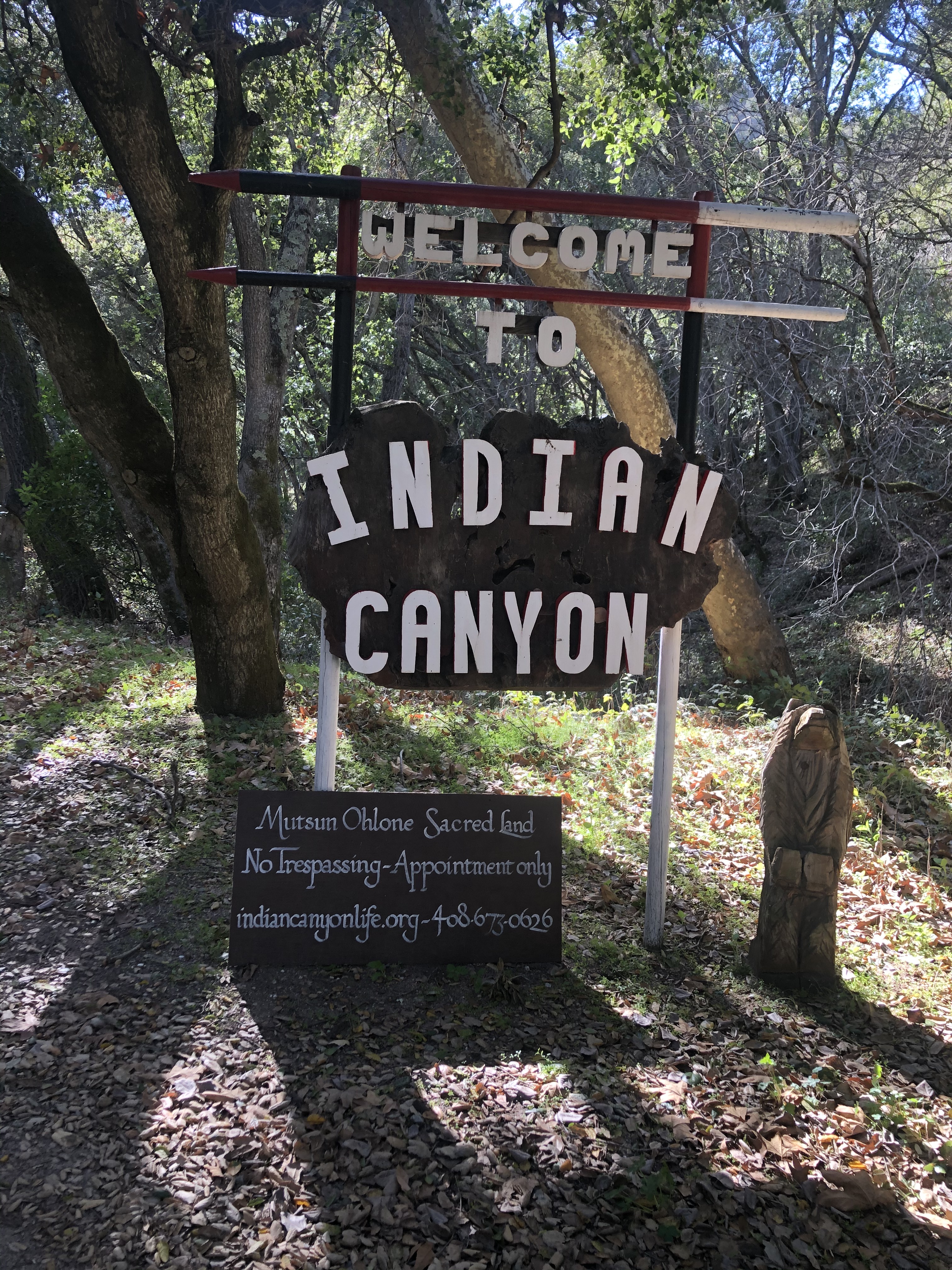
Last night I returned home to Big Sur full of hope and joy after a successful “Fire Mimicry and Insights of Traditional Ecological Knowledge” workshop held at Indian Canyon over the weekend. About 60 truly fine and stellar people showed up! Kanyon Sayers-Roods (Costanoan Ohlone, Chumash) welcomed us warmly to Indian Canyon and skillfully held us accountable for our sacred relations to the land and people. Ruth Orta (Ohlone, Bay Miwok, Plains Miwok) generously shared stories of her family history and instructed us on traditional methods of acorn processing. Leo Lauchere, Ero Gorski, Jill Kunishige, and the rest of the crew of Ecocamp Coyote did a fantastic job of organizing the schedule and providing the necessary infrastructure. And all the while, Red prepared and served us the tastiest vegan meals imaginable!. Many thanks, too, to my loyal colleagues Giovanna Piumarta, Sprout Weinberger, Siena King, and Jorge Espinosa for showing up and sharing their fire mimicry knowledge and insights. If you missed the event, don’t worry, we’ll definitely be doing this again!
Also, there will a followup event on Sunday, December 5, 2021 at Indian Canyon where we will be holding a burn pile workshop. Prescribed fire expert Jared Childress and several of his colleagues will be there to help lead and teach us about fire safety and management. I’ll also be there sharing about fire mimicry. Watch this page for further details.
Here are images of some of the event highlights this past weekend …
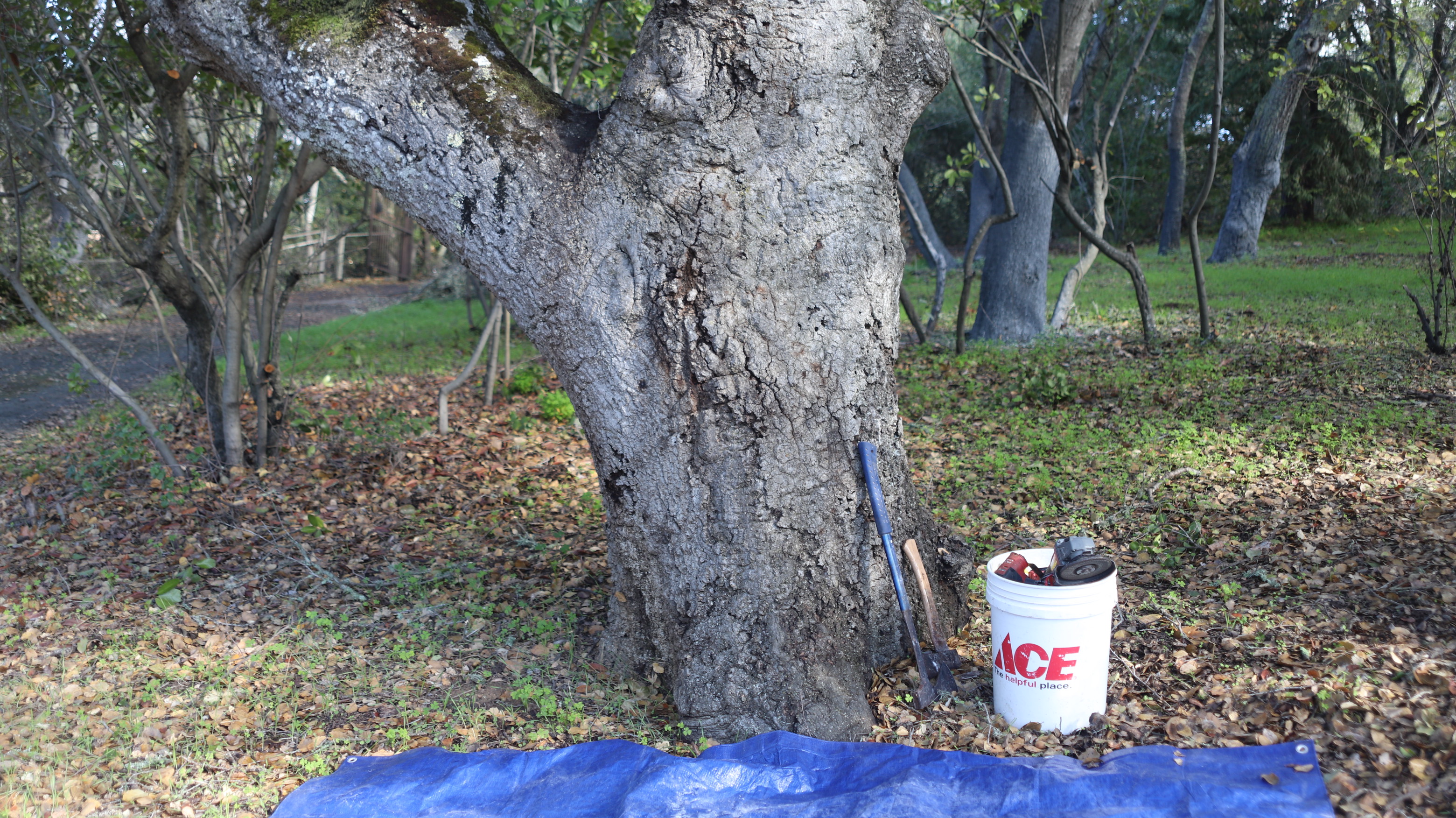
Below is a time-lapse video of a stem canker surgery we did today on a pollarded, Ohlone “ancestor” coast live oak in Portola Valley, CA. Note the removal of diseased tissue with axes and power multi-tools, cauterization, and poultice application. This was followed by a limewash application to the trunk, as well as compost tea and alkaline-rich mineral amendments to the soils. Enjoy!
Indian Canyon Nation, EcoCamp Coyote, and Sudden Oak Life are collaborating on an upcoming 3-day intensive workshop titled “Fire Mimicry and Insights of Traditional Ecological Knowledge” being held at Indian Canyon November 12-14, 2021. This event will feature Kanyon Sayers-Roods (Mutsun Ohlone), Ruth Orta (Him•re-n of Ohlone, Bay Miwok, and Plains Miwok), Ero Gorski and Leo Lauchere (EcoCamp Coyote), and Lee Klinger (Sudden Oak Life). Here are some of the topics we will cover:
• identifying culturally modified trees and landscapes
• the science and practice of fire mimicry
• demonstration of stem canker surgical procedure
• considerations for acorn harvesting
• methods of oak seedling propagation.
This is a rare event and should not be missed by anyone passionate about tending oaks and other native trees. More information and registration for the event are here.
Coast live oak at Indian Canyon tended with fire mimicry since 2019
Today I performed a major stem canker surgery in an effort to save an Esselen-era (400+ years old) coast live oak in Big Sur. The process involved large and small axe work, power multi-tools, cauterization, and poultice. This is part of a larger protocol called fire mimicry, which includes removal of woody understory, fertilization of soils with alkaline-rich minerals + compost tea, and application of limewash to the trunk. Here’s the link to a time-lapse video of today’s surgery: https://www.youtube.com/watch?v=pEISFdAErc4
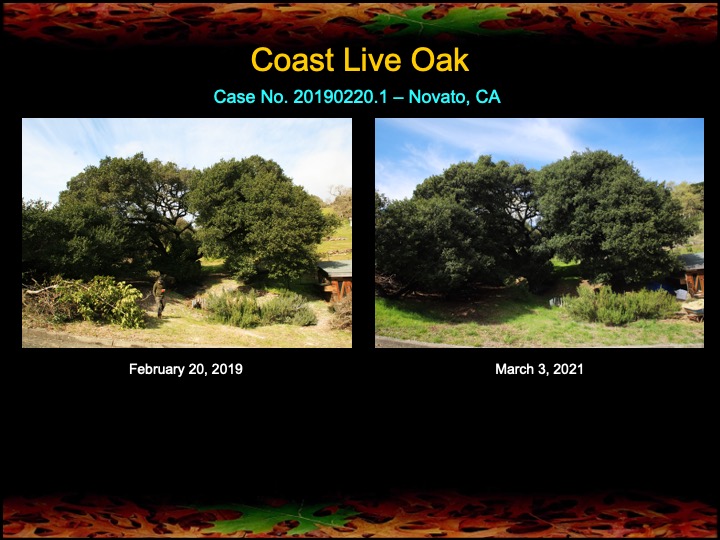
The coast live oak above is about 5 feet in diameter and clearly dates from a time when the Coast Miwok Indians tended the land. The oak has obvious signs of being pollarded, with numerous lateral boles growing outward from a point about 4 feet above the base of the trunk. I suspect this tree is around 500 years old.
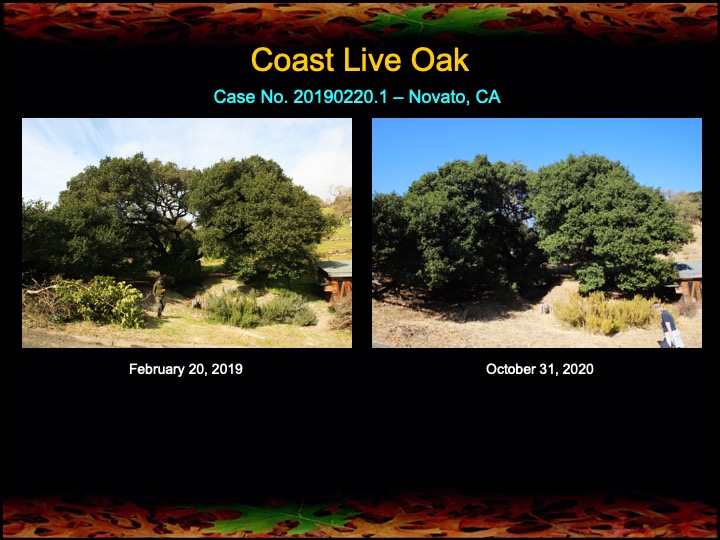
Two years ago we treated this oak and neighboring trees with fire mimicry, which involved clearing brush, pruning, removing moss and lichens from the base, fertilizing the soils, and applying a imewash to the trunk. Last year I returned to fertilize the soils again, reapply the limewash, and to surgically remove a stem canker infection (probably Sudden Oak Death) from the trunk of the large oak above. A few days ago I inspected the trees and found significant improvement in their health after only two years! Keep in mind that this past year this region has been in a significant drought. Seems these trees have something to say about taking an ecological/cultural approach to their care …
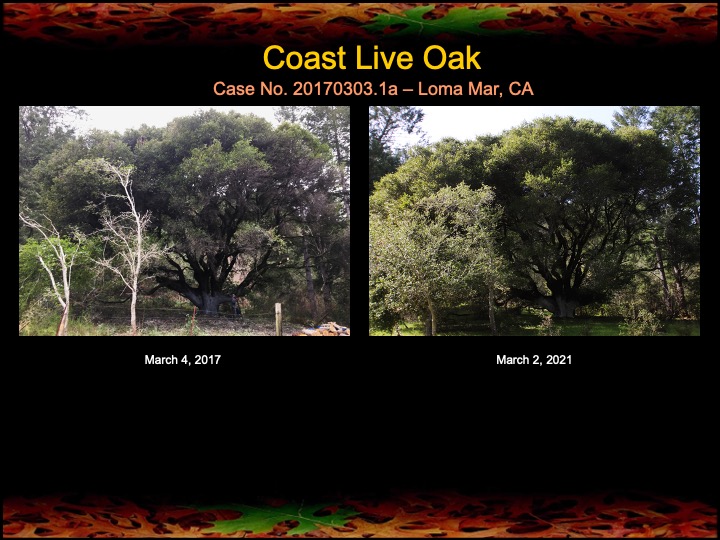
Fours years ago we began fire mimicry treatments on an ancient, Ohlone-era coast live oak near Loma Mar, CA. Affectionately called Grandmother oak by the owners, she measures 17′ 8″ in circumference and is likely more than 500 years old. We started by clearing away the woody understory, removing nearby young firs and bays, and pruning off the dead lower limbs. Then we fertilized with compost tea and alkaline-rich minerals, and applied a limewash to the trunk. We repeated the fertilization treatments for two additional years. Above and below are photos showing how Grandmother oak has responded to care we gave her. She sure seems happier and more vibrant to me!
Here a Youtube video of my recent lecture and discussion in the course FORESTS, hosted by the Humanities Center of Texas Tech University. Many thanks to Bruce Clarke and Michael Borshuk for facilitating this talk!
The above coast live oak is a ~500 year old coast live oak that was clearly pollarded by resident Coast Miwok people. I recently inspected this and several other coast live oaks treated with fire mimicry in February of 2019. Due to the difference in time of year of the photos these results are not exact comparisons. Still, significant improvement in canopy density and lushness is apparent in all the oaks, except for the untreated (control) oak shown in the final image.
This Fall 2020 I will be lecturing for the online course FORESTS, hosted by Texas Tech University, on the topic of “Forest Restoration Theory and Practice Based on Indigenous Cultural Tending”. The speaker list is excellent and I plan to participate on all of the lectures and discussions.










Recent Comments