An integral ecology of Sudden Oak Death

9 04 2010

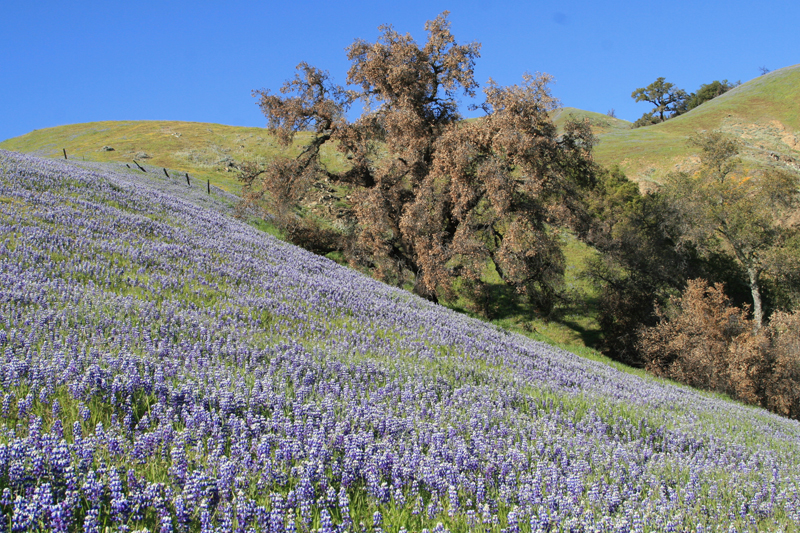
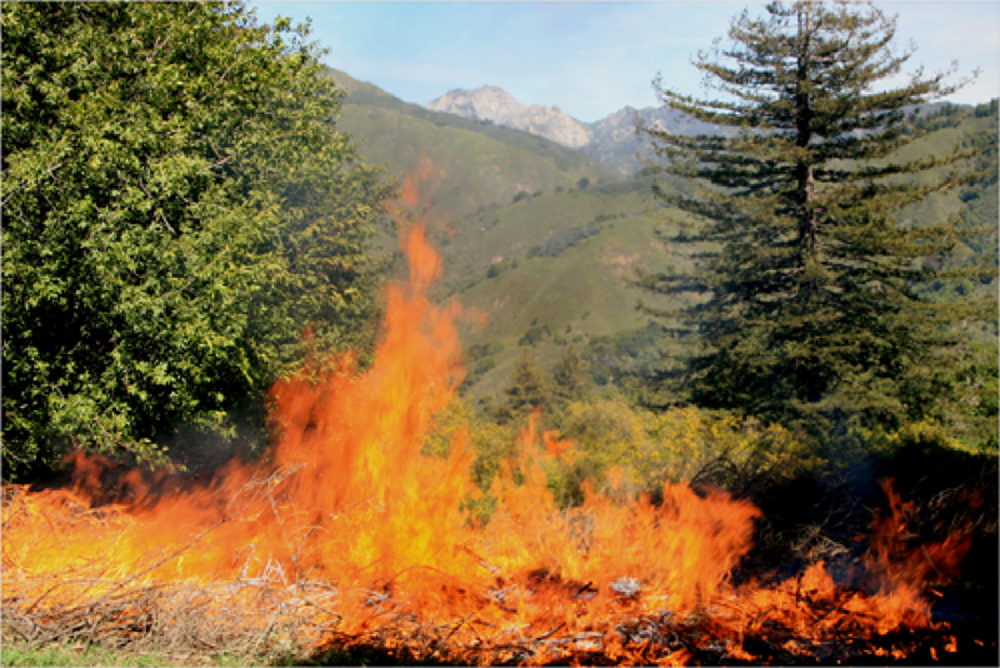
Sudden Oak Death (photo by Lee Klinger)

Dr. Joel Kreisberg has recently published an excellent book entitled “An integral ecology of Sudden Oak Death: multiple perspectives of a forest pathology”.

The summary of the book states:

“The oak woodlands of central and northern California have seen a rapid decline of native oak trees in the last ten years attributed to Sudden Oak Death (SOD). Phytophthora ramorum has been isolated as the forest pathogen focusing the academic and public research agenda. Integral Ecology offers a systematic approach as a means of balancing multiple perspectives. Science is seldom value free and offers more then one conclusion. Alternatively Sudden Oak Death is a response to a larger set of variables including shifting climate, general forest decline and the ongoing impact from human activities. For an integral ecology all parties may be partially correct–the difference is in perspective. The interpretation of Sudden Oak Death as P. ramorum encourages institutions to combat the disease using technology and research as its primary tool. SOD as forest decline offers a choice to either deny our role in these changes or to learn and adapt with it. In this capacity, nature is the teacher and we are the students.”

About the author – Dr. Joel Kreisberg, DC, MA is the Founder and Executive Director of the Teleosis Institute, dedicated to reducing healthcare’s footprint while broadening its ecological vision. Dr. Kreisberg is currently an adjunct professor at the School of Holistic Studies at John F. Kennedy University in Pleasant Hill, CA. http://www.joelkreisberg.com Read the rest of this entry »
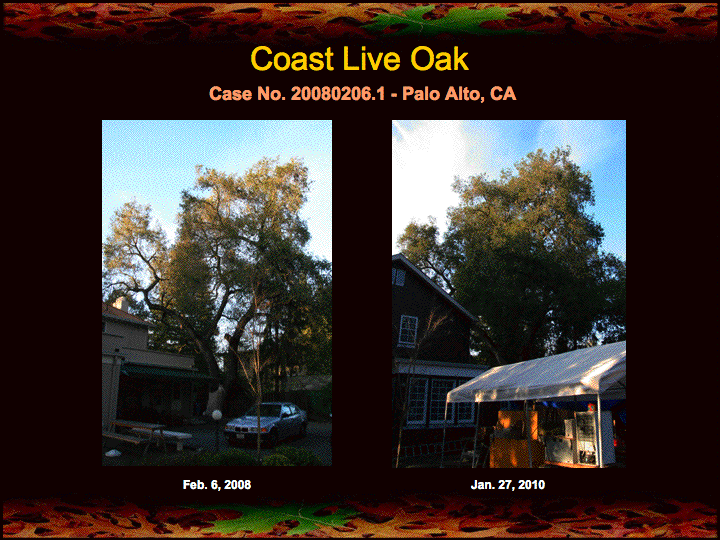
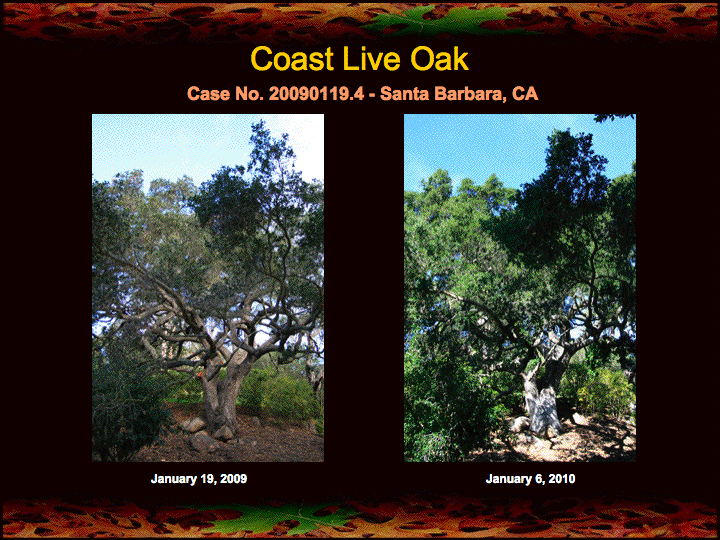
Fire mimicry 2-year results with coast live oaks

7 04 2010

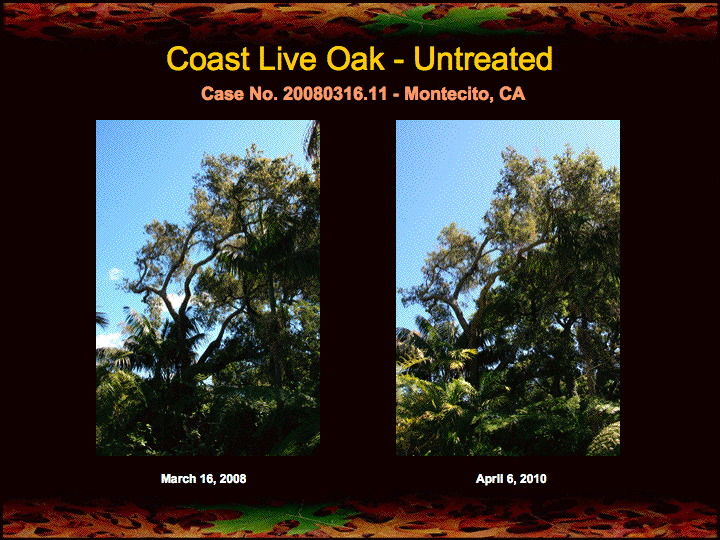
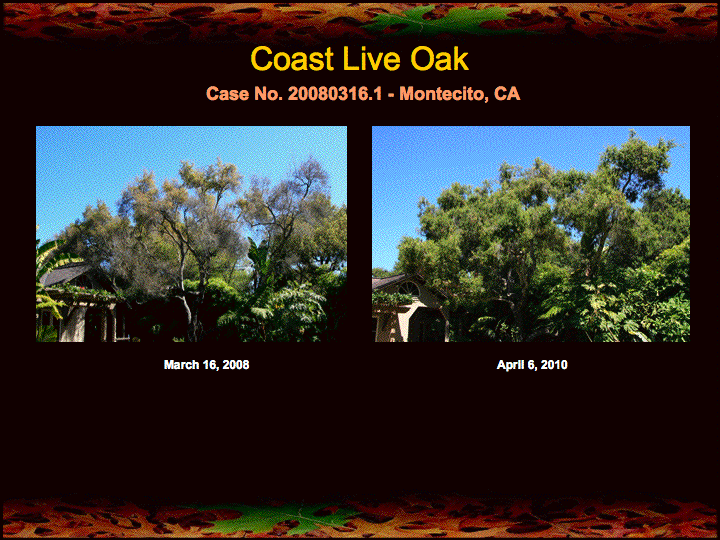
Yesterday I re-photographed several coast live oaks in Santa Barbara that have been undergoing fire mimicry treatments for two years. Here are the results. Note that the latest photos were taken a few weeks later in the season than the original photos. This will have some affect on the results due to the few weeks of additional growth. However, the examination of a control (untreated) oak here indicates that this additional growth cannot explain the significant increase in canopy health seen in the results with the many treated oaks. Read the rest of this entry »


Interview with SustainableWorld’s Channel

17 02 2010

SustainableWorld’s Channel did a recent interview with me at La Casa de Maria (Santa Barbara, CA) about oak health, native people, and fire mimicry and has posted a portion of the interview on YouTube. Here is the video:


What is fire mimicry?

8 02 2010

People often ask me why the oaks and other trees in California need to be tended. Oaks have been growing in California for many thousands of years, so why would they need our help now?

The answer is clear. The great oak woodlands and savannas of California are not the result of mother nature doing what she does best. The iconic oaks are largely the product of thousands of years of tending by Native Americans. It is well documented that the native people here managed the oaks with fire, keeping the ecosystem in an early successional state that is optimal for oaks. Acorns from the oaks were a primary food source for the native people of California.

Tending the land with fire in Big Sur (photo by Lee Klinger)

Read the rest of this entry »


Palo Alto oaks responding to fire mimicry

2 02 2010

Last week I checked up on several coast live oaks in Palo Alto that were treated with fire mimicry two years ago. Check out the results below.

Read the rest of this entry »


Treated vs. untreated oaks

2 02 2010

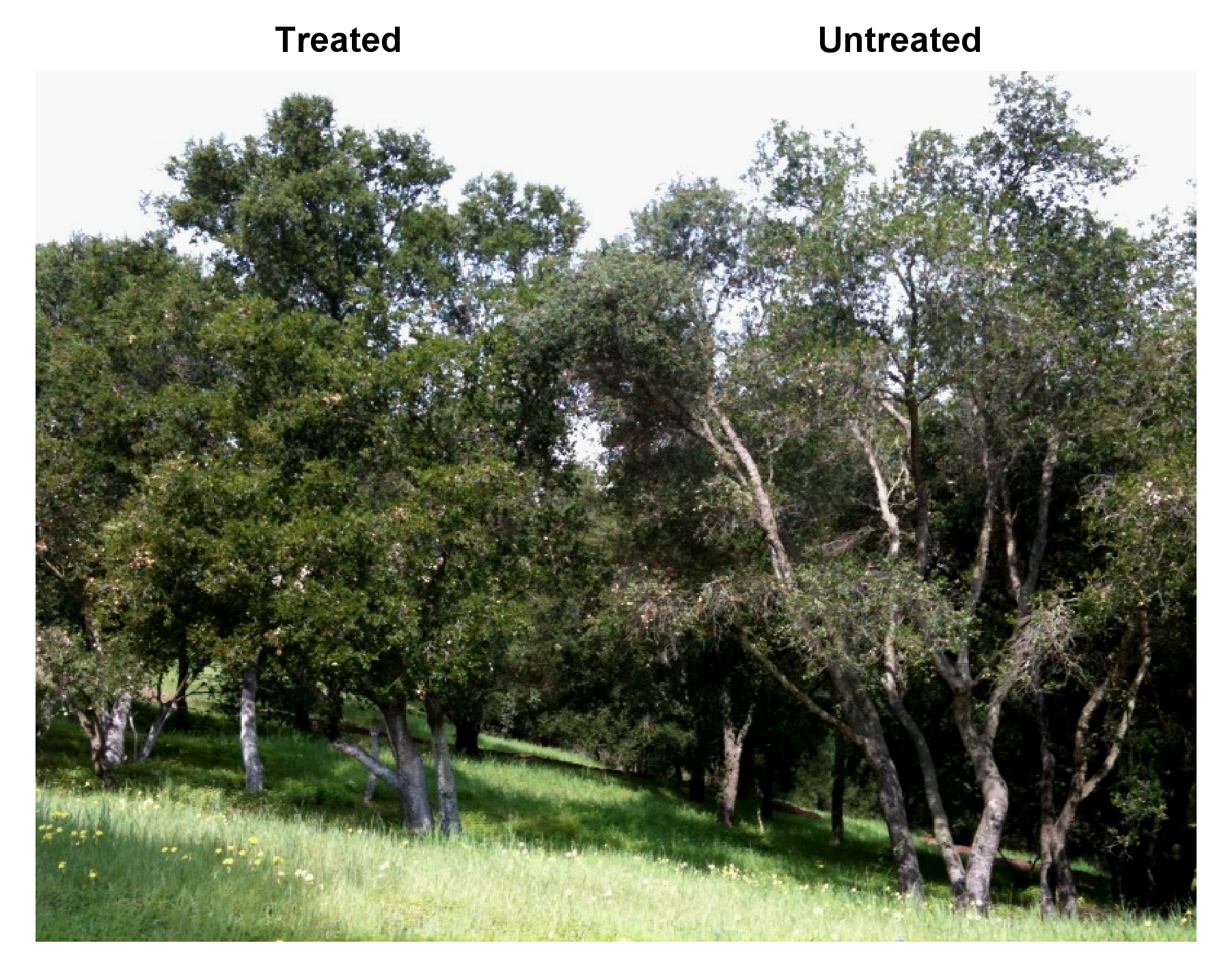
Today I was examining some coast live oaks that were treated last year with fire mimicry in Toro Canyon near Santa Barbara. I came across the example below where there were both treated and untreated oaks growing next to each other. The photo I believe is self-explanatory. As you can see there is no reason why we can’t have healthier oaks here in California.

To see images of the oaks before they were treated check out my earlier post Toro Canyon oaks.

Coast live oaks in Toro Canyon (photo by Lee Klinger)


Toro Canyon oaks

7 01 2010

These oaks growing in Toro Canyon near Santa Barbara were first treated last year with fire mimicry practices. Check out the results below.

Read the rest of this entry »


Hearst Castle 4-year results

4 01 2010

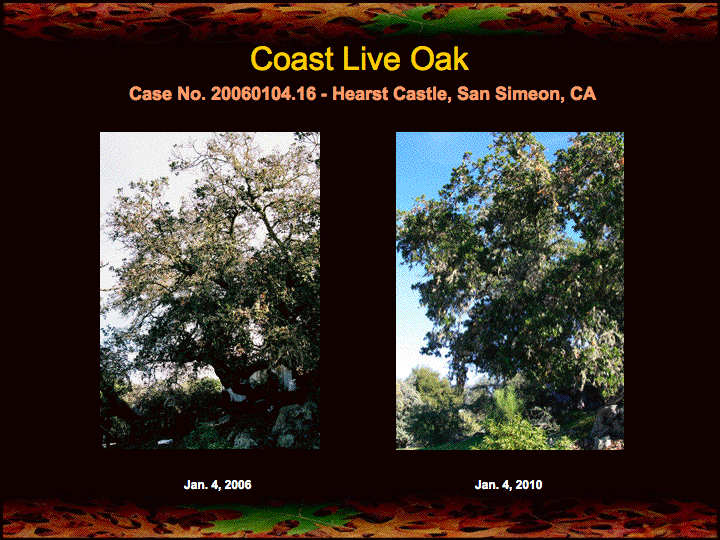
Today I visited Hearst Castle and photographed several coast live oaks that have been under treatment with fire mimicry practices for four years. Some results from last year can be seen here. Below are the photos I took today showing changes in both treated and untreated oaks after four years. Be sure to examine the last two sets of photos which show results from some untreated oaks. Enjoy!

Read the rest of this entry »


A holistic approach to mitigating pathogenic effects on trees

25 12 2009

For those of you who would like to read more about the details of the science and techniques involved in fire mimicry practices for oak restoration, here is a paper I wrote last year:

A holistic approach to mitigating pathogenic effects on trees

by Lee Klinger MA PhD

Presented at: Treework Environmental Practice Seminar XII
National Museum Cardiff, Cardiff, UK – 13th November 2008

Summary

The conventional ‘disease model’ approach to tree health focuses on identifying and controlling a specific pathogen (or pest) implicated as the causal agent of tree decline. Alternatively there are more holistic approaches in tree health that address a broader suite of processes occurring at the ecosystem level which may be predisposing the trees to infection by disease. Here I describe a holistic methodology that takes into account not only the proximal agents involved in tree decline, but also the age and structure of the forest, the abundance of cryptogams, the fire history, the acidity of the precipitation, the fertility of the soil, and the historical land care practices. This methodology is being implemented in the oak forests of coastal California which are experiencing high levels of mortality attributed, by most scientists, to the pathogen Phytophthora ramorum (aka sudden oak death). Evidence reported here of 1) acid rain, 2) acidifying effects of mosses and lichens, 3) the presence of acidic and nutrient deficient soils, and 4) a much lowered incidence of disease in recently burned areas, points to the likelihood that fire suppression has radically altered the structure and successional status of the forests, leading to enhanced competition and systemic acidification. Case study results of sick and diseased coast live oaks receiving holistic care, aimed not at treating P. ramorum but at reducing the environmental acidity, fertilizing the soils, and otherwise mimicking the effects of fire, show noticeable improvement in the health of the oaks after one year (78%, n=152), with further improvement in years two (84%, n=134) and three+ (81%, n=80). While the results do not indicate that the incidence of P. ramorum has changed significantly in the population of treated oaks, there is evidence that the sick, non-diseased trees are better able to resist infection.

Download the complete paper here.


Winter solstice oaks

21 12 2009

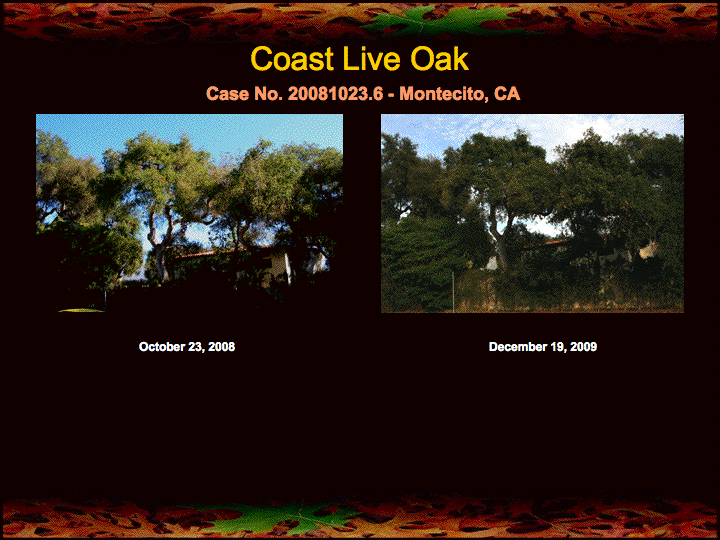
Winter solstice is upon us and I’m taking this day to rest my body after many days of hard work restoring oaks with fire mimicry practices in Santa Barbara. During my visit I re-photographed several oaks that I treated last year in Santa Barbara. I thought I would share the results as a winter solstice gift to readers.

Happy holidays. Enjoy!

Read the rest of this entry »