Fire mimicry improving health of oaks, pines, and toyons

23 06 2013

20080612.1.5

For thousands of years the native people of California used fire as a tool to manage the lands and maintain healthy trees. Now-a-days, faced with the fact that we can no longer set fire to the land because of heavy fuel buildup from years of fire suppression, we must use alternatives, such as fire mimicry methods, in our work to keep California’s trees healthy.  Today I’m posting some recent results of fire mimicry treatments in restoring oak, pine, and toyon health.

Enjoy!

20100602.1.3 Read the rest of this entry »


Oaks in Carmel respond with vigor to fire mimicry treatments

27 05 2013

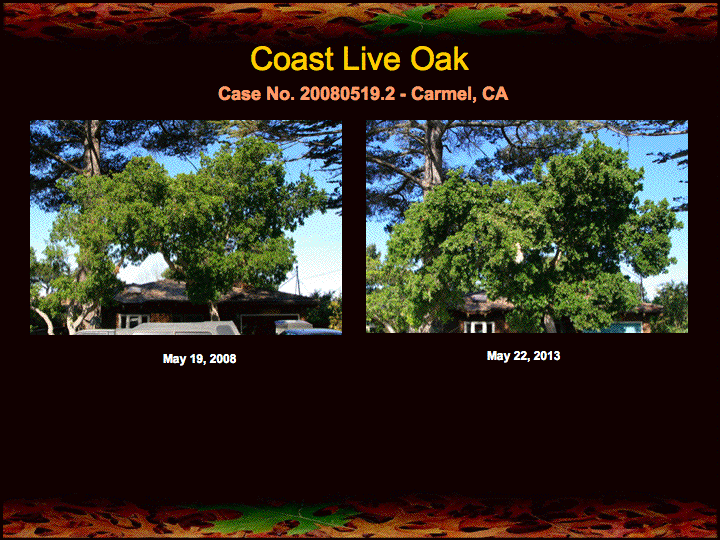
Five years ago I began fire mimicry treatments on these coast live oaks in Carmel, CA. Last week I checked on the oaks and re-photographed them. Here are the results:

20080519.1.5

20080519.2.5


Glen Ellen oaks on the mend

18 05 2013

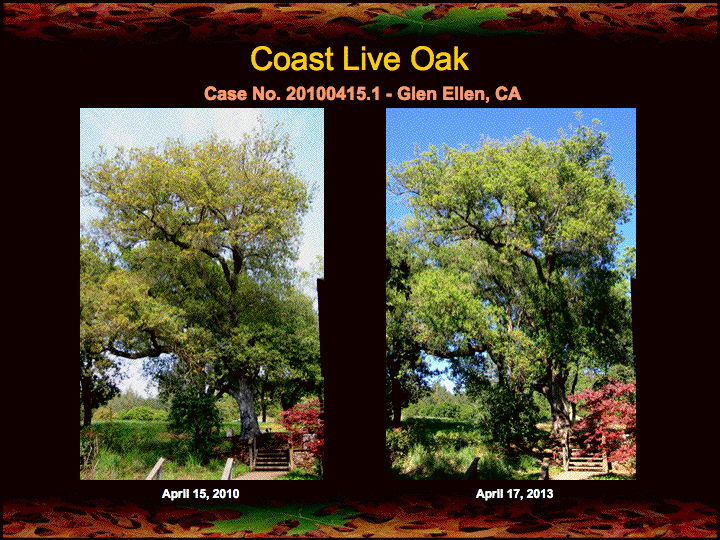
Three years ago I began fire mimicry treatments on a number of coast live oaks and valley oaks near Glen Ellen, in Sonoma County, CA. I recently did my annual checkup on these oaks and re-photographed them to assess their response. 

Here are the results.

20100415.1.3

20100415.6.3 Read the rest of this entry »


Hillsborough oaks respond to fire mimicry

3 05 2013

20120417.3

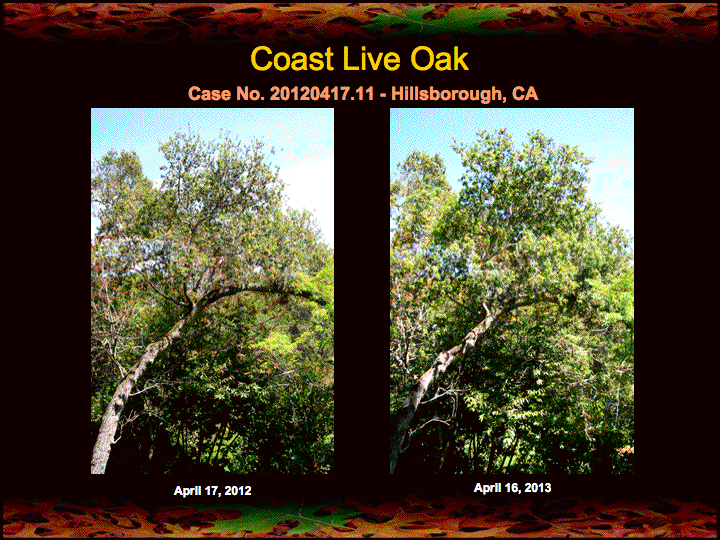
Last year I began restoration work using fire mimicry on a stand of oaks in Hillsborough, CA. I did some clearing of woody understory and moss removal from the trunks, and added alkaline-rich minerals and compost tea to the soils. I also applied a lime spray to the trunks.

Here are the results after just one year.

20120417.11

20120417.8 Read the rest of this entry »


Sick pines respond to fire mimicry

21 04 2013

20100415.24.3

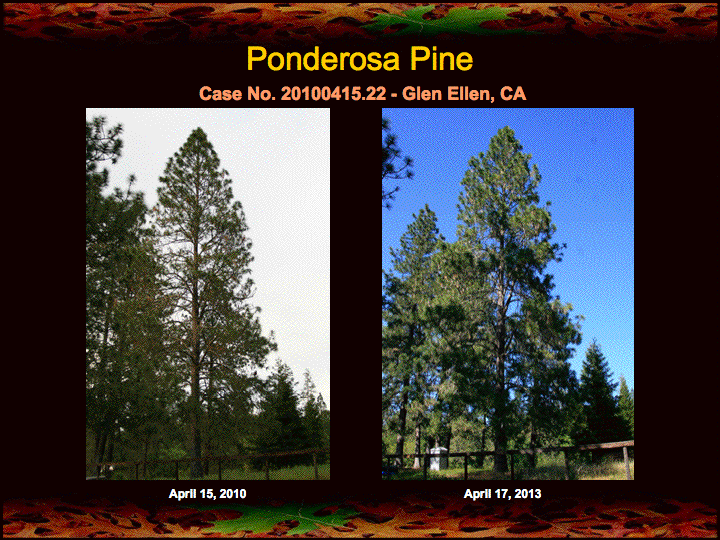
While the focus of work here at Sudden Oak Life is on oak health, there are lots of other kinds of trees that respond to fire mimicry treatments. Today I would like to share with you the results of some work being done on several ponderosa pine trees. These photo sets show how the pines have responded after three years of treatments. Note that the last photo set is of an adjacent UNTREATED pine.

20100415.22.3

20100415.23.3 Read the rest of this entry »


City of Piedmont oaks respond quickly to fire mimicry treatments

19 04 2013

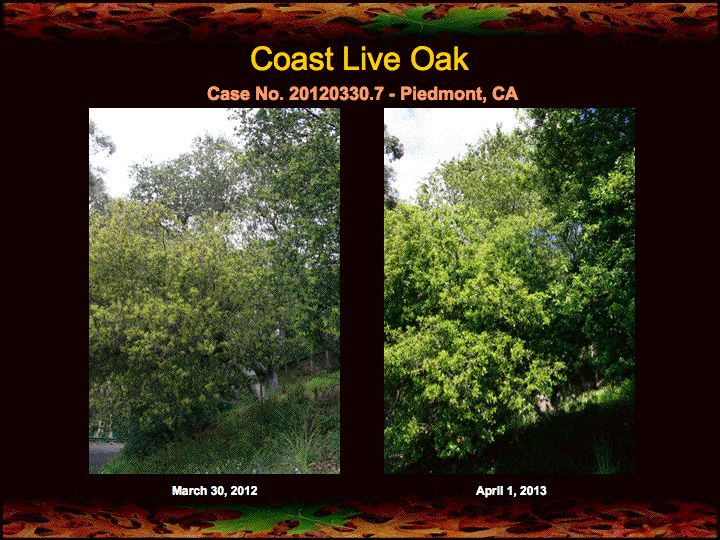
20120330.7

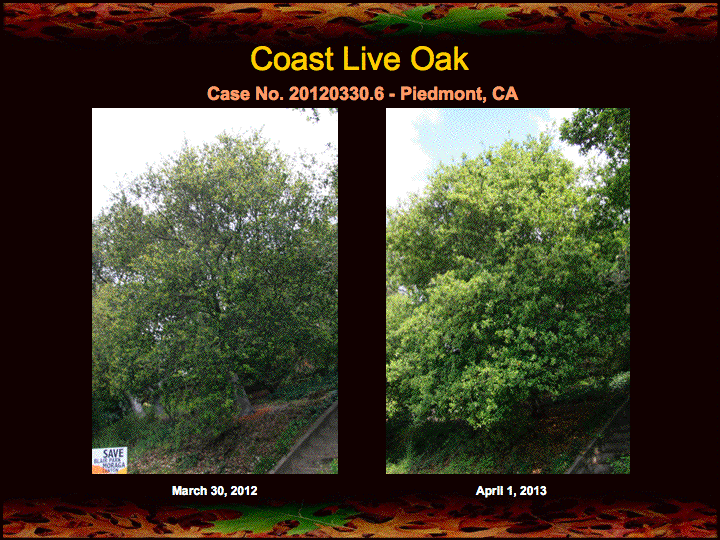
In April of 2012 I was asked by the City of Piedmont to treat several oaks along Moraga Ave. that were appearing unhealthy. Some of the oaks were on a cliff, so I set up a belay and worked spreading minerals and compost tea underneath the oak canopies and applying a lime spray to the trunks. In addition to the City of Piedmont oaks, I also treated several oaks on an adjacent private property at the same time.  Here are the results after just one year.

20120330.4


20120330.6 Read the rest of this entry »


Oakland oaks get a reprieve from the chainsaws

27 02 2013
Healthy grove of oaks in Oakland slated for removal.

Healthy grove of oaks in Oakland slated for removal (January 2013)

As is evident in the city’s name, Oakland was named for the large area of oak woodland that originally grew in the region back when it was settled. These days, however, most of original oaks have died or been removed, and those that do remain are mostly limited to the Oakland hills. So it seems baffling why the East Bay Municipal Utility District (EBMUD) would want to remove a flourishing oak grove from its lands within the city of Oakland.

Yet that is exactly the situation I came across last month when a friend contacted me about a large oak grove near her home in Oakland that had been slated for removal by EBMUD.  At that time the removal of the trees was imminent. My concerned friend who lives near the oak grove requested I come assess the situation. She felt, based on photographs she had taken, that the oak grove was not in poor health, as was suggested in a consulting firm’s report to EBMUD. The report, written in August of 2010, stated that several oaks were showing signs of the sudden oak death pathogen or were otherwise in poor health, and that the majority of the oaks should be removed. About 50 trees, mostly oaks, but also some redwood, cedar, and pine trees, were recommended and eventually marked for removal. Read the rest of this entry »


Oaks in Santa Barbara thriving after 4 years of fire mimicry

7 02 2013

20090203.1.4

I’ve had several recent posts showing how oaks in Santa Barbara are flourishing after fire mimicry treatments. Here is another set of photos from a grove of oaks in Santa Barbara that have been receiving fire mimicry treatments for the past four years. Compare these results with the results in this same grove posted last year after three years of treatments.

Enjoy! Read the rest of this entry »


Acid rain in Big Sur – 2011-2012 season summary

3 02 2013
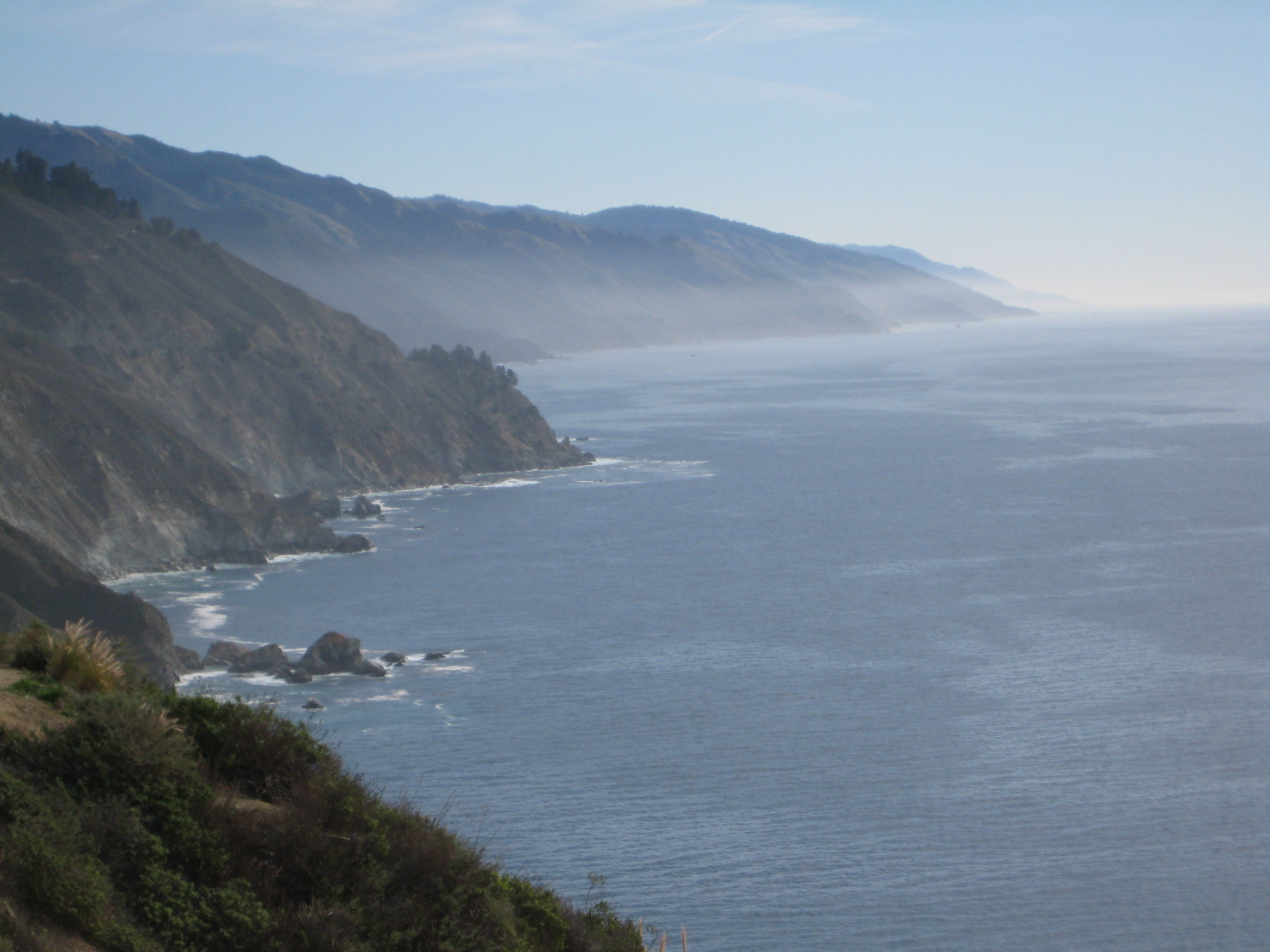
Big Sur Coast

Marine haze comprised largely of sulfate aerosols produced by ocean phytoplankton is a possible source of acidity in the rain in Big Sur. Photo by Lee Klinger.

I’ve been remiss in not posting this sooner. Here is the summary data for the  2011-2012 rain season in Big Sur. During the season we received a total of 25.49″ of rain, which is below the average of the previous four years (32.25”). The rainy season lasted for nearly 8 months, with the first rains arriving on October 4, 2011 and the last rains falling on May 27, 2012.

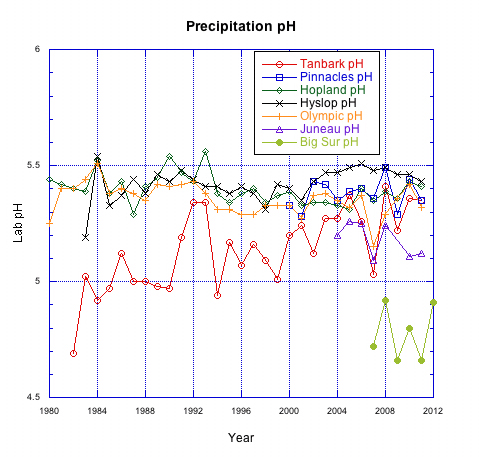
Rainfall from 29 events, totaling 25.13″, was measured for pH. The season volume-weighted average pH was 4.91 ± 0.16. This mean pH was higher than the average of the previous seasons (mean volume weighted pH 2007-2011 = 4.77).

Season length: October 4, 2011 to May 27, 2012

Total rainfall: 25.49″

Rainfall from 29 measured events: 25.13″

Mean volume-weighted pH (± s.d.): 4.91 ± 0.16

For summaries of previous years see “Acid rain in Big Sur 2010-2011 season summary“, “Acid rain in Big Sur 2009-2010 season summary”, and “Acid rain in Big Sur”.

The graph below shows the mean volume-weighted pH values recorded from Big Sur for the past 5 rain years, along with the mean volume-weighted pH values reported from six National Acid Deposition Program (NADP) sites along the Pacific coast, from southern California (Tanbark) to southeast Alaska (Juneau). Note that the NADP sites have data only through the 2010-2011 rain year. Data for the most recent rain year are not yet available from NADP.

2012 rain pH

Mean volume-weighted pH values of precipitation at six NADP sites and at Big Sur

This graph shows that the rainfall pH readings from Big Sur are significantly lower than those at the NADP sites near the Pacific coast. As I mentioned in last year’s summary, some of this difference is possibly due to the fact that the NADP sites report “lab pH” and the Big Sur readings are “field pH”. Typically the “lab pH” readings are higher (less acidic) than “field pH”. Another reason is that the Big Sur station is significantly closer to the Pacific Ocean than the NADP sites. If the Pacific Ocean is the source of much of the acidity, as I suspect, then the lower readings at Big Sur could be due to the closer proximity to the source of acidity.


More results with Santa Barbara oaks

28 01 2013

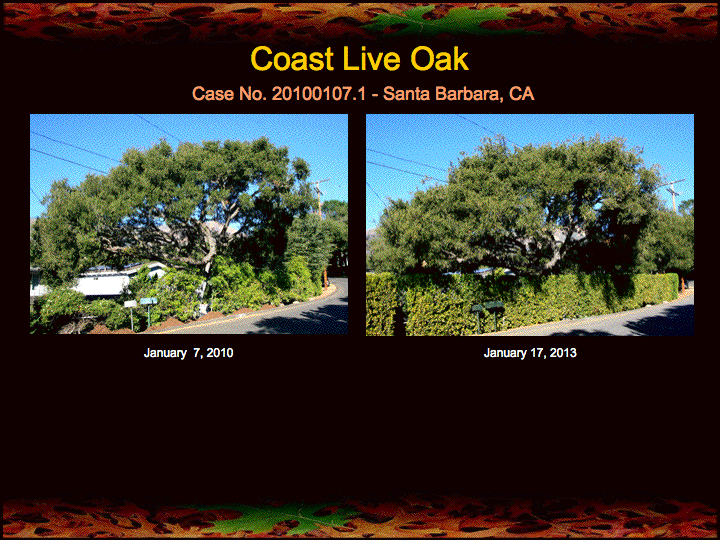
20100107.1.3

Yesterday I posted some very encouraging results from a grove of oaks in Santa Barbara. Today I would like to share some more results from another grove of oaks in Santa Barbara. These oaks have been treated with fire mimicry for three years, and all but one (case no. 20100107.5) are showing positive responses. The photos above and below show the results.

Be sure to examine the last photo set of this series (case no. 20100107.7), which shows the changes in an untreated control oak located in the same grove.

20100107.2.3 Read the rest of this entry »