An Op Ed on the Los Angeles Wildfires

13 01 2025

With regards to the recent catastrophic wildfires burning in LA, please consider what I have to say. I am a survivor of a wildfire that burned here in Big Sur several years ago which, despite my fire-fighting skills, took my home. As a PhD scientist my understanding of the ecology of the California forests and their decline runs deep, which has proven useful in consulting with landowners on how to prevent the decline of their trees and reduce the fire hazard on their properties. I served for many years as a volunteer and paid firefighter and, with respect to climate change, I worked as a staff scientist for 14 years at the National Center for Atmospheric Research (NCAR). Currently I serve as the Staff Ecologist with the Esselen Tribe of Monterey County.

Climate change is so often invoked as the “cause” of these wildfire disasters, that it is hard for most folks to parse the more nuanced explanations of what is really going on. In my opinion, the wildfire problem in California and elsewhere has been hijacked by climate activists, who wish to divert the attention of wildfires to climate change, despite knowing that climate is only part of the problem. This emphasis on climate change leaves people with few real-world solutions to the wildfire problem. Buy a Tesla perhaps?

But the LA fires were preventable, without changing the climate. How do I know? Because of the real world work I do which has not only saved homes, it has also saved entire forests – and I didn’t change the climate!

To put it simply, in my opinion, if climate change was not happening, or even if we were able to stop or reverse climate change right now, these wildfires would still happen. Present day climate change may be exacerbating the frequency of these events, but the wildfires would still happen. Suppose we were to develop better firefighting technologies and skills, the wildfires would still happen. Let’s rebuild with more fireproof homes, well then maybe not so many homes would be lost, but the wildfires would still happen!

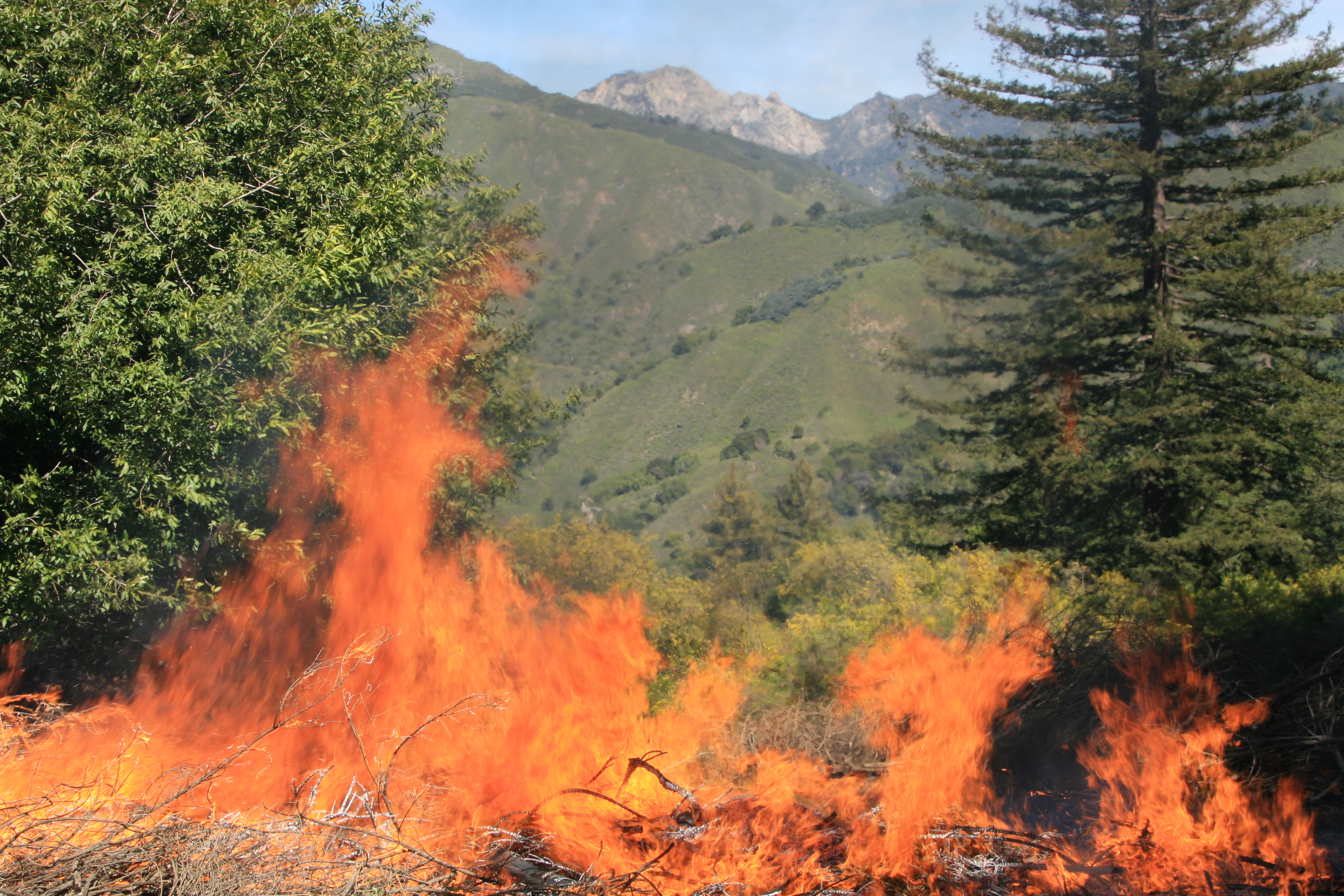
The catastrophic wildfires in California and elsewhere are NOT the result of an altered climatology, they are the result of an altered ecology. For thousands of years the forests, chaparral, and prairies of California were managed by the Native Peoples, mainly with fire. Now that the Native People have been largely removed, the lands are no longer being tended. This has resulted in rapid shifts in the succession of ecosystems. Prairie ecosystems are being invaded by chaparral and oak savannas are quickly becoming overcrowded oak forests.

Thankfully, the Native Peoples have solutions, which they are willing to share. Maybe it’s time to listen and learn!

Respectfully,

Lee Klinger, Big Sur, CA

Author – “Forged by Fire: The Cultural Tending of Trees and Forests in Big Sur and Beyond” https://www.amazon.com/dp/B0D3ZVMB3P


Uncle Huck and Aunt Joan’s farm

12 01 2025

Many are asking about my thoughts on the LA fires. I plan to eventually share these once the scope of the tragedy is better known. For now let me show some images depicting the transformation of the land of my youth. Even though this place is in Ohio, the ecological changes happening here are dramatic and relevant to the devastating fires currently burning in Los Angeles.

Historically, grasslands in Ohio were maintained by a combination of cultural burning by the Native Peoples and grazing by the native herbivores. After colonization, although there were fewer fires, the grasslands in many areas persisted mainly due to cattle grazing.

When I first arrived at my Uncle Huck and Aunt Joan’s southern Ohio farmhouse in the late 1950s it was surrounded by cattle pasture as far as I could see. I remember how my cousin Scooter and I would climb the fence and throw stones at the Brahma bull, who then charged at us until we safely retreated behind the fence. I will never forget being reprimanded by Aunt Joan after she eventually caught us. We never did THAT again.

Anyway the point of this post, besides allowing me to wax nostalgic, is the transformation I’ve observed on this land over my lifetime. Below are two photos of the Huck’s farmhouse, one from 1956 and the other from 2014 taken from nearly the same spot. Farmhouse is still there, but mostly hidden by trees. The photo from 2014 was taken after cattle grazing had ended in the early 1970s. All of the previously grazed areas are now either mowed to maintain the grasses or are covered in dense deciduous forests. That may be OK (for now) in the midwest, but here in California the SAME THING is happening, and that is not OK! Our lands need more tending!


The Many Lives of James Lovelock by Jonathan Watts

10 01 2025

Last night I finished reading the new biography of my dear friend and mentor, the late Jim Lovelock. It was (is) a fascinating read of the man, the men, and the women who helped bring Gaia to our scientific consciousness. I know (knew) many of the people mentioned in this book, so the read was particularly engaging as well as revealing about matters and affairs that previously had me confounded. Here is a closing passage that moved me deeply:

“Despite a hermetic reputation, Jim’s great contribution to [Gaia] theory was the identification of relationships: ‘My role has been to bring separated things and ideas together and make the whole more than the sum of the parts.’ Curiosity drove him. Accuracy delighted him. But it was always about feeling as well as data. That is why Gaia continued to have appeal and relevance. ‘YOUR UNCONSCIOUS MIND CAN HANDLE CONCEPTS THAT YOUR CONSCIOUS MIND CANNOT handle nor speak in language. It’s rebellious,’ he said [emphasis mine]. Deep down he never stopped believing that the goddess was more than a metaphor. Right to the end, he was convinced the planet was truly alive.”

From – The Many Lives of James Lovelock by Jonathan Watts


Four years of doing nothing …

31 12 2024

I often tell people inquiring on how to best care for their oaks that doing nothing is not an option! It seems that most people see oaks as native trees of California that have adapted and endured here for thousands of years, so they should not need our care.

Missing from this understanding is that the great oak forests here are the result of thousands of years of care by the Native Peoples. That is why those of us who know this are tending the oaks with fire and/or fire mimicry and seeing clear improvement in their health. Indeed, most of the information on this blog addresses mainly the positive results of tending trees.

But what happens to oaks when we do nothing?

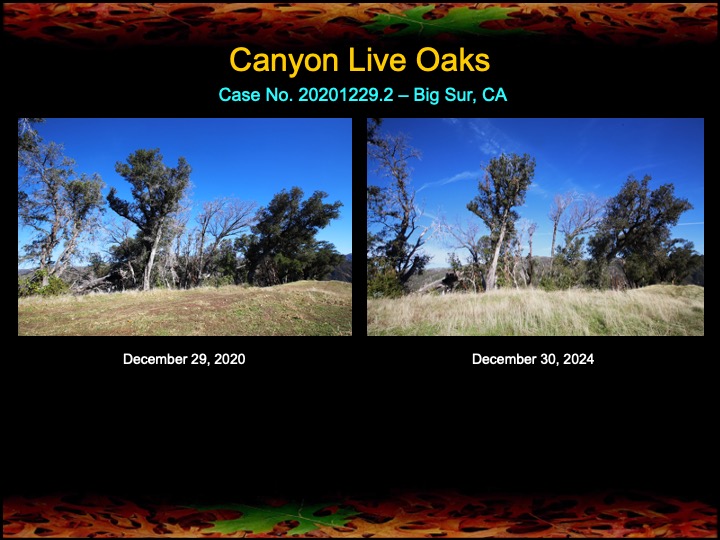
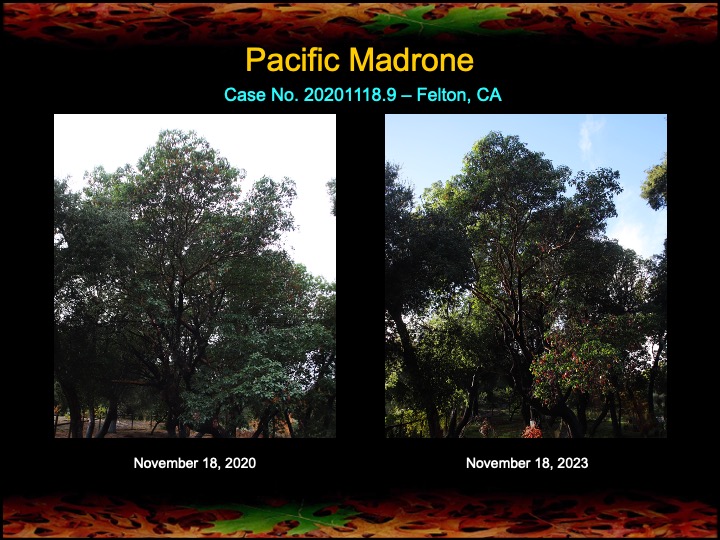
Here I present four-year photo sets of numerous canyon live (Valparaiso) oaks where nothing has been done, save for one oak that received a partial fire mimicry treatment in January of 2021. Most of the oaks are showing noticeable decline in canopy leaf density, a fair measure of the trees’ overall health. Several show no clear change in canopy density, and one or two seem to have improved over the past four years.

Can anyone guess which of these oaks received a partial fire mimicry treatment?

Read the rest of this entry »


Oranges and fire mimicry

26 12 2024
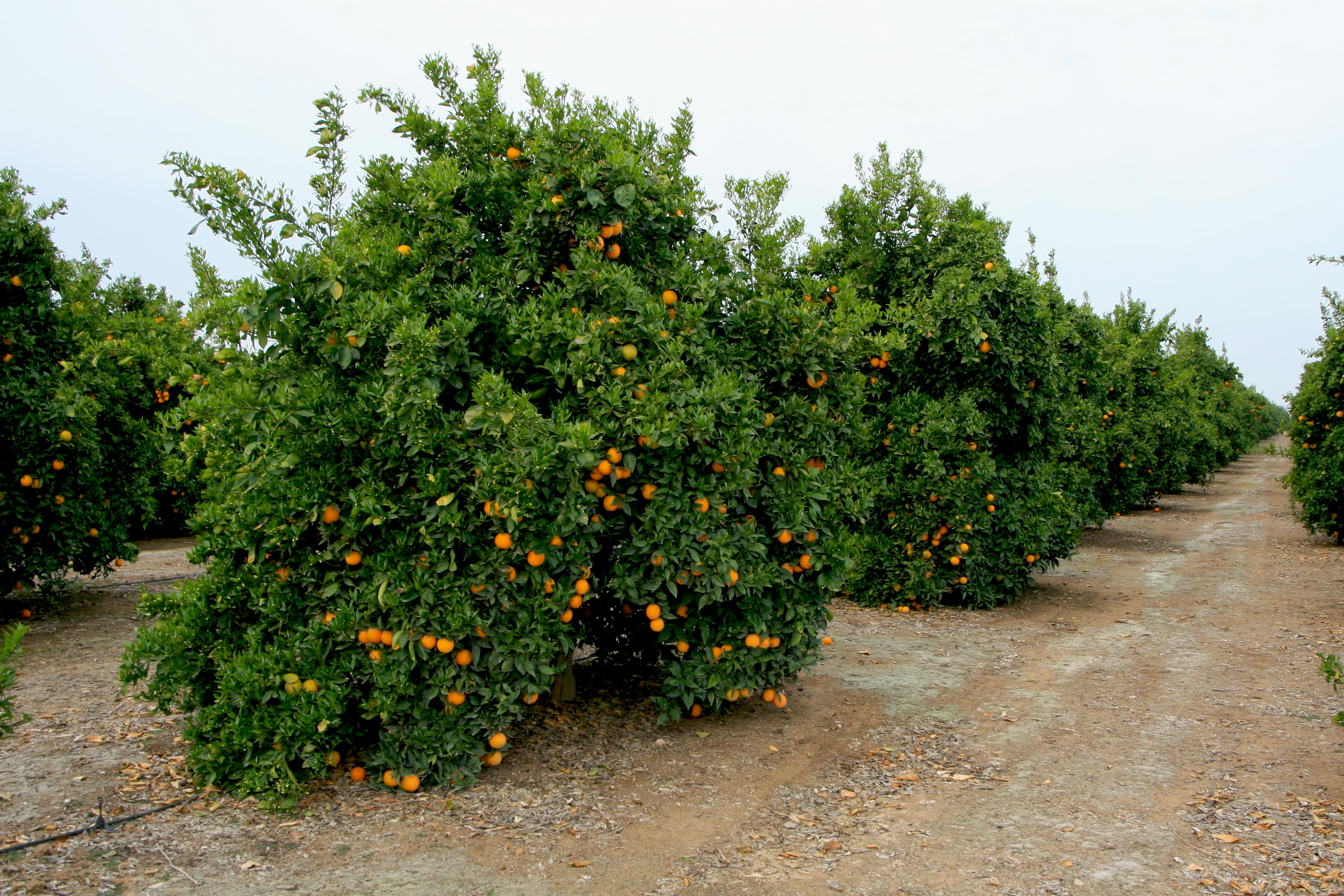
A commercial orange orchard in Visalia, CA.

Fire mimicry is clearly showing itself as a useful tool for restoring our native California trees. But what of all the non-native agricultural trees growing in vast orchards across the state? Is there any aspect of fire mimicry that may benefit them?

With these questions in mind I attended the World Ag Expo in Visalia, CA in February of 2007 and met a farmer whose family had been growing oranges in the Central Valley for generations. The farmer was concerned about a decline in the productivity and quality of their oranges in recent years. So in April of that year I returned to Visalia and inspected her orchards.

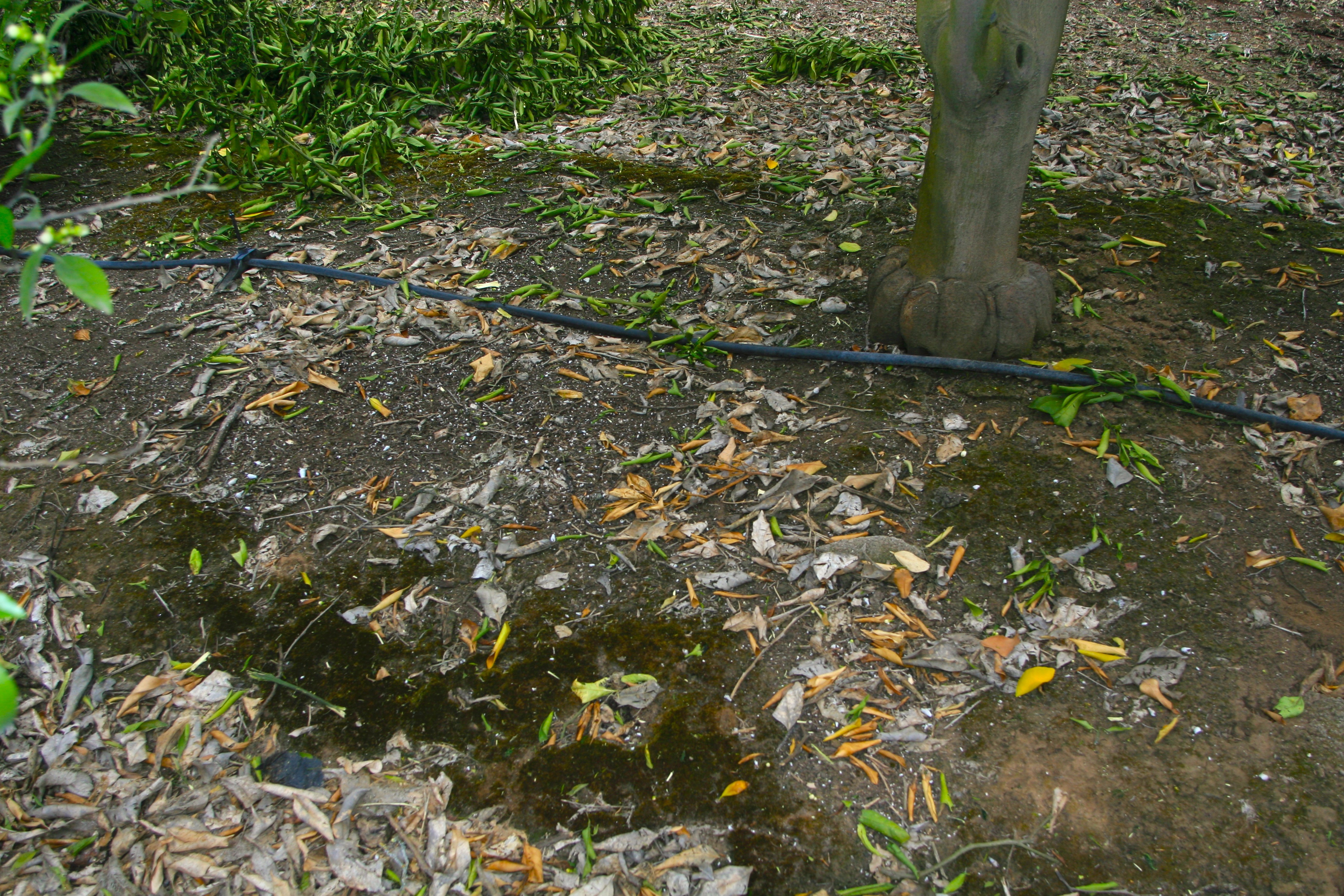
She first showed me an orchard block that had been consistently under-producing compared to adjacent blocks. I immediately noticed that a dense cover of mosses had formed around many of the trees, indicating to me that the soils were acidified and likely lacking in alkaline-rich nutrients. Most of the moss cover appeared confined to the soil zone of surface saturation along irrigation lines. [Any of you who have read Chapter 6 “The cryptic ecology of mosses and lichens” in my book Forged by Fire knows why this buildup of mosses may be problematic.]

Sick orange tree in a low productivity orchard. Note the thin canopy and yellowing of the leaves.
Dense mats of mosses growing on soils saturated by irrigation lines.
Read the rest of this entry »


Photo montage of trees other than coast live oaks that are feeling the love …

23 12 2024
Read the rest of this entry »


California oak decline is reversible!

22 12 2024

For more than two decades the decline and death of California’s oaks has been a matter of serious concern. In 2000 the California Oak Mortality Task Force (COMTF) was formed and members of the task force have received over $50 million in funding to address this problem. I attempted to become a member of the COMTF in the early 2000’s and applied several times for funding, but to no avail. The problem was seen then, as it still is, as pathological (say the pathologists) not ecological (say me).

That cold shoulder turned out to be a fine move for the dying oaks, as it forced me to stop studying the problem and start trying to fix it. Hence “Sudden Oak Life” was born and ever since I have been showing the fruits of my labor. While the title of this post may be news to many, it is old news to the long-time followers of this work. In the archives of this blog that span two decades are photos of THOUSANDS of oaks showing that in most cases their decline can be reversed.

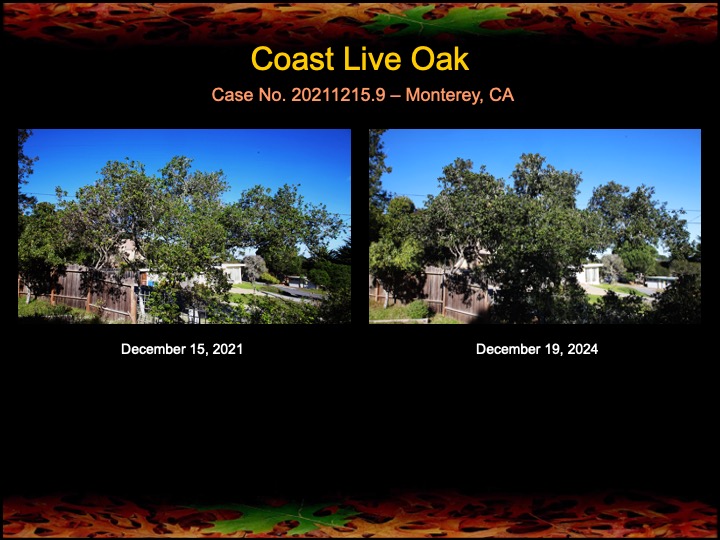
Shown here are photo sets of 16 ailing coast live oaks in Monterey CA treated with fire mimicry showing their progress after three years. Most of the oaks exhibit a notable increase in canopy density and many appear greener.

More evidence that California oak mortality is reversible! Enjoy …

Read the rest of this entry »


Monterey pines in Monterey showing off their new foliage

20 12 2024

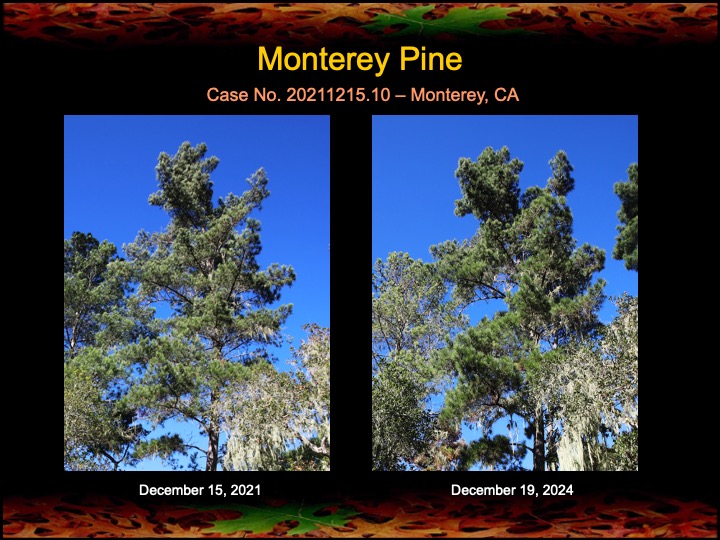
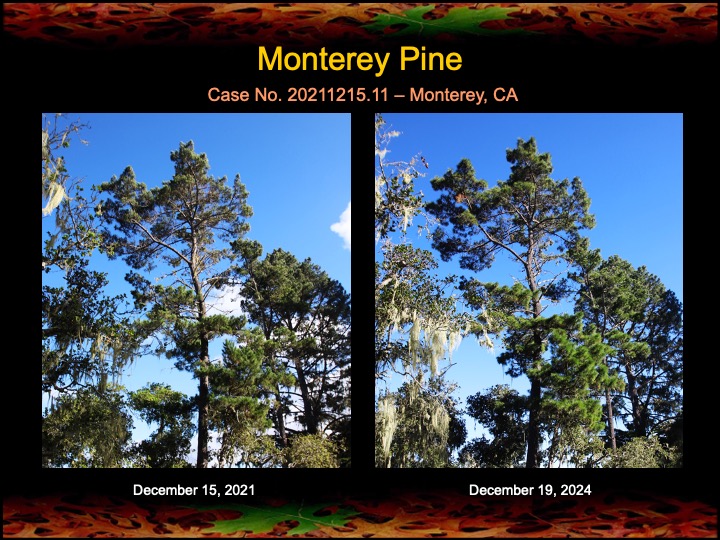
Monterey pines (Pinus radiata) are fast-growing trees that produce abundant large cones and seeds. They are, as might be expected, quite common in Monterey, CA and are endemic to our region, having been here since the Tertiary. Lately, however, Monterey pines, like the coast live oaks, are in decline, essentially victims of colonization which has led to a lack of healing fires. Both pitch pine canker disease and bark beetles are taking a heavy toll on the pines, as well as overcrowding of the forests.

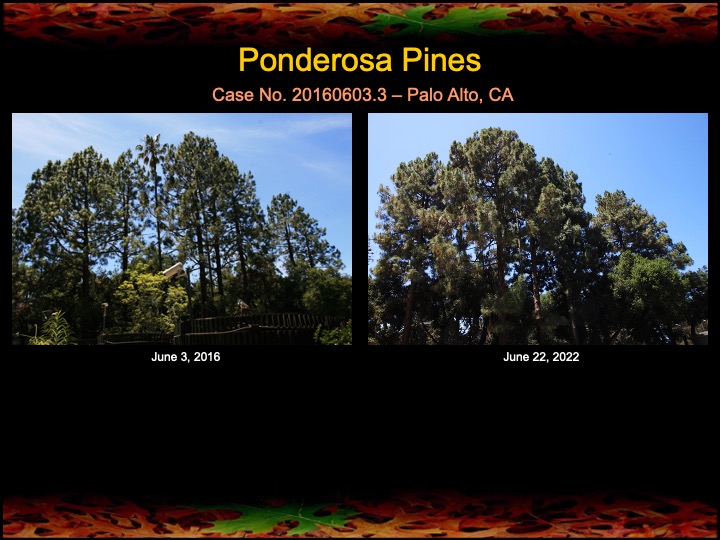
While my focus is on tending oaks, I’ve found that many other fire-adapted native trees respond well to fire mimicry. Thus, I began tending this grove of Monterey pines three years ago using the same fire mimicry protocol I use on the oaks. Yesterday I checked on these trees and am happy to report that most are showing noticeable improvement in the density and lushness of their foliage. Also, they bear no signs of disease or insect pests.

Read the rest of this entry »


Is the assumption that lichens are harmless to trees correct?

12 12 2024
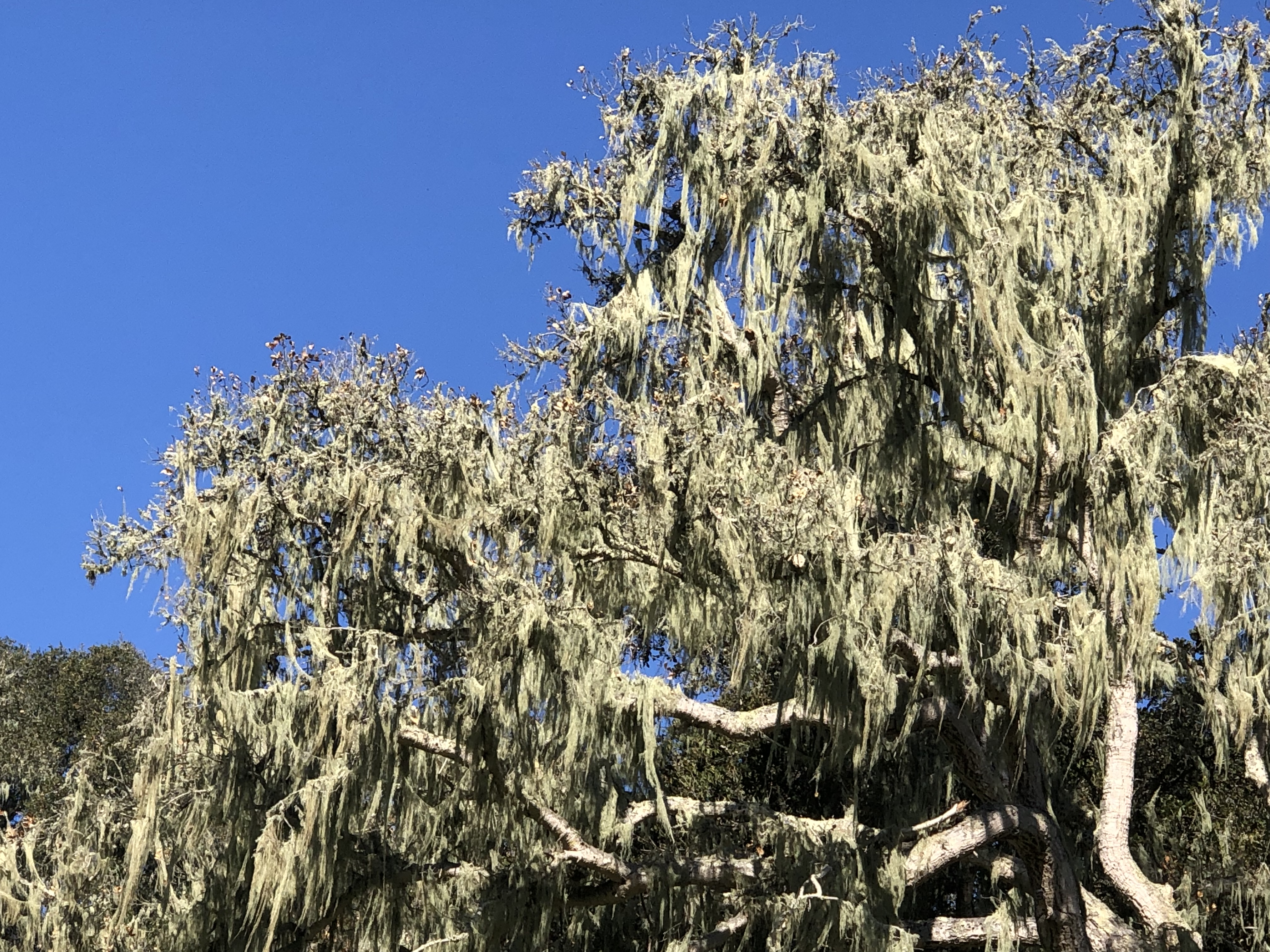
Dying coast live oak, centuries old, “smothered” in Ramalina reticulata and Usnea sp. lichens.

One of the most popular posts on this blog has been “Do lichens play a role in oak decline?” with nearly 4K views since it was published in 2018. With all those views I’m surprised that only a single reader has so far responded. It seems that photographing and identifying lichens is cool, but the ecology of lichens isn’t all that interesting to most folks.

Today I present readers a more detailed discussion on the ecology of epiphytic lichens and their possible effects on tree health. The following are excerpts from Chapter 6: The Cryptic Ecology of Mosses and Lichens, in my book “Forged by Fire: The Cultural Tending of Trees and Forests in Big Sur and Beyond”.

Foliose lichen (Flavoparmelia sp.) growing in a mat of mosses (Grimmia sp.) on the bark of an ancient coast live oak.
Read the rest of this entry »


Non-toxic approach to oakworm infestations along the Central Coast, CA

10 12 2024

In 2017 there was a severe oakworm infestation of coast live oaks in the Monterey region and elsewhere. I’m often contacted at these times by property owners concerned about their oaks. Many wish to spray the trees with insecticides to reduce the infestation. Upon my advice, I tell property owners that spraying chemical insecticides is not necessary for the oaks to recover from these infestations, provided they are given proper care. Since the oakworm infestations are related to a lack of cultural fires, which controlled their populations in the past, a way forward is to emulate fire effects on the forest ecosystem.

Thus, rather than using chemical sprays as is typically recommended by arborists, I prefer using fire mimicry treatments to oak trees infested with oakworm. In the present case study I recommended to the property owner to do fire mimicry treatments instead of spraying the oaks. Never knowing for sure, I explained to them that the oaks would likely recover from the infestation, and that they would show continued improvement in the following years. A second set of fire mimicry treatments were preformed the following year (2018).

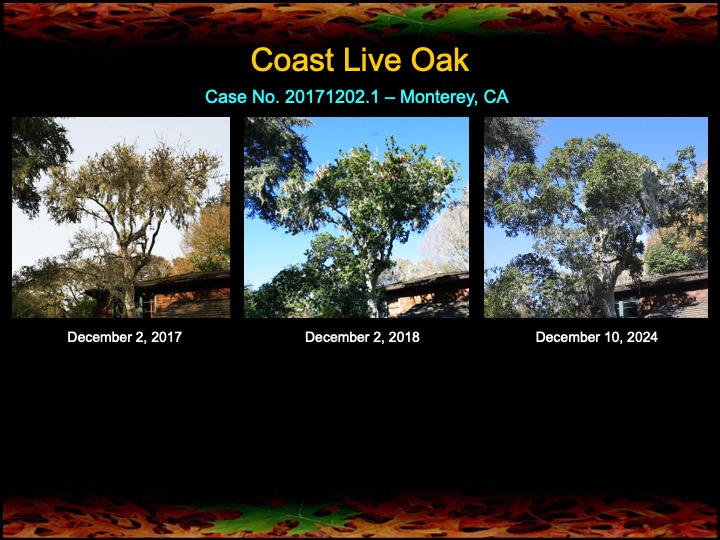
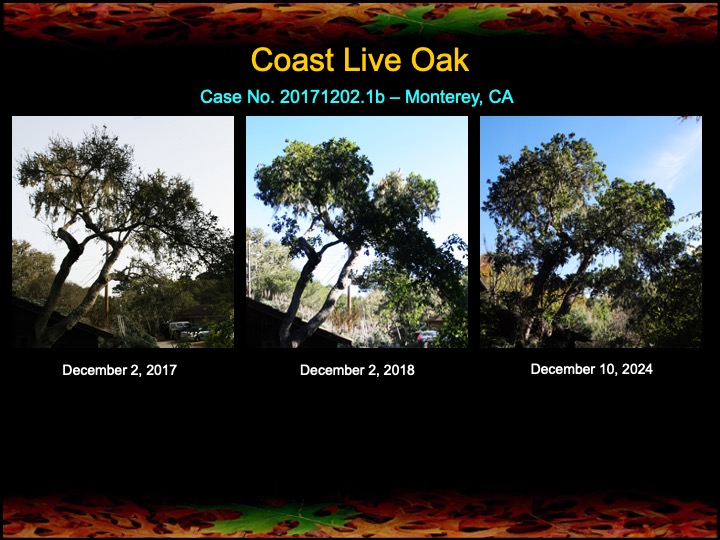
Shown here are repeat photographs of numerous coast live oaks taken upon initial treatments at the height of a severe oak worm infestation (2017), one year afterwards (2018), and seven years afterwards (2024).

Assessing the repeat photography results, the changes in canopy density of all the oaks on this property in Monterey, CA show that, in nearly all case studies, the canopy density increased as expected the year following the oakworm infection. However, the canopy density has continued to increase in nearly all of the oaks after only two years of fire mimicry treatments.

Read the rest of this entry »